
Companion Plants
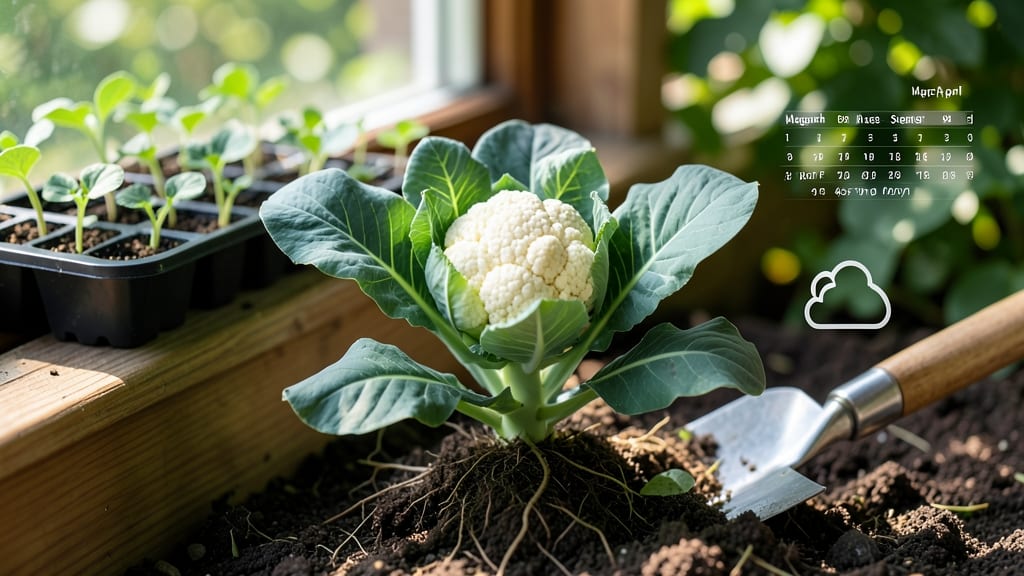
Timing your cauliflower 🥬 planting in Pennsylvania isn’t just about the calendar—it’s about outsmarting frost, heat waves, and those sneaky late-spring chills that can turn your garden dreams into a sad, wilted mess.
Get it right, and you’ll enjoy crisp, flavorful heads straight from your garden; get it wrong, and you’ll be staring at bolted greens or stunted plants by summer.
Here’s the game-changer: Pennsylvania’s USDA zones 5b-7a demand precision. Plant too early, and a surprise frost will freeze your seedlings; too late, and your cauliflower will bolt before forming proper heads.
The sweet spot? Mid-April to early June for spring plantings—or late July to early August for a fall harvest. But there’s more to it than dates.
Why? Because Pennsylvania’s weather is as unpredictable as a toddler’s mood swings—one day it’s 50°F, the next it’s 90°F.
I’ll show you how to adjust for your specific zone, whether you’re in the cooler mountains or the warmer valleys, so your cauliflower thrives no matter what Mother Nature throws at you.
Ready to avoid the most common mistakes and grow bountiful heads? Let’s dive into the exact planting windows, soil prep, and weather hacks that’ll make your garden the talk of your neighborhood—no more sad, stunted plants, just perfect 🥬 every time.
Best planting dates for cauliflower in PA by hardiness Zone
Pennsylvania’s USDA Zones 5b-7a create unique challenges for growing cauliflower—cool mountain air in the north clashes with humid heat in the south. To succeed, you must align planting with soil temperatures (ideal: 45-85°F) and frost-free windows.
In Zone 5b, for example, your last frost typically arrives around April 15, while Zone 7a enjoys a longer season until October 15. These differences mean your planting dates should shift by 2-3 weeks depending on where you live.
For spring plantings, aim to get seeds in the ground 4-6 weeks before your last frost date. This gives seedlings time to establish before summer heat arrives. In fall, plant 10-12 weeks before the first frost to ensure heads mature before cold sets in.
Missing these windows risks bolting (premature flowering) or frost damage—both kill your harvest.
Here’s the key: Soil temperature matters more than air temperature. Cauliflower roots struggle in cold soil (below 45°F), so wait until the ground warms to 50°F before direct sowing.
In cooler zones (5b), start seeds indoors 6-8 weeks before transplanting to jumpstart growth. Warmer zones (7a) can often direct-sow without indoor starts.
Microclimates in PA add another layer. Valleys like the Poconos (Zone 5b) may see frost until May 10, while Pittsburgh (Zone 6b) typically warms by April 20. Adjust your dates by 1-2 weeks if you’re in a sheltered microclimate or near large bodies of water, which moderate temperatures.
| Zone | Last Frost | First Frost | Spring Planting Window | Fall Planting Window | Soil Temp Goal |
|---|---|---|---|---|---|
| 5b (e.g., Erie, Scranton) | April 15 | October 10 | April 1-15 (indoors) / May 1-15 (outdoors) | July 15-August 1 | 50-55°F |
| 6a (e.g., Harrisburg, State College) | April 1 | October 20 | March 20-April 15 (outdoors) | July 1-August 10 | 50-60°F |
| 6b (e.g., Philadelphia, Pittsburgh) | March 25 | October 25 | March 10-April 30 (outdoors) | July 15-August 20 | 55-65°F |
| 7a (e.g., Reading, Allentown) | March 15 | November 1 | March 1-April 15 (outdoors) | August 1-15 | 60-70°F |
For continuous harvests, stagger plantings every 2-3 weeks during the spring window. For example, in Zone 6a, plant one batch on March 20, another on April 5, and a final batch on April 20.
This ensures you’re always picking fresh heads from late June through September. Fall plantings should follow the same logic—space them 3 weeks apart to extend your harvest into October.
Watch for heat stress in summer. If temperatures climb above 85°F for more than a few days, your cauliflower will bolt. In Zone 7a, this means avoiding late-June plantings. Instead, opt for shade cloth or choose heat-tolerant varieties like ‘Cheddar’, which handles warmth better than traditional white types.
How to adjust planting for Pennsylvania’s unpredictable weather patterns
Pennsylvania’s weather can shift faster than a cauliflower 🥬 head maturing—one moment you’re dealing with late-spring frosts, the next it’s a 90°F heatwave that stunts your plants. The key to success? Flexibility.
If you’re in the Poconos (Zone 5b), your frost dates are earlier than someone in Philadelphia (Zone 7a). I’ve grown cauliflower in both regions, and trust me, the adjustments make all the difference.
For high-altitude gardens like the Allegheny Mountains, start seeds indoors 8-10 weeks before your last frost date (usually mid-April). In warmer lowland areas, you can direct-sow 2-3 weeks earlier—but always have row covers ready.
The goal? Get your plants established before May’s unpredictable chills or July’s scorching heat derail your harvest.
Here’s the hard truth: Cauliflower hates extremes. It thrives in 60-70°F soil but bolts if temperatures exceed 80°F for more than a few days. That’s why I recommend two planting windows: early spring (March-April) for a summer harvest and late summer (August) for a fall crop.
But with PA’s 165 frost-free days, timing is critical.
⚠️ callout-warning ⚠️
- High-Altitude (Zones 5b-6a): Use black plastic mulch to warm soil faster and row covers for late frosts.
- Lowland (Zones 6b-7a): Prioritize shade cloth in summer and cold-hardy varieties like ‘Snowball Y Improved’.
- Both Regions: Avoid planting when forecasts show 80°F+ for 3+ days—cauliflower bolts under stress!
To beat the heat, I swear by white row covers during head formation. They reduce soil temps by 10-15°F and keep humidity in check. For fall plantings, use floating row covers to extend harvests into October—just remove them during the day to prevent overheating.
And if you’re in Zone 5b, consider greenhouse seedlings for a head start.
Don’t forget soil prep! Cauliflower loves rich, slightly acidic soil (pH 6.0-6.8). Amend your beds with compost and aged manure before planting, and side-dress with balanced fertilizer (5-10-10) when heads form. Consistency is key—uneven moisture leads to cracked heads, and nobody wants that.
Finally, monitor your plants like a hawk. If leaves yellow between veins, it’s clubroot disease—a common PA issue. Rotate crops and avoid wet soil to prevent it.
And if your cauliflower heads start to open, harvest immediately! The window for perfect 🥬 is narrow, but with these adjustments, you’ll nail it every time.