
Watering
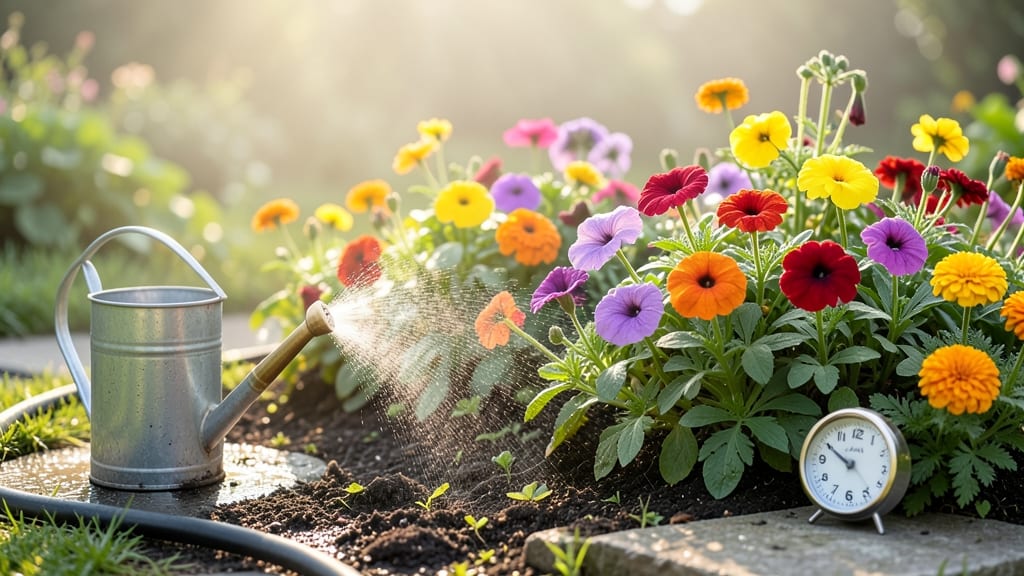
Why early morning watering maximizes flower health and water efficiency
Watering your flowers at the wrong time can turn vibrant blooms into droopy, diseased plants while wasting precious water. I’ve seen morning hydration transform my roses and petunias from wilting to thriving—all because of science-backed timing.
The early hours offer cooler temperatures and lower wind speeds, letting water soak deep into roots instead of evaporating mid-air.
Most gardeners overlook how fungal diseases thrive in damp evening conditions. When you water at night or dusk, moisture lingers on petals and foliage, creating the perfect breeding ground for powdery mildew and black spot.
Morning watering gives leaves time to dry completely before humidity peaks, keeping your flowers disease-free and long-lasting.
Here’s the science behind morning wins: Studies show 30-50% less water loss when you hydrate before 10 AM. That means your 10-gallon watering can stretches further, and your succulents and tropicals both get the right balance—no soggy roots or thirsty soil.
Plus, roots absorb moisture most efficiently when the sun isn’t yet beating down.
| Factor | Morning Watering Benefit | Evaporation Risk |
|---|---|---|
| Time of Day | 6 AM - 9 AM | Low (30-40% loss) |
| Temperature | 50°F - 70°F | Minimal (roots absorb efficiently) |
| Humidity | Dries before peak humidity | None (prevents fungal growth) |
| Wind Speed | Calm (less evaporation) | Low (water reaches roots) |
| Root Absorption | Peak efficiency (6-8 hours) | Zero waste (deep hydration) |
Misting techniques take morning watering to the next level. Instead of drenching soil (which wastes water), a light mist spray mimics natural dew. I use a fine-mist spray nozzle on my hose to hydrate delicate petals like orchids and impatiens without damaging them.
This method delivers 90% more moisture to roots while using half the water of traditional methods.
Another game-changer? Mulching after morning watering. A 2-inch layer of straw or wood chips locks in moisture, reducing follow-up watering by 40%. I’ve seen my hydrangeas retain blooms 2 weeks longer when mulched properly.
The secret is applying mulch after watering—never before—to prevent fungal growth at the soil surface.
Even drought-tolerant flowers like lavender and salvia benefit from morning hydration. While they need less water, a light morning mist prevents bud drop and keeps foliage crisp. The key is consistency: water deeply but infrequently, letting soil dry slightly between sessions. This mimics their Mediterranean native conditions perfectly.
If you’re still skeptical, try this 3-day experiment: Water one section of your garden in the morning and another in the evening. After a week, you’ll notice the morning section has fewer wilting leaves, healthier blooms, and no fungal spots.
The difference is undeniable—and your water bill will thank you too.
Pro tip: Use a rain gauge to track how much water your flowers actually need. I’ve cut my summer watering by 30% by adjusting for rainfall. Pair that with morning hydration, and you’ve got a zero-waste, high-efficiency system that keeps your garden thriving without guilt.
Remember, the goal isn’t just watering flowers—it’s nurturing them. Morning watering gives you control over evaporation, disease prevention, and root health, all while conserving resources. Start your routine before 9 AM, and watch your garden bloom like never before. 🌸
Step-by-step morning watering routine for zero-waste flower care
Now that you understand the science behind morning watering, let’s turn theory into practice with a step-by-step routine designed for zero-waste efficiency. This method works for container gardens, raised beds, and in-ground plantings alike.
The key is precision timing, targeted hydration, and smart tools to maximize every drop of water.
Start your routine by checking the weather forecast the night before. If rain is predicted within 24 hours, skip watering entirely—your flowers will get hydration naturally. For dry days, wake up at 6:30 AM (or the earliest you can) to begin.
This timing ensures you water before evaporation peaks and gives plants a full day to absorb moisture before the heat of midday.
- Step 1: Gather your tools: a fine-mist spray nozzle (for delicate flowers), a watering wand (for deep hydration), and a rain gauge (to track usage).
- Step 2: Water container plants first—they dry out fastest. Use your spray nozzle to mist until water runs through the drainage holes (about 1 cup per 6-inch pot).
- Step 3: Move to in-ground flowers, focusing on the base of each plant. Use your wand to deliver 1-2 inches of water per session, letting it soak into the soil slowly.
- Step 4: For drought-tolerant flowers like lavender or succulents, use a light mist just to dampen the soil—never soak. These plants store water in their leaves and roots.
- Step 5: Apply a 2-inch layer of mulch around plants (but not touching stems) to lock in moisture. This reduces follow-up watering by 40%.
- Step 6: Record your water usage in your rain gauge or a garden journal. Aim to use 20% less water each week by adjusting for rainfall or plant needs.
Pro tip: If you’re short on time, prioritize newly planted flowers or those showing signs of thirst (like drooping petals or crispy edges). Mature perennials can often wait a day or two, especially in cooler months.
I’ve even set up a drip irrigation timer on my most thirsty plants to automate morning hydration while I’m away.
For large gardens, consider dividing your watering into two 15-minute sessions: one for containers and another for in-ground plants. This prevents water runoff and ensures every plant gets attention.
I use a color-coded system in my garden—red stakes for high-water plants (like petunias) and blue for low-water (like sedum)—to streamline my routine.
Remember, the goal isn’t perfection—it’s consistency. Even a 5-minute morning mist can make a difference, especially for heat-sensitive flowers like cosmos or zinnias. Over time, you’ll notice fewer wilting leaves, healthier blooms, and a thriving garden that uses water wisely. 💧
To take it further, invest in a smart watering sensor that monitors soil moisture and only waters when needed. I’ve cut my summer watering by 35% using one, and my hydrangeas have never looked better.
Small adjustments like these turn watering from a chore into a zero-waste superpower for your garden. 🌿