
Flowers
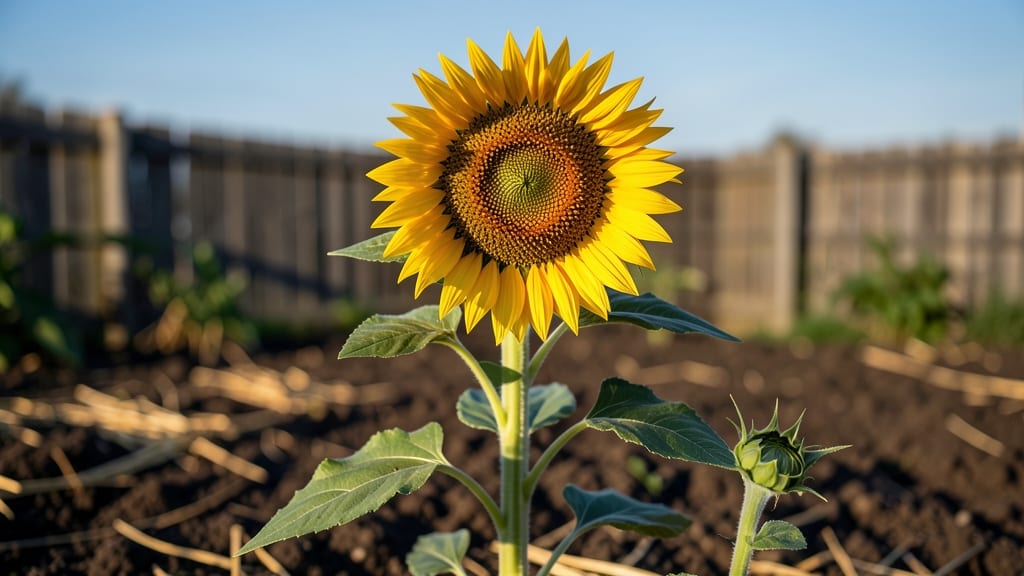
Sunflower growth stages: week-by-week timeline from seed to flower
Sunflowers are one of the fastest-growing plants in your garden, transforming from tiny seeds to towering blooms in just 8-12 weeks. Understanding their week-by-week growth stages helps you anticipate milestones and provide the right care at each phase.
Whether you're growing dwarf varieties for containers or giant sunflowers for cut flowers, this timeline ensures you never miss a critical moment in their development.
From the first cotyledon leaves emerging above soil to the dramatic opening of golden petals, each stage reveals how quickly sunflowers grow when given optimal conditions. Let’s explore what to expect each week, so you can track progress and troubleshoot any delays early.
| Week | Growth Stage | Key Milestones | Height Range |
|---|---|---|---|
| 1 | Germination | Seeds sprout cotyledon leaves (seed leaves) | 0.1–0.5 in |
| 2 | Seedling | First true leaves appear; stem strengthens | 1–3 in |
| 3 | Vegetative Growth | Rapid stem elongation begins; 4–6 true leaves | 6–12 in |
| 4 | Stem Elongation | Bud formation visible; leaves grow larger | 1–3 ft |
| 5 | Bud Development | Flower bud swells; petals begin coloring | 3–5 ft |
| 6 | Pre-Bloom | Petals partially open; seed head forms | 4–7 ft |
| 7–8 | Full Bloom | Complete flower opening; attracts pollinators | 6–16 ft |
| 9–10 | Seed Maturity | Petals wilt; seeds harden for harvest | 6–16 ft |
During week 1, your sunflower seeds should germinate within 5–10 days if planted in warm soil (at least 50°F or 10°C). Keep the soil consistently moist but avoid overwatering, which can cause seed rot. Once sprouts appear, thin seedlings to 12–18 inches apart to prevent competition for nutrients.
By week 3, you’ll notice a dramatic shift as the stem elongates rapidly, often growing 2–3 inches per day under ideal conditions. This is when sunflowers truly showcase their fast growth rate.
Provide stake support if growing tall varieties to prevent lodging from wind or rain. Monitor for aphids, which love young sunflower leaves.
Weeks 4–5 mark the transition to bud development, where the flower head begins forming. This stage is critical for determining final plant height—dwarf varieties may top out at 3–4 feet, while giant sunflowers can reach 10+ feet.
Increase watering slightly to support the developing bud, but avoid soggy soil to prevent fungal diseases like powdery mildew.
The pre-bloom phase (week 6) is one of the most exciting stages, as the petals start to unfurl like a golden umbrella. This is when sunflowers become a magnet for bees and butterflies. If
Factors that speed up or slow down sunflower growth (and how to optimize them)
Sunflowers are fast growers, but their speed depends heavily on environmental factors you can control. From sunlight exposure to soil nutrients, each element plays a crucial role in how quickly your plants reach their towering heights.
Understanding these factors lets you optimize growth and enjoy blooms in as little as 6-8 weeks.
While some factors like temperature are beyond your control, others such as watering schedules and variety selection can dramatically impact growth rates. For example, dwarf varieties like 'Teddy Bear' mature faster than giant types, while consistent moisture prevents stunted growth.
Let’s break down the key variables and how to maximize your sunflowers’ potential.
Factors That Speed Up or Slow Down Sunflower Growth
✅ Speeds Up Growth
- Full sun (6-8+ hours) – Fuels rapid stem elongation
- Well-draining soil – Prevents root rot and stunted growth
- Consistent watering – Deep soaks every 3-5 days
- Warm temperatures (70-85°F) – Ideal for germination and flowering
- Dwarf varieties – Mature in 45-60 days
❌ Slows Down Growth
- Partial shade – Causes leggy, weak stems
- Compacted or poor soil – Limits nutrient uptake
- Inconsistent watering – Leads to stress and wilting
- Cold temperatures (<50°F) – Delays germination and growth
- Overcrowding – Competes for sunlight and nutrients
Optimize these factors to double your sunflowers’ growth speed!
One of the most critical factors is sunlight exposure. Sunflowers thrive in full sun (6-8+ hours daily), and even a few hours of shade can slow growth significantly. If you’re growing in containers, place them in the sunniest spot available, like a south-facing window or patio.
For in-ground plants, ensure they’re not shaded by trees or structures, as this can reduce bloom size and delay flowering.
Soil quality is another game-changer. Sunflowers prefer well-draining, nutrient-rich soil with a pH between 6.0 and 7.5. Amend heavy clay soil with compost or sand to improve drainage, and avoid soggy conditions, which can rot roots and stunt growth.
A balanced fertilizer (10-10-10) applied at planting and again during flowering can boost growth by 30%.
Watering plays a dual role—too little causes wilting, while too much can drown roots. Aim for deep watering every 3-5 days, soaking the soil to a depth of 6-8 inches.
Water in the morning to reduce evaporation and fungal risks. Once established, sunflowers are drought-tolerant, but consistent moisture during the first 4-6 weeks ensures robust stem development.
Temperature also matters, especially for germination and early growth. Sunflowers germinate best in soil temperatures above 50°F (10°C), and ideal growth occurs between 70-85°F (21-29°C). If you’re in a cooler climate, opt for early-spring planting or use row covers to protect seedlings.
Conversely, in hot climates, provide afternoon shade to prevent stress during extreme heat.
Finally, choosing the right sunflower variety can shave weeks off your growing timeline. Dwarf varieties like 'Teddy Bear' mature in just 45-60 days, while standard types like 'Moulin Rouge' take 70-90 days.
If you’re short on time, prioritize fast-maturing hybrids designed for quick blooms. Pair this with optimal care, and you’ll be harvesting seeds or enjoying golden blooms in record time.