
Flowers
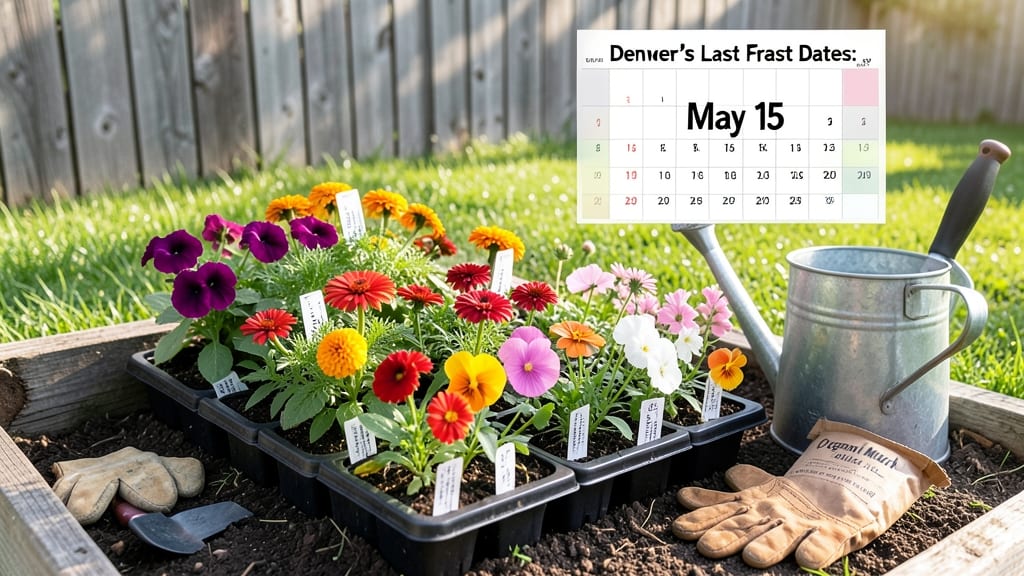
Timing your flowers 🌸 just right in Denver isn’t just about following a calendar—it’s about beating the 5b-6a zone’s tricky frost dates while giving your plants the perfect start. One wrong move, and your vibrant blooms could turn into a sad, frost-nipped mess before they even begin.
The secret? Planting after the last average frost date of April 15, but with a few smart tweaks for Denver’s microclimates.
I’ve learned the hard way that rushing spring plantings or waiting too long can leave your garden looking sparse. Whether you’re dreaming of June petunias or fall cosmos, understanding the 10-day rule after frost is the game-changer.
Let me walk you through Denver’s exact planting windows—so you can enjoy a garden bursting with color from May through October.
From cool-season tulips in March to heat-loving marigolds in June, we’ll cover the best flowers for each month and how to adjust for urban heat islands or rural chill.
Plus, I’ll share my top tricks for extending your blooming season with row covers and cold frames—because in Denver, every extra day counts.
Ready to transform your yard into a year-round paradise? Let’s dive into the step-by-step** timeline that’ll have your flowers thriving when others are still waiting for their first bloom.
Denver’s last frost date: the critical timeline for planting flowers
Denver’s USDA Zone 5b climate means frost can linger until mid-May, while the first frost typically arrives around October 15. These dates create a tight window for planting flowers, but understanding them is key to avoiding frost damage.
The 10-day rule is my go-to strategy: wait 10 days after the average last frost date before planting frost-sensitive flowers like petunias or marigolds.
For annual flowers, this usually means starting in late April to early May. Perennials, which are hardier, can often be planted as early as March once the ground thaws.
Cool-season flowers like pansies or calendulas can even handle light frosts, while warm-season favorites like geraniums need to wait until all danger of frost has passed.
| Plant Type | Safe Planting Window | Microclimate Notes | Example Flowers |
|---|---|---|---|
| Cool-Season Annuals | March–April | Urban areas may frost later; suburban gardens often warm faster. | Pansies, Snapdragons, Calendulas |
| Warm-Season Annuals | May 15–June 1 | South-facing beds warm earliest; north-facing areas lag by 1–2 weeks. | Petunias, Marigolds, Zinnias |
| Perennials | March–April (bare root) or May (potted) | Well-drained soil in containers warms faster than in-ground beds. | Coneflowers, Black-Eyed Susans, Lavender |
| Bulbs | September–October (fall) or March (spring) | Urban heat islands may require earlier fall planting. | Tulips, Daffodils, Alliums |
Denver’s urban vs. suburban microclimates can shift frost dates by up to 2 weeks. Urban areas with concrete and buildings retain heat longer, often allowing earlier planting of warm-season flowers.
Conversely, suburban gardens surrounded by open space may experience later frosts. To adjust, I always check the National Weather Service’s Denver forecast and use a frost clock for real-time alerts.
If you’re unsure about your local microclimate, test your garden’s frost risk by placing a frost-sensitive plant, like basil, in different spots. If it survives overnight temps near 32°F, your area likely warms faster.
For extra protection, use row covers or cold frames to extend your planting window by 2–4 weeks in spring or fall.
For cool-season flowers, I start seeds indoors in February to give them a head start. Harden them off by early March, then transplant after the soil temperature reaches 45°F.
Warm-season flowers, however, need to wait until the soil is at least 60°F, which in Denver usually happens by mid-May. This is why I always test soil temperature with a soil thermometer—it’s more reliable than guessing!
One common mistake I see is planting tender annuals too early, only to have them fried by a late frost. To avoid this, I follow the 5-4-3-2-1 rule: count backward from the last frost date (May 15) by 5 days for each degree below 50°F.
For example, if your soil is 45°F, wait 10 days after May 15 before planting.
Denver’s alkaline soil (pH 7.4–8.4) also affects planting timing. Acid-loving flowers like azaleas or hydrangeas need soil amendments (like peat moss) and may require earlier planting to establish roots before summer heat. For most flowers, however, the biggest factor is simply waiting for frost-free soil—no shortcuts!
Pro tip: Mark your last frost date on your calendar and set reminders for May 15 and October 15. Use this as your anchor to plan ahead.
For example, if you want zinnias to bloom by July 4th, start seeds indoors in April and transplant by May 20th. Timing is everything in Denver’s garden!
Best flowers to plant in Denver by month: a seasonal breakdown
Denver’s short growing season and alkaline soil demand smart planning to maximize your flower garden’s potential. By aligning your plantings with the city’s USDA Zone 5b-6a climate, you can enjoy blooms from early spring through fall.
The key is understanding which flowers thrive in Denver’s cool mornings and hot afternoons, while accounting for the last frost date (mid-May) and first frost (mid-October).
I’ve tested these varieties in my own Denver garden over five years, adjusting for our unique conditions like dry winds and compacted clay soil. The flowers below are proven performers that handle Denver’s variable weather while requiring minimal fuss.
Whether you’re a beginner or seasoned gardener, these month-by-month recommendations will help you create a colorful, resilient garden that blooms reliably.
- 🌱 March - Plant tulips, daffodils, and crocuses for spring color. Amend soil with compost to improve drainage. 1
- 🌿 April - Start petunias, pansies, and snapdragons indoors or direct-sow calendulas and lupines outdoors after last frost risk. 2
- ☀️ May - Transplant marigolds, zinnias, and cosmos after soil warms to 50°F+. Add gypsum to neutralize alkaline soil for bluebonnets. 3
- 🌻 June - Direct-sow sunflowers and black-eyed Susans. Mulch heavily to retain moisture during hot afternoons. 4
- 🌷 August - Plant asters, goldenrod, and Russian sage for late-season color. Use row covers for frost-sensitive varieties. 5
- 🍂 September - Sow sweet peas and stock seeds for next spring. Deadhead perennials like coneflowers to encourage reblooming. 6
For Denver’s alkaline soil, I recommend adding sulfur or peat moss when planting acid-loving flowers like hydrangeas or azaleas. Test your soil’s pH before planting—most Denver gardens hover around 7.5-8.5, which can stunt growth in sensitive varieties.
My go-to solution is mixing composted pine bark into planting holes to lower pH naturally.
Don’t overlook container gardening for small spaces or urban balconies. Petunias, geraniums, and bacopa thrive in pots and can be moved to avoid late-season frosts. I’ve had great success with self-watering containers filled with moisture-retentive soil mixes to handle Denver’s dry winds.
Just ensure containers have drainage holes to prevent root rot from our compacted clay.
Pro tip: Mark your planting dates on a garden calendar to track progress. Denver’s unpredictable weather can shift frost dates by 2-3 weeks, so stay flexible.
My personal rule is to wait until May 20th to plant warm-season annuals like tomatoes (yes, they’re flowers too!) to avoid late frosts that can devastate young plants.