
Light Requirements
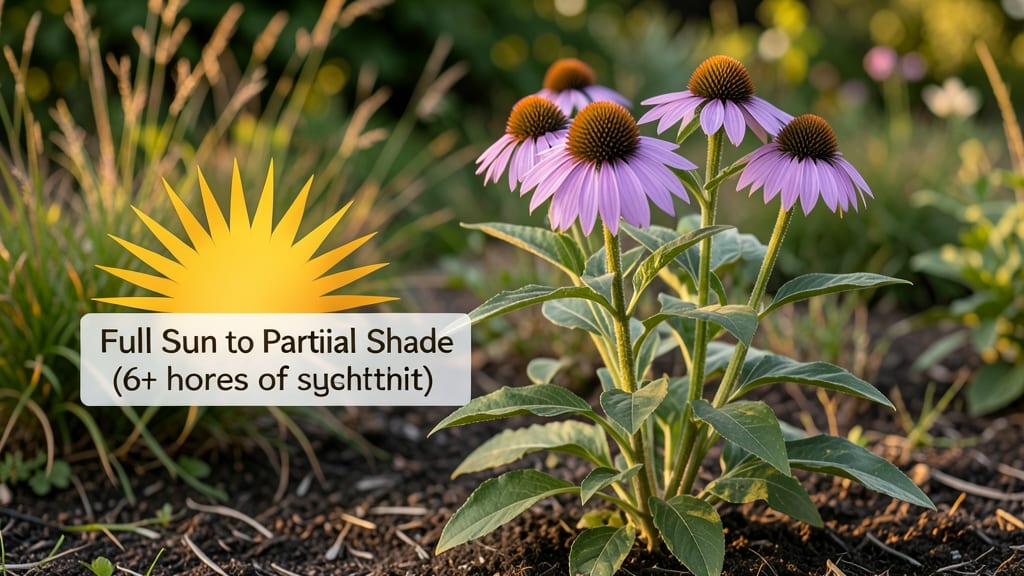
Ideal light conditions for coneflower growth and blooming
Coneflowers (Echinacea spp.) are sun-loving perennials that thrive when given the right amount of light, but their needs can vary slightly depending on your climate and specific variety. Full sun (6-8 hours daily) produces the most vibrant blooms and robust growth, but some varieties tolerate partial shade (3-6 hours).
Understanding these light requirements helps prevent common issues like leggy stems or faded flowers.
In hot, dry climates like the Southwest, coneflowers benefit from afternoon shade to prevent wilting. Meanwhile, in cooler regions like the Pacific Northwest, they can handle more direct sun without stress. The key is finding the balance that keeps your plants healthy and blooming prolifically.
| Light Condition | Sun Hours | Bloom Impact | Best For |
|---|---|---|---|
| Full Sun | 6-8+ hours | Largest, most vibrant blooms | Hot climates, open gardens |
| Partial Shade | 3-6 hours | Smaller blooms, less intense color | Woodland gardens, shaded borders |
| Too Much Shade | <3 hours | Leggy stems, sparse blooms | Avoid in all but deep shade varieties |
| Intense Afternoon Sun | 6+ hours (with afternoon shade) | Healthy growth, fewer scorch marks | Desert climates, containers |
For maximum bloom size and color intensity, aim for 6-8 hours of full sun daily. This is especially critical in USDA Zones 5-8, where coneflowers are most commonly grown. In these zones, morning sun paired with afternoon shade can prevent heat stress while still encouraging abundant flowering.
If your coneflowers receive less than 3 hours of sun, they’ll become leggy and weak, with fewer blooms. Look for yellowing leaves or stretched stems as warning signs.
In these cases, consider transplanting to a sunnier spot or using reflective surfaces (like white gravel or mirrors) to bounce extra light onto the plants.
In hotter climates (Zones 9-10), coneflowers appreciate afternoon shade between 1 PM and 4 PM to avoid wilting. A simple solution is to plant them near taller perennials or shrubs that provide natural shade during peak heat. This also helps maintain moisture retention in the soil.
Color intensity is directly tied to light exposure—purple coneflowers deepen in hue with more sun, while white varieties may develop a slight pink tint. For pink coneflowers, full sun enhances their brightness, making them stand out in pollinator gardens.
Even a few extra hours of sunlight can transform a lackluster display into a showstopper.
When planting in containers or raised beds, ensure they receive at least 6 hours of direct sun. Containers heat up faster, so monitor soil moisture closely. Use light-colored pots to reflect excess heat and reduce stress on the roots.
In shadier spots, choose dwarf varieties like 'White Swan' or 'Sombrero White,' which tolerate slightly less light.
If your coneflowers are already established but not blooming well, try pruning back leggy stems in early spring to encourage bushier growth. This helps redirect energy toward flower production rather than elongated foliage.
Pair this with a balanced fertilizer (10-10-10) applied in early spring to support robust growth during the blooming season.
Remember, coneflowers are drought-tolerant once established, but their light needs remain non-negotiable. Whether you're in a sun-drenched prairie garden or a partially shaded woodland edge, adjusting their light exposure can mean the difference between a few small blooms and a bountiful, pollinator-friendly display.
For best results, observe your plants throughout the growing season and adjust their placement as needed. A little experimentation will help you find the perfect light balance for your specific climate and coneflower variety.
How to adjust light exposure for different coneflower varieties
Not all coneflowers thrive equally under the same light conditions. While Echinacea purpurea (purple coneflower) loves full sun exposure, Echinacea pallida (pale purple coneflower) can tolerate partial shade in hot climates.
Understanding these differences ensures vibrant blooms and healthy foliage. Let’s break down the light needs for popular varieties and how to adapt your care routine accordingly.
For container gardening, light requirements become even more critical. Smaller pots dry out faster and can’t regulate temperature like in-ground plants.
If you’re growing Echinacea 'White Swan' in containers, place it in morning sun with afternoon shade to prevent leaf scorch. Dwarf varieties like 'Sombrero Mexican Hat' also prefer bright indirect light rather than harsh midday rays.
🌼
Coneflower Varieties & Light Requirements
Pro Tip: Use reflective mulch or light-colored containers to bounce extra light onto shade-loving varieties.
Watch for tell-tale signs of improper light exposure. Leggy stems and sparse blooms indicate too little light, while yellowing leaves or brown leaf edges signal sunburn. If your Echinacea purpurea develops pale, stretched-out foliage, move it to a sunnier spot.
Conversely, if leaves turn bronze or crispy, provide afternoon shade with a lightweight shade cloth (30-50% coverage).
For hot climates, consider afternoon shade strategies. Plant tall grasses or deciduous trees nearby to filter harsh afternoon rays while still allowing morning sun.
In cooler regions, maximize sun exposure to encourage robust growth. Container growers should rotate pots every few weeks to ensure even light distribution and prevent one-sided growth.
If your coneflowers aren’t blooming as expected, light adjustment is often the culprit. Echinacea pallida, for example, may produce fewer flowers in full sun during extreme heat. Try dappled shade (filtering sunlight through trees) to strike the perfect balance.
For container varieties, a south-facing windowsill with 4-6 hours of light works wonders, especially in urban gardens with limited space.
Experiment with microclimates in your garden. A north-facing slope might offer cooler, indirect light ideal for Echinacea 'White Swan', while a south-facing border can power Echinacea purpurea to its fullest potential. Pay attention to how your plants respond over multiple seasons