
Watering
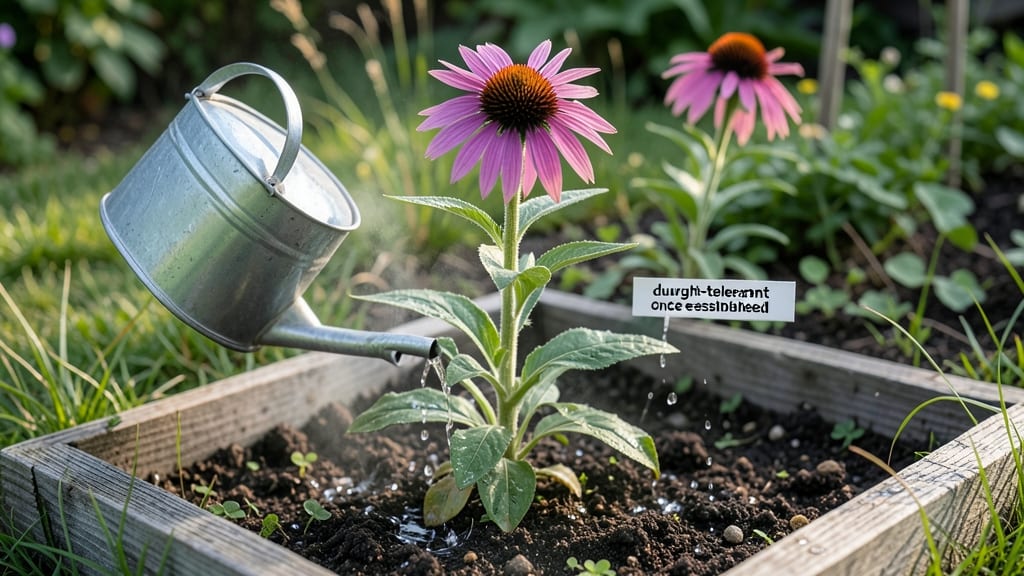
If your coneflower 🌼 is struggling to thrive despite your best efforts, you might be missing the mark on its water requirements. These hardy perennials are famously drought-tolerant, but getting the balance right can make all the difference between wilted stems and vibrant blooms that last all season.
Most gardeners assume coneflowers need constant moisture, but the truth is simpler: they prefer deep, infrequent watering that encourages strong root systems. In fact, overwatering is a bigger threat than underwatering, especially in USDA Zone 6a climates where summers can be hot and dry.
Let’s break down exactly how much water your coneflowers need—from the spring planting window to the peak blooming season in July and September. You’ll learn when to water, how to spot signs of stress, and even how to adjust for seasonal changes without guesswork.
By the end, you’ll have a foolproof routine that keeps your coneflowers healthy, happy, and show-stopping with minimal effort. Ready to transform your garden with confidence?


How often to water coneflowers for optimal growth and blooms
Coneflowers (Echinacea) are famously drought-tolerant, but their water needs change dramatically by season and soil type. The key to vibrant blooms lies in establishing a deep root system early on—once established, they can go weeks without water.
However, young plants and hot summers demand more attention. Let's break down the perfect watering schedule to keep your coneflowers thriving without overdoing it.
Newly planted coneflowers need the most frequent watering—every 3-5 days for the first 2-3 weeks—to help roots establish. After that, you can ease up, but timing matters. Watering in the early morning prevents fungal diseases like powdery mildew, while evening water can leave foliage damp overnight.
The goal is deep, infrequent watering that encourages roots to grow downward rather than staying shallow.
Here’s how to adjust your watering based on seasonal needs and soil conditions. Use this comparison table as your quick reference guide:
| Season | Soil Type | Watering Frequency | Watering Depth | Notes |
|---|---|---|---|---|
| Spring | Clay | Every 7-10 days | 6-8 inches | Clay holds moisture; water less often. |
| Spring | Sandy | Every 5-7 days | 4-6 inches | Sandy soil drains fast; water more frequently. |
| Summer | Clay | Every 10-14 days | 8-10 inches | Established plants need less; deep watering is key. |
| Summer | Sandy | Every 3-5 days | 6-8 inches | Hot weather + sandy soil = frequent watering. |
| Fall | Clay or Sandy | Every 2-3 weeks | 4-6 inches | Reduce watering as growth slows; prepare for dormancy. |
| Winter | Any | Monthly (if no snow) | 2-3 inches | Dormant plants need minimal water; avoid soggy soil. |
In spring, focus on consistent moisture to encourage leaf and stem growth. Aim for 1 inch of water per week, either from rainfall or irrigation. If your soil is clay-heavy, you’ll water less often because it retains moisture longer.
For sandy soil, water more frequently to prevent drying out. Mulching with 2-3 inches of organic mulch (like straw or wood chips) helps retain moisture and regulate soil temperature.
Summer is when coneflowers face their biggest watering challenge. Heat and drought stress can cause wilting or faded blooms, but don’t panic—these plants are tough! For established coneflowers, water deeply every 10-14 days (clay soil) or every 3-5 days (sandy soil).
The key is to water slowly and deeply, so roots absorb moisture rather than just wetting the surface. Avoid shallow, frequent watering, which promotes weak, shallow roots. If your area experiences a heatwave, increase watering slightly but never let the soil stay soggy.
As fall approaches, reduce watering gradually. Coneflowers start preparing for dormancy, and overwatering now can lead to rot or fungal issues. By late September, cut back to every 2-3 weeks, and stop fertilizing entirely.
This helps harden off the plants for winter. In winter, water only if there’s no snow cover—once a month is plenty. The goal is to keep the soil slightly moist but never waterlogged.
Watch for signs of overwatering, like yellowing leaves, mushy stems, or powdery mildew on foliage. These are red flags to reduce watering immediately and improve drainage.
On the flip side, underwatering causes wilting, dry, crispy leaves, or drooping flower heads. If you see these, water deeply right
Signs your coneflower needs more or less water (and how to fix it)
Your coneflower 🌼 might be silently screaming for help if its leaves are yellowing or wilting. These perennials are drought-tolerant, but they still need the right balance of moisture. The key is learning to read their visual cues—like drooping petals or crispy edges—before they become irreversible problems.
Overwatering is actually more common than you think, especially in USDA Zone 6a summers. Too much moisture can lead to root rot or powdery mildew, which weakens your plant and attracts pests.
On the flip side, underwatering causes stress that stunts growth and reduces those show-stopping blooms you planted for.
Let’s tackle the most common signs first. If your coneflower’s leaves feel soft and mushy when touched, that’s a red flag for overwatering. Check the soil—if it’s soggy or smells foul, you’ve gone too far.
For underwatering, look for crispy leaf edges or stems that collapse when you gently squeeze them.
⚠️ callout warning
Coneflowers hate soggy roots. If you see yellow leaves with green veins, that’s classic overwatering. Fix it fast by letting the soil dry out completely between waterings—aim for 1-1.5 inches deep moisture, not a swamp.
For underwatering, water deeply until it drains from the bottom. Morning watering is best—it gives foliage time to dry before nighttime humidity triggers fungal growth.
Powdery mildew is another sneaky issue caused by excessive moisture on leaves. You’ll spot it as a white, powdery coating on the tops of leaves. To treat it, prune affected areas immediately and space plants wider for better airflow.
A neem oil spray (1 tsp per quart of water) can also stop its spread.
If your coneflower’s blooms are smaller than usual or fading quickly, it might be thirsty. These plants store water in their deep taproots, so they can handle dry spells—but they’ll reward you with larger, longer-lasting flowers if you water deeply every 7-10 days during peak summer heat.
Pro tip: Stick your finger 2 inches into the soil. If it feels dry, it’s time to water. If it’s still damp, wait another day.
This simple trick saves you from both overwatering and underwatering mistakes. With these adjustments, your coneflowers will bounce back with bold, healthy blooms in no time!