
Light Requirements
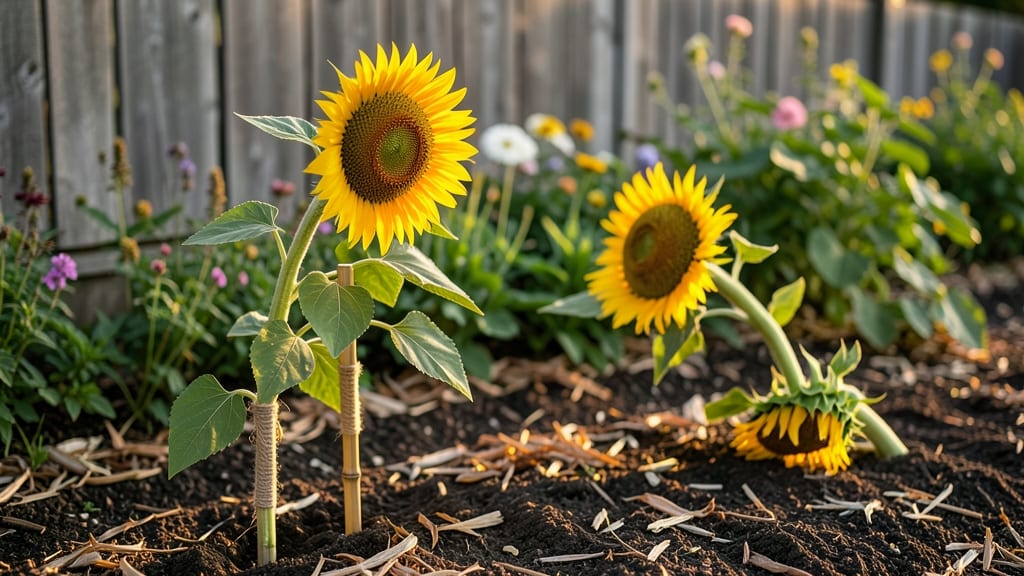
When and why sunflowers need support (and when they don’t)
Not all sunflowers need support, but the tallest varieties like 'Mammoth' or 'Russian Giant' often do. These beauties can grow 10-16 feet tall, making them vulnerable to wind, rain, and even their own weight. Shorter varieties, like 'Teddy Bear' or 'Autumn Beauty', usually stand strong without help.
The key factors? Stem strength, wind exposure, and soil conditions all play a role in whether your sunflowers will need extra support to stay upright.
Sunflowers with thin, hollow stems are more prone to snapping, especially in windy climates or after heavy rain. Even the hardiest varieties may need support if planted in loose, sandy soil that doesn’t anchor their roots well.
If you’re growing sunflowers in an open garden bed or near a breezy area, staking is almost always a good idea—especially for those towering giants that can reach the sky.
| Variety | Height Range | Support Needed? | Best For |
|---|---|---|---|
| 'Mammoth' Series | 12-16 ft | ✅ Yes (stakes or cages) | Wind-prone areas, tall gardens |
| 'Russian Giant' | 10-14 ft | ✅ Yes (sturdy stakes) | Containers, loose soil |
| 'Teddy Bear' | 1-3 ft | ❌ No (self-supporting) | Front of borders, small spaces |
| 'Autumn Beauty' | 3-5 ft | ❌ No (unless windy) | Cut flowers, mixed beds |
| 'ProCut' | 5-7 ft | ⚠️ Maybe (check soil) | Floral arrangements, bouquets |
If you’re growing sunflowers in containers or small spaces, support becomes even more critical. Potted sunflowers have limited root space, which weakens their ability to anchor themselves.
Even a gentle breeze can topple them over, especially if the pot isn’t heavy or secured. For container-grown sunflowers, use wide-based stakes or heavy-duty cages to prevent tipping.
Another factor to consider is soil fertility. Sunflowers grown in rich, nutrient-dense soil often produce thicker, stronger stems that require less support. However, if your soil is poor or compacted, the stems may struggle to support the plant’s weight.
Amending the soil with compost or organic matter before planting can help strengthen stems naturally, reducing the need for staking.
For gardeners in high-wind areas, even self-supporting varieties like 'Autumn Beauty' may need a little help. A lightweight spiral stake or soft tie can prevent damage without restricting growth.
The goal is to support without smothering—sunflowers should still sway slightly in the breeze, but not risk snapping under pressure.
One common misconception is that all sunflowers need heavy-duty support. In reality, many dwarf or semi-dwarf varieties thrive without any staking at all.
If you’re growing sunflowers for cut flowers or bouquets, opt for varieties like 'ProCut' or 'Evening Sun', which are bred for straight stems and minimal support. These types are perfect for beginner gardeners who want stunning blooms with less hassle.
Before deciding whether to stake your sunflowers, observe their growth habits early on. If the stems are thick and sturdy by the time they reach 3-4 feet tall, they’ll likely hold up well on their own.
But if the stems appear thin or hollow, it’s time to install support before they become top-heavy with blooms. Early intervention is key to preventing flopping later in the season.
Remember, sunflowers are fast growers, and their needs can change quickly. What starts as a self-supporting stem might become unstable as the plant matures and the flower head grows heavier.
Always have support materials on hand—like bamboo stakes or plant ties—just in case your sunflowers outgrow their natural stability.
Best support methods: stakes vs. cages vs. natural tricks
Choosing the right support for your sunflowers can mean the difference between a showstopping display and a sadly slumped disappointment. The method you pick depends on your sunflower variety, garden space, and how much effort you're willing to invest.
Let’s break down the best options to keep those towering blooms upright all season.
For tall varieties like 'Mammoth' or 'Russian Giant' (reaching 10+ feet), support is almost always necessary. Shorter types like 'Teddy Bear' (3-4 feet) often stand alone, but even they benefit from a little help in windy climates.
The key is matching your sunflower’s stem strength to the right support system.
Support Method Showdown
- ✅ Pros: Sturdy, reusable, great for single plants
- ✅ Best for: Tall varieties (8+ ft), windy areas
- ✅ DIY tip: Use bamboo stakes (cheap, flexible) or metal spiral stakes (durable)
- ❌ Time-consuming: Requires tying stems (use soft garden twine)
- ❌ Limited use: Only supports 1-2 plants per stake
- ❌ Visibility: Stakes can block views of smaller blooms
- ✅ Pros: Supports multiple plants, hidden support, great for crowded gardens
- ✅ Best for: Clusters of sunflowers, container gardening
- ✅ DIY tip: Use wire tomato cages (6+ ft tall) or plastic mesh cages (durable, reusable)
- ❌ Bulky: Takes up garden space
- ❌ Cost: Pre-made cages can be expensive
- ❌ Setup: Requires burying or anchoring
- ✅ Pros: No hardware needed, low-cost, eco-friendly
- ✅ Best for: Short varieties, small gardens, or low-wind areas
- ✅ DIY tip: Try pebble mulch (weighted base) or companion planting (corn stalks as support)
- ❌ Limited: Works best for shorter varieties (under 5 ft)
- ❌ Less reliable: Not ideal for heavy winds or rain
- ❌ Time: Requires frequent adjustments
If you’re growing multiple sunflowers in a row, wire cages are my top pick—they’re nearly invisible and let you plant densely. For single statement plants, a single bamboo stake (6+ feet tall) is the simplest solution.
Just bury it 1/3 of its length and tie the stem loosely with twine every 1-2 feet as it grows.
For the most natural look, try the pebble mulch hack: Pile 1-2 inches of smooth river rocks around the base of your sunflower. The weight helps anchor the stem, and it doubles as a weed barrier.
Pair this with proper spacing (12+ inches apart) to reduce competition for nutrients, which weakens stems.
Remember, support isn’t just about height—it’s also about preventing disease. Wet stems from rain or dew can lead to rot or mold, so always choose supports that allow good airflow.
If you’re in a windy area, combine stakes with a lightweight cage for extra security without sacrificing aesthetics.
Pro tip: Start supporting your sunflowers early—once they reach 2-3 feet tall. This gives the stem time to adjust gradually and reduces the risk of snapping. And if you’re feeling creative, paint your stakes with non-toxic outdoor paint to match your garden’s color scheme!