
Size
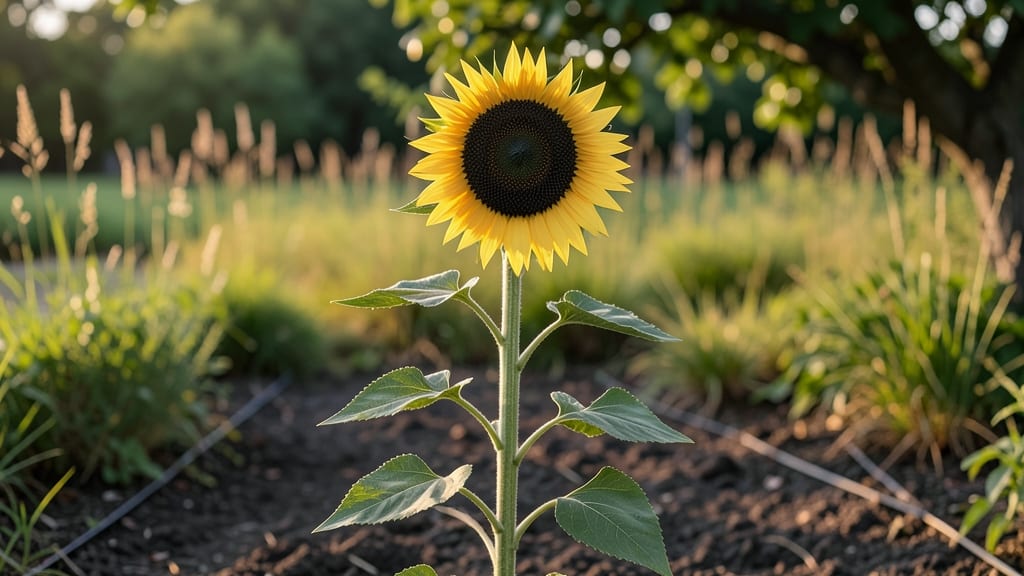
If you're wondering how big your Black Oil Sunflowers 🌻 will grow, the answer might surprise you—these towering beauties can reach heights of 6 to 12 feet in just one season!
Knowing their mature size is the key to planning your garden layout, choosing the right companions, and avoiding crowded spaces that could stunt their growth.
For gardeners in USDA Zone 6a, planting these sunflowers in April or May sets them up for peak growth by July to September.
But here's the catch: their rapid growth means you'll need to give them plenty of space—at least 1 to 2 feet apart—to prevent competition for sunlight and nutrients. Without proper spacing, you might end up with leggy, weak stems that struggle to support those massive blooms.
Whether you're growing them in a backyard garden, raised beds, or even containers, understanding their height progression is essential. From 1 to 2 feet at just 4 weeks to their full 6 to 12-foot stature by maturity, these sunflowers grow faster than you might expect.
Let’s break down how to manage their height and keep them thriving—no matter how much space you have to work with.
Ready to harness their full potential? I’ll share practical tips for spacing, pruning, and even controlling their height so you can enjoy their stunning dark blooms and rich seeds without the hassle. Let’s get growing!
Black Oil sunflower height by growth stage: exact measurements
Black Oil Sunflowers are one of the tallest varieties, reaching impressive heights that can transform your garden into a sunflower sea. Understanding their growth stages helps you plan spacing, support, and even harvest timing.
These giants start small but grow rapidly—knowing their exact measurements at each stage prevents overcrowding and ensures healthy development.
From tender seedlings to towering mature plants, the height progression is dramatic. At 4 weeks, they stand just 1-2 feet tall, but by 8 weeks, they can surge to 3-5 feet.
Without proper care, some varieties even reach 12 feet or more at maturity—taller than most gardeners! This rapid growth means spacing and support become critical early on.
Here’s a clear breakdown of their height progression, including key environmental factors that influence growth. Whether you're growing them for seeds, cut flowers, or simply as a dramatic garden feature, these measurements will help you plan like a pro.
🌱
| Growth Stage | Height Range | Key Characteristics | Environmental Needs |
|---|---|---|---|
| Germination (0-2 weeks) | 0.1–0.5 inches | Seedling emerges with first true leaves | Warm soil (55–65°F), indirect light |
| Seedling (2-4 weeks) | 1–2 feet | Rapid leaf growth, no flowers yet | Full sun (6+ hours), consistent moisture |
| Vegetative (4-8 weeks) | 3–5 feet | Stem thickens, buds form | Stake if windy; avoid overwatering |
| Flowering (8-12 weeks) | 5–7 feet | Dark blooms open, seeds develop | Support needed; reduce water slightly |
| Mature (12+ weeks) | 6–12 feet | Full height, seeds mature | Drought-tolerant; harvest before frost |
At 4 weeks, Black Oil Sunflowers are still manageable, standing between 1-2 feet tall. This is the perfect time to thin seedlings if you planted them too closely. Many gardeners make the mistake of assuming they’ll stay small—don’t let their early height fool you!
By 8 weeks, they’ll shoot up to 3-5 feet, making spacing critical to avoid competition for nutrients.
By the time they reach 5-7 feet (around 10-12 weeks), their rapid growth means they’ll need sturdy support. Without it, strong winds or heavy seed heads can cause them to lodge (fall over), wasting your effort.
At maturity, their 6-12 feet height makes them a stunning focal point—but only if you’ve prepared for their size from the start.
Environmental factors like sunlight, soil nutrients, and watering play huge roles in their final height. For example, plants grown in full sun with rich, well-draining soil often reach the upper limit of their height range.
Meanwhile, those in partial shade or poor soil may stay shorter, sometimes as little as 5-7 feet.
If you’re growing Black Oil Sunflowers in containers, expect slightly shorter heights—typically 4-8 feet—due to root restriction. However, even container-grown plants benefit from deep pots (at least 18 inches deep) to accommodate their long taproots. Always choose a pot with drainage holes to prevent root rot.
🌻
For gardeners in small spaces, consider the ‘Moulin Rouge’ variety, a semi-dwarf Black Oil Sunflower that tops out at 5-7 feet. This makes it ideal for backyard gardens or even large containers.
Even standard varieties can be pruned to control height, though this may reduce seed yield. Always leave at least 3-4 feet of stem for stability and seed production.
Pro tip: Mark your garden beds with spacing guides early on. Black Oil Sunflowers need 12-18 inches of space between plants to prevent overcrowding. In rows, space them 2-3 feet apart for optimal airflow and sunlight penetration.
This simple step can mean the difference between healthy, towering sunflowers and stunted, struggling plants.
How to control Black Oil sunflower height: pruning and support techniques
Now that you know how tall Black Oil Sunflowers can grow—up to 12 feet—managing their height becomes essential for both aesthetics and plant health. The key is balancing pruning and support without sacrificing seed production.
These sunflowers naturally grow tall, but strategic interventions can help you control their height while keeping them sturdy and productive.
Pruning is the most effective way to manage height, but timing is everything. I recommend pruning early in the season (around 4-6 weeks after germination) when the plants are still young and flexible.
At this stage, you can trim the main stem just above a side bud to encourage bushier growth. This technique reduces overall height by 20-30% while promoting multiple smaller blooms instead of one towering stalk.
For gardeners concerned about seed yield, focus on selective pruning rather than aggressive cutting. Removing only the topmost buds allows the plant to redirect energy to seed production while still controlling height. Always leave at least 3-4 feet of stem intact to maintain stability and support the heavy flower heads.
Pruning vs. Support Methods for Black Oil Sunflowers
Pruning Techniques
- Early pruning: Trim at 4-6 weeks
- Bushier growth: Encourages side buds
- Height reduction: Up to 30%
- Seed yield: Minimal impact if selective
Support Methods
- Stakes: Individual support for tall varieties
- Cages: Better for multiple plants
- Lodging prevention: Essential for windy areas
- Seed production: No impact on yield
When to Prune
- Young plants: 4-6 weeks after germination
- Avoid flowering: Never prune after buds form
- Best time: Morning on dry days
- Tools: Clean, sharp pruners
When to Add Support
- Early support: 3-4 feet tall
- Sturdy materials: Bamboo stakes or metal cages
- Tie method: Soft plant ties or fabric strips
- Avoid: Wire that can cut stems
Support systems are equally important for maintaining height control. I’ve found that stakes work best for individual plants, while cages are ideal for groups. For 6-8 foot varieties, a single 4-foot stake inserted at planting time provides enough support.
For the tallest varieties (9-12 feet), use 6-foot stakes or even tomato cages for added stability.
When choosing support, consider your garden’s wind exposure. In windy areas, I recommend using metal cages or bamboo stakes tied at multiple points along the stem. This prevents lodging (falling over) and ensures the plant maintains its upright position.
For container-grown sunflowers, use deep pots with built-in supports or add stakes at planting to avoid disturbing roots later.
Remember that pruning and support work best when combined. If you prune early to control height, you’ll need less aggressive support later. Conversely, if you skip pruning but use strong supports, you can still manage height without sacrificing seed production.
The key is to intervene early—once the plants reach 5 feet, they become much harder to manage.
🌱