
Container Gardens
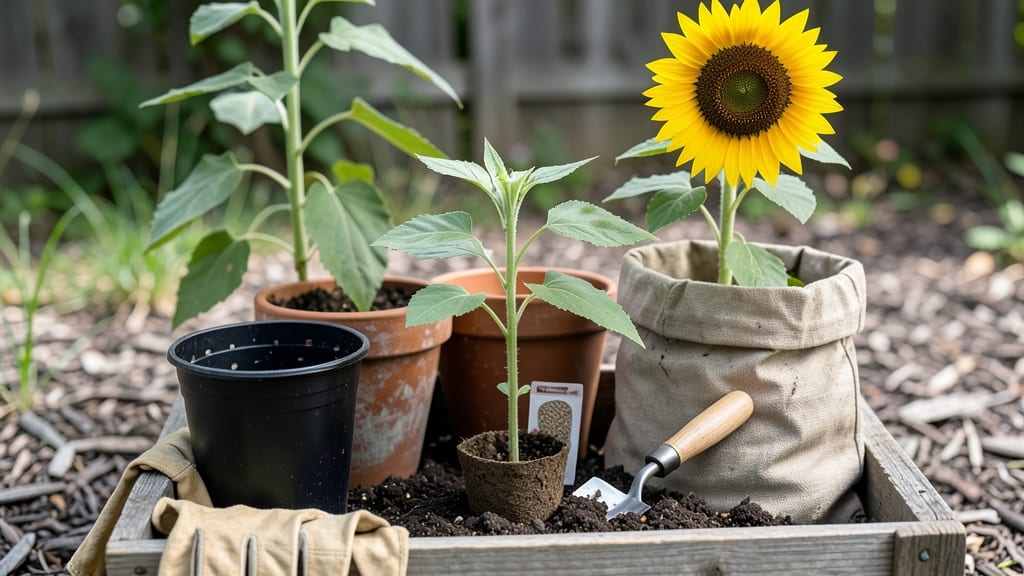
To grow a thriving 🌻 sunflower in a pot, you need more than just sunlight—you need the right container size to prevent toppling and stunted growth. Sunflowers are heavy plants, and their towering stems can easily outgrow flimsy pots, leading to instability or poor root development.
Most gardeners assume bigger pots are always better, but the truth is more nuanced. A pot that’s too large can waterlog roots, while one that’s too small restricts growth.
For standard sunflowers reaching 6-12 feet, a container with at least 12-18 inches in diameter and depth is ideal, but dwarf varieties need far less space.
Beyond size, drainage and stability matter just as much. Heavy terracotta pots or weighted bases can help anchor tall sunflowers, while proper soil mix ensures roots get the oxygen they need. Let’s break down the exact pot dimensions for different sunflower types and how to keep them standing strong.
Whether you’re planting in USDA Zone 6a or a sunny balcony, these guidelines will help you avoid common mistakes and grow sunflowers that reach their full potential without falling over. Ready to get started?
Sunflower pot size requirements by variety: dwarf vs giant types
Choosing the right pot size for your sunflowers depends entirely on the variety you’re growing. Dwarf sunflowers like 'Teddy Bear' or 'Moulin Rouge' stay compact at just 2-4 feet, while giant varieties such as 'Russian Giant' or 'Mammoth' can soar to 12-16 feet.
The container must match both the plant’s root depth and stem stability needs to prevent toppling or stunted growth.
For most gardeners, the biggest mistake is using a pot that’s too shallow or narrow. Sunflowers develop deep taproots, and a container that’s too small forces roots to circle, weakening the plant. Meanwhile, a pot that’s too large can hold excess moisture, leading to root rot.
The key is finding that sweet spot where the roots have room to grow while the plant remains stable.
Below is a detailed breakdown of pot sizes for different sunflower varieties, including dwarf, medium, and giant types. We’ve also included professional recommendations for soil depth, container weight, and drainage to ensure your sunflowers thrive in pots.
For dwarf sunflowers, a 10-12 inch pot is perfect—they’re lightweight and don’t need deep roots. These varieties are ideal for balconies or small patios, but even here, ensure the pot has drainage holes to prevent soggy soil.
I’ve grown 'Teddy Bear' sunflowers in fabric grow bags with great success, as they allow roots to breathe while still providing stability.
When it comes to medium-height sunflowers like 'Autumn Beauty', you’ll need a 14-16 inch pot to accommodate their 4-8 foot stature. These plants benefit from terracotta pots because the material’s weight helps anchor the stem.
I always add a support stake at planting time to give the stem structure as it grows. Without support, even medium-height varieties can lean or snap in windy conditions.
Giant sunflowers are the most demanding when it comes to container size. A 20-24 inch pot is the minimum for varieties like 'Russian Giant', which can reach 12-16 feet. These plants require heavy-duty containers—think fiberglass or plastic barrels filled with gravel or sand at the bottom for weight. I’ve seen 10-foot sunflowers topple over in 5-gallon buckets; it’s not a risk worth taking.
Beyond pot size, the soil mix plays a critical role in stability. Use a blend of 60% potting soil, 30% perlite, and 10% compost to ensure good drainage while retaining moisture.
For giant sunflowers, I’ve had the best luck with a heavy soil mix that includes coarse sand or pumice to add weight and improve aeration.
Another pro tip: rotate your pots
How to prevent toppling: weight, support, and soil techniques for tall sunflowers
Tall sunflowers can grow 8-16 feet tall, making them prone to toppling in containers. The key to stability lies in three critical factors: pot weight, structural support, and soil composition.
Without these, even a well-sized pot won’t prevent your sunflower from leaning or falling over during wind or heavy blooming.
For standard sunflowers, I’ve learned that adding weight to the pot isn’t just about filling it with soil—it’s about creating a balanced base. A 15-gallon pot (18" diameter) is the minimum for mature plants, but even then, you’ll need to reinforce it.
Smaller dwarf varieties (2-4 ft) can thrive in 5-gallon pots, but they still need stability techniques.
One of my biggest mistakes was ignoring wind exposure. Even in USDA Zone 6a, a sunny patio can become a wind tunnel. I learned the hard way that bamboo stakes or metal plant cages aren’t just decorative—they’re essential for tall sunflowers in containers.
A 20-gallon pot won’t save a sunflower from toppling if the soil is too light or the support is missing. Here’s the critical combo:
- Use heavy terracotta pots or add sand/gravel to the bottom 1/3 of the pot
- Install two support stakes at planting (not after growth starts)
- Choose well-draining soil mix with perlite or vermiculite (30% by volume)
For soil weight adjustments, I recommend mixing 50% potting soil with 30% compost and 20% coarse sand. The sand adds bulk without compacting roots, while the compost provides nutrients. When planting, fill the bottom 3 inches with small rocks or pebbles to create an instant weight base.
Support stakes should be 2-3 feet tall at planting and tied loosely with soft plant ties (never wire). I’ve found that bamboo stakes work best because they’re flexible yet sturdy.
For extra security, place the pot in a sheltered location like near a fence or under a patio awning during stormy weather.
One technique I’ve perfected is the "double-staking method" for sunflowers over 6 feet tall. After installing the primary stake, I add a secondary horizontal support at mid-height, creating a tripod effect. This distributes wind pressure more evenly and prevents the stem from snapping at the base.
Finally, don’t forget about watering patterns. Overwatering makes soil lighter and more prone to shifting, while underwatering causes roots to grip loosely. Aim for deep watering every 2-3 days in summer, letting excess water drain completely. This keeps the soil compact enough for stability while preventing root rot.