
Planting
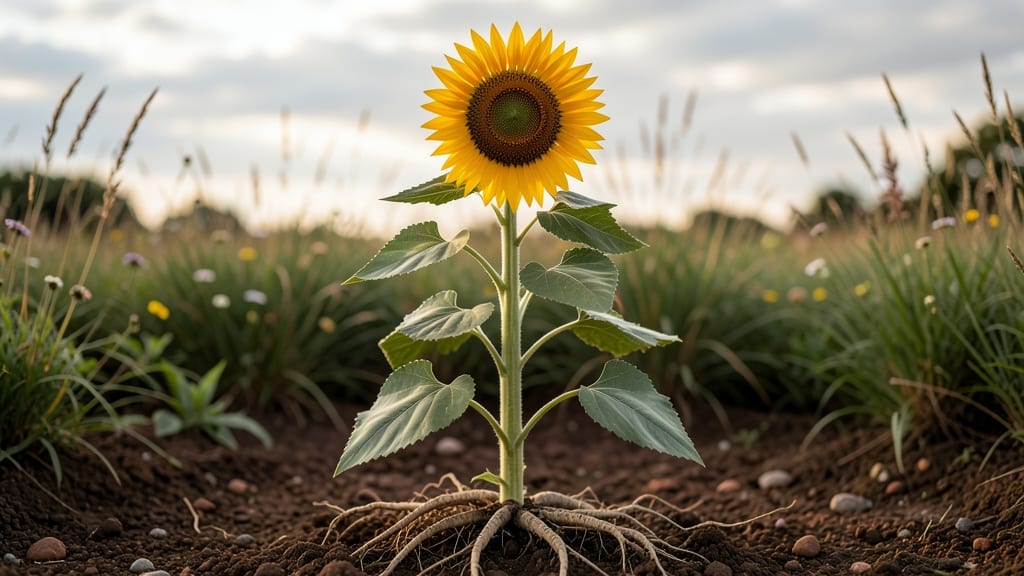
To grow a sturdy 🌻 sunflower that stands tall against summer storms, you need to know how deep its roots really go—because what’s hidden underground determines what you see above.
Most sunflower roots plunge 3 to 6 feet deep, acting like nature’s anchor to keep your towering beauty from toppling over.
This deep root system isn’t just about stability—it’s also the plant’s secret weapon for survival. Sunflowers tap into moisture and nutrients far below the surface, making them surprisingly drought-resistant once established.
But here’s the catch: shallow soil or compacted ground can stunt their growth, leaving your plants vulnerable to wind and poor nutrient uptake.
If you’ve ever wondered why some sunflowers thrive while others struggle, the answer often lies beneath your feet. Understanding how deep sunflower roots grow helps you plant, water, and care for them the right way—so you can enjoy those iconic blooms without the worry.
Let’s dig into the science behind sunflower roots and how you can give yours the best chance to reach their full potential. You’ll learn how soil type, variety, and even your watering habits play a role in root development—and why getting it right makes all the difference.
Sunflower root depth: how deep do they grow and why it matters
Sunflowers may reach for the sky with their towering stalks, but their true strength lies underground. The average sunflower root depth ranges from 3 to 6 feet, with some varieties extending even deeper.
This deep root system isn't just for show—it's what keeps your sunflowers standing tall in windy conditions and thrives during dry spells.
Understanding this depth helps you plan your garden layout, watering schedule, and even soil preparation. For instance, planting near sidewalks or driveways could damage those deep roots as they grow. Let’s explore why root depth matters and how to optimize it for healthy sunflowers.
Sunflower roots develop a primary taproot that grows straight down, while secondary roots branch out horizontally. The taproot can reach 4-5 feet deep, while lateral roots spread 2-3 feet wide. This structure helps them access water and nutrients from deep soil layers, making them surprisingly drought-resistant once established.
| Root Type | Depth Range | Key Function | Soil Impact |
|---|---|---|---|
| Primary Taproot | 3-6 feet | Anchorage & water storage | Needs loose, deep soil |
| Secondary Lateral Roots | 2-3 feet wide | Nutrient absorption | Benefits from organic matter |
| Mature Root System | Up to 8 feet | Drought resistance | Avoids compaction |
The primary taproot is the sunflower’s anchor, growing deeper as the plant matures. In sandy soil, roots may grow faster but reach shallower depths, while clay soil can restrict growth unless amended with compost.
This is why loose, well-draining soil is ideal—it allows roots to penetrate deeply without hitting obstacles.
Root depth directly impacts a sunflower’s stability. Shallow roots mean plants are more likely to topple in wind or storms. For example, a 10-foot sunflower with roots only 2 feet deep will struggle to stay upright.
To prevent this, plant seeds in deep soil beds or use stakes for extra support in windy areas.
Water absorption is another critical factor. Deep roots allow sunflowers to access moisture from lower soil layers, reducing their need for frequent watering. In drought conditions, plants with well-developed roots survive better than those with shallow systems.
This is why deep watering—rather than light, frequent watering—is essential during dry spells.
Nutrient uptake also benefits from deep roots. Sunflowers absorb nitrogen, phosphorus, and potassium from deep soil layers, which is especially important during their rapid growth phase. Adding compost or organic matter to the soil before planting encourages root growth and nutrient availability.
Soil type plays a crucial role in root development. In sandy soil, roots may spread wider but not as deep, while clay soil can restrict root growth unless amended. The best approach is to mix in compost or aged manure to improve soil structure and encourage deeper root penetration.
If you’re growing sunflowers in containers, ensure the pot is at least 18 inches deep to accommodate their root system. Shallow containers will stunt root growth, leading to weaker plants. For in-ground planting, avoid compacting the soil around the roots, as this can limit their ability to grow deeper.
Understanding sunflower root depth helps you create the perfect growing conditions. Whether you're planting in your backyard or a community garden, prioritize deep, loose soil and proper spacing to give those roots the room they need to thrive.
Factors affecting sunflower root growth depth: soil, variety, and care
Sunflower roots aren't just shallow anchors—they plunge deep into the soil to support those towering 10-foot stalks. The depth varies dramatically based on the sunflower variety you choose and how you care for them.
Giant varieties like 'Mammoth' sunflowers can send roots 6 feet deep, while dwarf varieties might only reach 2-3 feet. This difference isn't random—it's shaped by genetics, soil conditions, and your gardening habits.
One of the biggest factors is soil composition. Loose, well-draining soil with plenty of organic matter lets roots grow freely, while compacted or clay-heavy soil can stunt them.
I've seen sunflowers in my garden struggle when planted in heavy clay—their roots barely broke 2 feet down compared to the 5 feet they reached in amended soil. The right soil prep can make all the difference.
Your watering practices also play a crucial role. Sunflowers need deep watering to encourage roots to grow downward. Shallow watering keeps roots near the surface, making plants more prone to toppling in wind.
I've learned the hard way—my first attempt with daily light sprinkles resulted in weak stalks that snapped easily. Now, I water deeply 2-3 times per week to push roots deeper.
⚠️ Common Mistakes That Stunt Sunflower Roots
Overcrowding forces roots to compete for space, limiting depth. Plant 12-18 inches apart for proper root development.
Shallow tilling (less than 6 inches deep) can sever developing roots. Use deep cultivation tools instead.
Fertilizer overload near the surface encourages top growth but weakens roots. Apply fertilizer 3-4 inches below soil.
Another critical factor is sunflower variety selection. Giant varieties like 'Russian Giant' develop massive taproots to support their height, while 'Teddy Bear' dwarf sunflowers have shallower systems.
If you're growing in containers, choose dwarf varieties—their roots won't outgrow the pot. For in-ground planting, giant varieties reward you with deeper roots and better stability.
Even the planting depth affects root growth. Seeds planted too shallow (less than 1 inch) may produce weak roots, while those planted too deep (more than 2 inches) can struggle to emerge.
I've found the sweet spot is 1-1.5 inches deep, which gives roots room to establish without surface interference. Mulching around the base also helps maintain consistent soil moisture, encouraging deeper root penetration.
Finally, avoid soil compaction from foot traffic or machinery. Compacted soil creates air pockets that roots can't penetrate. After planting, gently loosen the soil around the base with a broadfork to create channels for roots to grow downward.
This simple step can double your sunflower's rooting depth, making your plants more resilient against wind and drought.