
Propagation
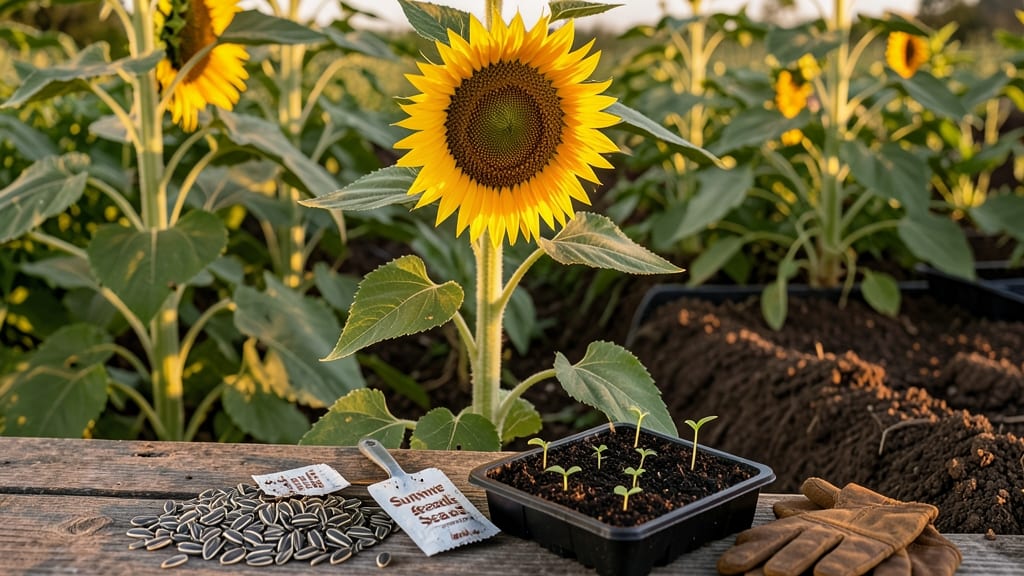
Growing sunflowers from seed feels like watching a giant unfold right before your eyes—but how long does it really take? From that first green shoot to a towering 🌻 reaching for the sky, most varieties need between 60 and 120 days, depending on the type and growing conditions.
If you’ve ever planted sunflower seeds only to wonder why they’re taking longer than expected, you’re not alone. The timeline isn’t just about days—it’s about sunlight, soil, and even the variety you choose.
Some sunflowers bloom in as little as 50 days, while others take closer to 120 days to reach their full height.
In this guide, I’ll break down the exact stages of sunflower growth—from germination to those iconic golden blooms—so you can set realistic expectations and troubleshoot delays. Whether you’re planting in Zone 6a or just starting your spring garden, knowing these timelines helps you plan for success.
Ready to grow sunflowers that wow? Let’s dive into the science behind their speedy (or sometimes slow) journey from seed to sunlit showstopper.

Sunflower growth timeline: seed to full bloom stages explained
Sunflowers grow through four distinct stages from seed to maturity, with each phase bringing unique visual milestones. Understanding these stages helps you predict bloom times and troubleshoot delays.
Most varieties complete this journey in 80-120 days, though dwarf types may bloom in 60 days while giant varieties can take 150 days or more.
Your sunflower's journey begins with germination, where seeds sprout tiny roots and leaves. This stage typically takes 7-14 days under ideal conditions, but cold soil or poor moisture can extend this to 3-4 weeks. Watch for the first cotyledons (seed leaves) breaking through the soil—this confirms successful germination.
The vegetative stage follows, lasting 30-50 days as your plant focuses on leaf and stem growth. During this phase, you'll notice rapid height increases and the development of true leaves (not the initial cotyledons). This is when proper spacing becomes critical—crowded plants compete for nutrients and sunlight, slowing their progress.
Here's a quick reference for each growth stage with key milestones:
The flowering stage begins when you spot buds forming at the stem tips, typically 40-60 days after planting. This phase lasts 10-20 days as the flower head develops its iconic structure. Pay attention to petal color changes—healthy sunflowers show vibrant hues, while stressed plants may produce duller blooms.
During maturity, your sunflower reaches its full height and prepares for seed production. This final stage takes 20-40 days, during which the petals dry and fall while the seed head matures.
The back of the flower head will turn yellow or brown, signaling it's time to harvest seeds for next year's planting.
Climate plays a huge role in growth speed—warmer temperatures accelerate development, while cool nights can delay flowering. For example, my Russian Giant sunflowers in Zone 6a often take 10-14 days longer to bloom than the same variety in Zone 8 due to cooler spring temperatures.
Variety selection is equally important. Dwarf varieties like 'Teddy Bear' mature in 50-60 days, while giant types such as 'Mammoth' can take 120-150 days. Always check the seed packet for days-to-maturity estimates and adjust your planting timeline accordingly for your first frost date.
Proper care during each stage can shave 10-20 days off your sunflower's growth timeline. Consistent moisture, full sun exposure, and nutrient-rich soil create optimal conditions for rapid, healthy development. My fastest-growing sunflowers always get compost-enriched soil and morning watering to prevent fungal issues.
Factors that speed up or delay sunflower growth (and how to control them)
Sunflowers are resilient, but their growth speed depends heavily on your control over a few key factors. The soil temperature alone can cut growth time in half—seeds planted in 60°F+ soil sprout faster than those in cooler conditions.
Even the sunlight exposure you provide plays a critical role, as sunflowers need 6-8+ hours of direct sun daily to thrive.
Your watering habits also directly impact how quickly your sunflowers mature. Overwatering can suffocate roots, while underwatering stunts growth. Even the seed quality you start with matters—old or low-grade seeds may take longer to germinate or produce weaker plants.
Finally, choosing the right variety sets your timeline, with dwarf varieties blooming in 50-60 days and giants taking 100+ days.
⚠️ callout warning ⚠️
🚨 Common Growth Delays & Fixes
Cold Soil: Seeds won’t sprout below 50°F. Use black plastic mulch or wait until soil warms.
Overwatering: Roots rot in soggy soil. Water deeply 1-2x/week instead of daily.
Nutrient Deficiency: Yellow leaves? Add balanced 10-10-10 fertilizer at planting and mid-season.
Shade Stress: Sunflowers wilt without full sun. Move pots or thin seedlings for better airflow.
Let’s start with soil temperature, the silent speed regulator. Sunflower seeds need soil to reach at least 50°F to germinate, but they’ll sprout 3x faster in 70°F+ soil.
If your spring soil is still chilly, try planting in raised beds or covering the area with clear plastic for a few days to warm it up. I’ve seen seeds emerge in 5-7 days with warm soil versus 2+ weeks in cooler conditions.
Next, sunlight exposure is non-negotiable. Sunflowers are heliotropic, meaning they follow the sun. If they don’t get enough light, they’ll grow leggy and weak, delaying flowering by 2-4 weeks.
Place them in the sunniest spot in your garden, and if you’re growing in containers, rotate pots weekly so all sides get equal light.
I once had a Russian Giant that took 120 days to bloom because it was tucked under a tree—once I moved it, it flowered in 90 days.
Your watering habits can either turbocharge or sabotage growth. Sunflowers need 1-2 gallons of water per week, but the key is deep, infrequent watering. Shallow watering encourages weak roots, while overwatering leads to root rot.
I recommend watering at the base of the plant in the morning to reduce evaporation and fungal risks. If your soil feels dry 1 inch below the surface, it’s time to water.
Don’t overlook seed quality—it’s the foundation of fast growth. Old seeds (over 2 years) may have 50% lower germination rates. Always buy from reputable suppliers and store seeds in a cool, dry place.
I’ve tested fresh vs. aged seeds and seen fresh ones sprout in 4 days while older ones took 12+ days. For best results, soak seeds in lukewarm water for 4 hours before planting to kickstart germination.