
How To
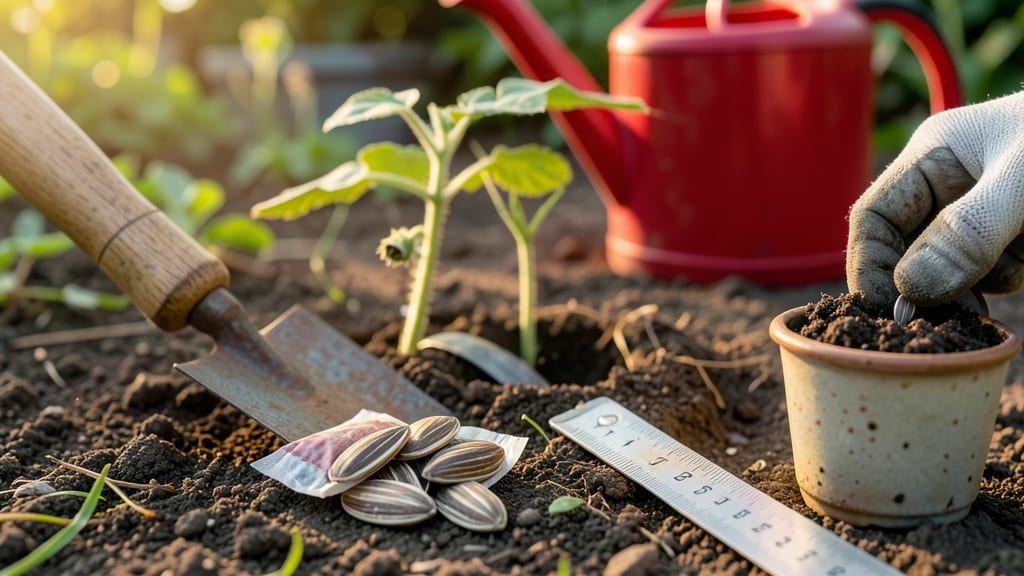
Planting sunflowers with the right number of seeds per hole is the game-changer between a patch of scraggly stalks and towering 🌻 giants that steal the show. Too many seeds mean competition for sunlight, while too few wastes your garden space—both mistakes can leave you disappointed by harvest time.
I’ve learned the hard way that spacing science matters just as much as soil prep. Whether you’re growing dwarf varieties for containers or giant sunflowers for cut flowers, the number of seeds per hole directly impacts stalk strength and yield.
Let’s break down the exact method that guarantees stronger plants and bigger blooms.
Most gardeners swear by planting 1-2 seeds per hole, but the real secret lies in depth and distance. Sunflowers need room to stretch their legs—literally—and proper spacing prevents overcrowding that leads to weak stems or disease. I’ll show you how to adjust for your sunflower type and garden size.
Ready to grow sunflowers that reach their full potential? By the end of this guide, you’ll know exactly how to plant for success—no guesswork, just science-backed results. Let’s get those seeds in the ground the right way!
Optimal sunflower seed spacing by variety: depth, distance, and density rules
Sunflowers thrive when planted with precision—not just in depth, but in how many seeds share a hole. I’ve found that most gardeners make one of two mistakes: either cramming too many seeds into tight spaces or spacing them too widely, both of which sabotage growth.
The truth? 1-2 seeds per hole is the golden rule, but the real magic happens when you pair that with the right depth and spacing for your sunflower variety.
Giant sunflowers need elbow room to support their 10-16 foot stalks, while dwarf varieties can huddle closer together. Even soil temperature plays a role—cool soil can delay germination, so timing matters just as much as technique.
Let’s dive into the exact measurements that’ll give you stronger stems and bigger blooms.
| Variety Type | Seeds Per Hole | Spacing (Inches) | Planting Depth | Row Spacing |
|---|---|---|---|---|
| Dwarf (2-4 ft) | 1-2 | 12-18 | 1 inch | 12-18 |
| Mid-Size (4-8 ft) | 1-2 | 24-30 | 1-2 inches | 24-30 |
| Giant (10-16 ft) | 1 | 30-36 | 2 inches | 36-48 |
For dwarf varieties, planting 1-2 seeds per hole with 12-18 inches between plants works perfectly. Their compact size means they can handle closer quarters without competing for sunlight. I’ve used this method in containers with great success—they’ll fill space quickly while still producing plump seed heads.
Mid-size sunflowers (like ‘Moulin Rouge’) need more breathing room. Space them 24-30 inches apart and plant 1-2 seeds per hole at 1-2 inches deep.
These varieties strike a balance between height and density, making them ideal for cut flower gardens where you want a full but not overcrowded display.
Giant sunflowers are the divas of the garden—they demand 30-36 inches between plants and only 1 seed per hole. Planting two seeds risks overcrowding, leading to weak, leaning stalks that snap in wind or rain.
I once tried planting two giant seeds in one hole for "insurance"—big mistake. The weaker seedling stole nutrients from the stronger one, and both ended up stunted and diseased.
Depth matters just as much as spacing. Sunflower seeds germinate best when planted 1-2 inches deep in soil that’s at least 55°F (13°C). If your soil is cooler, wait until temperatures rise or use a seedling heat mat to speed up germination.
Too shallow, and seeds dry out; too deep, and they struggle to surface.
Moisture is the final piece of the puzzle. After planting, keep the soil consistently moist but not soggy until germination (about 7-14 days). Once seedlings emerge, reduce watering slightly to every 3-5 days to encourage deep root growth. Overwatering leads to soft stems that can’t support heavy flower heads.
Pro tip: If you’re planting multiple rows, space them 24-48 inches apart depending on variety. This creates airflow that reduces powdery mildew risk—a common issue in dense sunflower patches. I’ve also found that staggering rows by 6-12 inches helps maximize sunlight exposure for all plants.
Remember, thinning is key. Once seedlings are 3-4 inches tall, snip the weaker one at the base with clean scissors. This might feel cruel, but it ensures the remaining plant gets all the nutrients it needs to grow tall and strong.
Skip this step, and you’ll end up with a forest of skinny, weak stalks.
With these spacing rules, you’ll grow sunflowers that reach their full potential—no more scraggly stalks or crowded patches. Happy planting! 🌻
Common sunflower planting mistakes that stunt growth (and how to fix them)
Even with rich soil and full sun, overcrowded sunflowers will still struggle to reach their full height. I’ve seen it happen too many times—seedlings fighting for space, stems leaning like drunks at last call, and flowers that barely open.
These issues almost always trace back to planting mistakes that seem small but have huge consequences.
The most critical error? Planting too many seeds per hole. While it might seem like more seeds equal more sunflowers, the reality is competition. Each seedling needs room to develop a strong taproot and sturdy stem.
When you cram seeds together, they’ll either compete aggressively or produce weak, spindly plants that snap in the wind.
Another common blunder is planting seeds too shallow or too deep. Sunflower seeds need just the right depth—too shallow, and they dry out; too deep, and they struggle to push through the soil.
Even experienced gardeners sometimes get this wrong, leading to poor germination rates or leggy seedlings that flop over.
⚠️ callout warning
Most gardeners think planting extra seeds ensures success, but sunflowers hate competition. Here’s the fix:
- 1-2 seeds per hole is ideal for most varieties
- Thin seedlings to 1 strong plant per hole when they’re 3-4 inches tall
- Use 6-12 inches between holes (depending on variety) to prevent overcrowding
Pro Tip: If you’re worried about germination, plant 2 seeds but mark the location so you can thin properly later!
Watch for these warning signs of poor spacing: leaves turning yellow at the base, stems leaning dramatically, or flowers that refuse to fully open. These are your sunflowers’ way of screaming, “Give me space!” The fix?
Thin your seedlings immediately—don’t wait until they’re established. The sooner you remove weak plants, the better your survivors will grow.
For giant varieties, give them even more room—18-24 inches between plants. These towering beauties need space to develop those massive flower heads without toppling over. I once planted ‘Mammoth’ sunflowers too close together, and they spent more energy leaning away from each other than growing upward.
The result? A jungle of weak stems instead of the 12-foot giants I’d hoped for.
If you’re growing sunflowers in containers or small spaces, choose dwarf varieties and space them 6-12 inches apart. Even then, monitor their growth closely. Sunflowers are resilient, but they’ll always perform best when given the right conditions.
With proper spacing, you’ll end up with straight, sturdy stalks and flowers that reach their full potential—no more sad, leaning sunflowers!