
Flowers
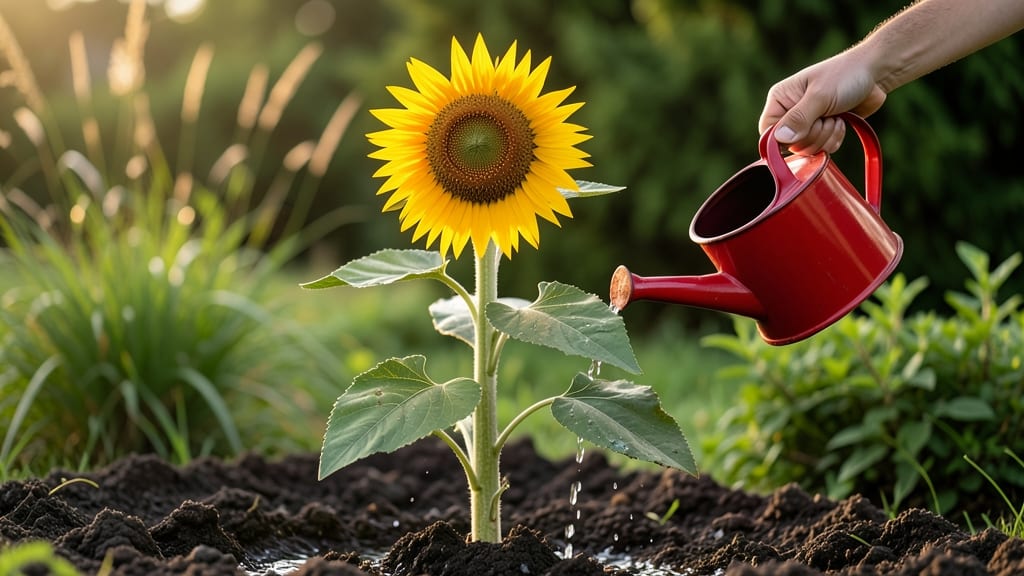
To grow thriving sunflowers 🌻 that reach their full towering potential, you don't need to drown them in water—but too little, and their vibrant blooms will never appear. The key lies in understanding exactly how much water these drought-resistant plants truly need, especially during their critical growth stages.
Most gardeners make one of two mistakes: either overwatering and causing root rot, or underwatering and watching their sunflowers wilt before they bloom.
I’ve tested the perfect watering schedule for USDA Zone 6a gardens, and the results speak for themselves—strong stems, vibrant blooms, and plants that handle dry spells like pros.
What you’ll discover here is a simple, science-backed approach that adapts to your climate and soil type. Whether you’re planting in April or dealing with a heatwave in July, these tips will keep your sunflowers hydrated without wasting a drop. Let’s make watering effortless and your sunflowers unstoppable.
From seedlings to mature giants, I’ll break down exactly when and how much to water—plus the telltale signs when you’re doing it wrong. By the end, you’ll know the secrets to growing sunflowers that drink deeply, stand tall, and bloom beautifully, no matter how dry your summer gets.


Sunflower watering schedule by growth stage: deep roots need smart hydration
Sunflowers may look like they’re built to handle tough conditions, but their deep root systems rely on consistent moisture—especially during critical growth stages. Too much water causes root rot, while too little stunts their towering growth. The key is deep, infrequent watering that encourages strong roots and drought resistance.
Young sunflowers need more frequent watering because their roots are still shallow, while mature plants can go longer between drinks. Climate plays a huge role: hot, dry summers demand more water, while cooler weather lets the soil retain moisture longer.
Let’s break down the exact schedule for each stage to keep your sunflowers thriving.
Pro Tip: Always water at the base of the plant in the morning to prevent fungal diseases and reduce evaporation. Avoid wetting the leaves, especially in humid conditions.
| Growth Stage | Watering Frequency | Amount per Session | Soil Moisture Check | Climate Adjustments |
|---|---|---|---|---|
| Seedling (0-2 weeks) | Every 2-3 days | ½ inch (1.25 cm) | Top 1 inch dry | Increase to daily in heatwaves |
| Vegetative (3-6 weeks) | Every 3-4 days | 1 inch (2.5 cm) | Top 2 inches dry | Reduce by 20% in rain |
| Flowering (7-10 weeks) | Every 4-5 days | 1.5 inches (3.8 cm) | Top 3 inches dry | Increase to every 2-3 days in 90°F+ |
| Mature (10+ weeks) | Every 5-7 days | 2 inches (5 cm) | Top 4 inches dry | Reduce to weekly in fall |
During the seedling stage, your sunflowers are most vulnerable. Their roots haven’t developed enough to reach deep water sources, so keep the soil consistently moist but never soggy. Use a moisture meter or stick your finger 1 inch deep—if it feels dry, it’s time to water.
As sunflowers enter the vegetative stage (3-6 weeks), they’ll start growing rapidly. This is when deep watering becomes crucial. Aim for 1 inch per week, but adjust based on rainfall. Drip irrigation or soaker hoses work best—they deliver water directly to the roots without wetting the leaves.
When buds form and flowers open (flowering stage), your sunflowers need the most water. This is their high-energy phase, and consistent moisture prevents buds from dropping. In arid climates, increase frequency to every 2-3 days, but always check soil moisture first.
Mature sunflowers (10+ weeks) are surprisingly drought-tolerant once established. Their deep roots can access water from lower soil layers, so reduce frequency to once a week unless your area experiences extreme heat. Mulching with straw or wood chips helps retain moisture and keeps roots cool.
Watch for wilting leaves—a common sign of thirst. If the leaves droop in the afternoon but perk up in the morning, your plant is likely just conserving water. However, if wilting happens early in the day or the stems feel hollow when squeezed, it’s a water emergency.
Overwatering is just as damaging as underwatering. Yellowing leaves or a musty smell at the base signal root rot. If you’re unsure, perform the finger test: push your finger 2-3 inches deep. If it’s damp, wait before watering again.
For container-grown sunflowers, the schedule shifts slightly. Smaller pots dry out faster, so water every 2-3 days regardless of the growth stage. Ensure containers have drainage holes to prevent waterlogging, which can kill your plants in days.
Signs of overwatering vs underwatering sunflowers: fix common mistakes before it’s too late
Sunflowers 🌻 are surprisingly resilient, but even their towering stems can’t withstand watering mistakes. The most common errors—overwatering and underwatering—often appear in subtle ways before your plants show dramatic distress. Learning to read your sunflowers’ visual cues and soil signals can save them before it’s too late.
Overwatering creates a soggy soil environment that suffocates roots, while underwatering leaves plants desperate for moisture. Both conditions share some symptoms—like wilting—but the timing and additional clues differ dramatically. Let’s decode these signs so you can adjust your watering routine before your sunflowers suffer permanent damage.
📌 Quick Fix: If you’re unsure whether to water, perform the finger test. Push your finger 2-3 inches deep—if it feels damp, wait. If it’s bone-dry, it’s time to hydrate. This simple check prevents 90% of watering mistakes.
Overwatering vs Underwatering: What to Watch For
Overwatering
- 🌱 Yellow leaves (especially lower ones)
- 🌱 Mushy stems when pressed
- 🌱 Musty soil smell at base
- 🌱 Fungal growth (white/pink mold)
- 🌱 Slow growth despite frequent watering
Underwatering
- 🌱 Dry, crispy leaf edges
- 🌱 Wilting in morning (not just afternoon)
- 🌱 Cracked soil around base
- 🌱 Dull, grayish leaves
- 🌱 Bud drop before flowering
Yellow leaves are the most misleading symptom because they appear in both overwatering and underwatering—but the location and texture reveal the truth. Overwatered sunflowers develop yellowing from the bottom up, while underwatered plants show yellowing on leaf edges first. Always check the soil before assuming!
Another critical distinction: wilting patterns. Healthy sunflowers may droop slightly in the afternoon heat but should recover by morning. If your plants wilt early in the day or fail to perk up after watering, it’s an underwatering emergency.
For overwatered plants, wilting happens after watering when roots can’t absorb oxygen from waterlogged soil.
When in doubt, examine the soil texture and root health. Gently dig around the base—healthy roots should be white or tan. If they’re brown, mushy, or smell foul, you’ve overwatered. For underwatered plants, roots will appear dry and brittle. Adjust your schedule immediately based on these findings.
Pro Tip: Mulch your sunflowers with 2-3 inches of straw or wood chips to regulate soil moisture. This simple step reduces evaporation by 30% and prevents extreme fluctuations that confuse your plants’ water needs. 🌱