
Watering
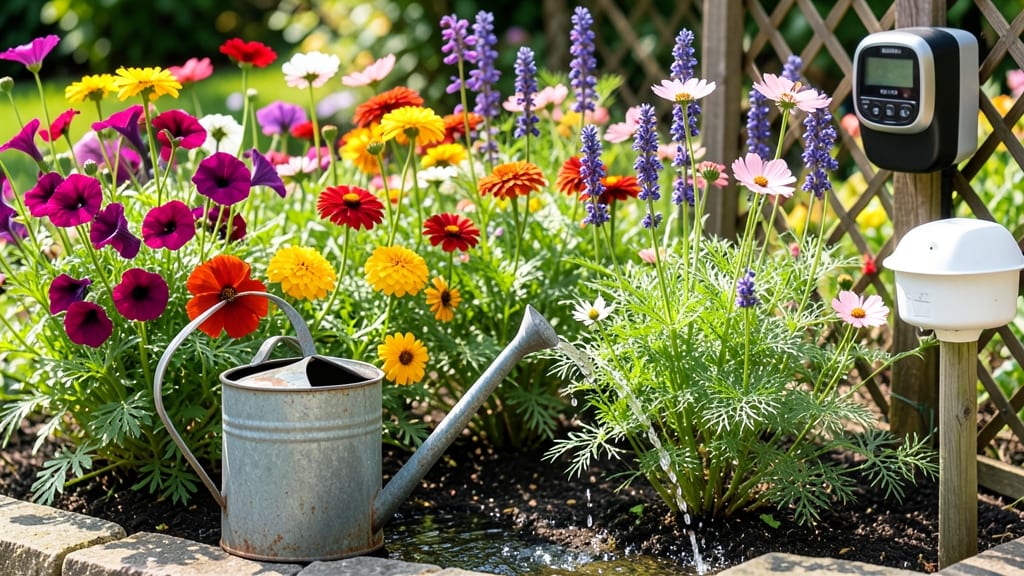
If you've ever walked past a wilting flower garden and wondered, "Why didn't they just water it more?"—you're not alone. The truth is, watering too much can be just as damaging as not enough, and the "right" frequency depends on more than just sticking your finger in the dirt.
Your 🌸 flower garden thrives on balance, but figuring out that sweet spot between soggy roots and thirsty petals can feel like guessing. What works for sun-loving roses in USDA Zone 6a might leave delicate annuals parched.
And let’s be honest—spring showers, summer heatwaves, and fall rains all play their own tricks on your watering schedule.
Here’s the good news: with a few simple adjustments based on plant type, weather, and soil, you can master the art of watering without the guesswork.
I’ll break down exactly how often to water—whether you’re dealing with drought-resistant lavender or moisture-loving hydrangeas—and how to spot when your flowers are begging for a drink (or screaming for a break).
Ready to transform your garden from "maybe next year" to "wow, look at these blooms"? Let’s dive into the seasonal watering secrets that’ll keep your flowers happy, healthy, and begging for more.
Watering frequency by flower type: a plant-specific schedule
One of the biggest mistakes I see in gardens is treating all flowers the same when it comes to water. Annuals like petunias need consistent moisture, while succulents like sedum practically scream "leave me alone!"
Understanding these differences saves time and keeps your garden thriving. Root depth plays a huge role—deep-rooted perennials store water differently than shallow-rooted bulbs.
Soil type matters too. Clay soil holds moisture longer than sandy soil, meaning you'll water less frequently. But even within flower types, varieties vary—geraniums thrive with regular watering, while lavender despises soggy roots. Let's break down exactly how often to water each category so you can tailor your routine.
| Flower Type | Water Frequency | Root Depth | Key Notes |
|---|---|---|---|
| Annuals (Petunias, Marigolds) | Every 1-2 days (daily in heat) | Shallow (6-12 inches) | Keep soil consistently moist; mulch helps retain water |
| Perennials (Coneflowers, Black-Eyed Susans) | Every 2-3 days (deep watering) | Moderate (12-24 inches) | Water at soil level, not leaves; drought-tolerant once established |
| Succulents (Sedum, Echeveria) | Every 10-14 days (or less) | Deep (varies by type) | Overwatering kills; check soil 2 inches down before watering |
| Bulbs (Tulips, Daffodils) | Every 7-10 days (spring only) | Shallow (6-10 inches) | Reduce watering after foliage dies back; store moisture for next year |
| Drought-Tolerant (Lavender, Yarrow) | Every 7-21 days | Deep (12+ inches) | Never soggy; water deeply but infrequently to encourage deep roots |
| Moisture-Loving (Hostas, Impatiens) | Every 1-3 days (keep soil damp) | Shallow (6-12 inches) | Mulch heavily to retain moisture; avoid water on leaves |
For annuals, think of watering like feeding a hungry pet—consistent and frequent. I once killed a bed of impatiens because I thought "a little water" was enough. They wilted dramatically within hours!
The key is to water deeply (1-2 inches) rather than just wetting the surface. This encourages roots to grow downward where they'll find stability.
Perennials are the Goldilocks of watering—not too much, not too little. Once established, many perennials like coneflowers can go weeks without water, but young plants need regular moisture. I test soil moisture by sticking my finger 2 inches down; if it's dry, it's time to water.
Pro tip: Water in the early morning to prevent fungal diseases that thrive in damp evening air.
Succulents and drought-tolerant plants are my favorite for low-maintenance gardens. Lavender, for example, will tell you when it's thirsty by drooping slightly—just add water and watch it perk up.
The biggest mistake here is assuming "drought-tolerant" means "never water." Even these plants need moisture during extreme heat or when newly planted. Always check the soil first before watering.
Bulbs are often overlooked after they bloom, but proper watering ensures next year's flowers. Tulips and daffodils need regular watering during their active growing phase (spring), but once foliage yellows, reduce watering completely.
This helps the bulb store energy for next season. I mark my calendar to stop watering bulbs by mid-summer to avoid rot.
Seasonal adjustments are critical. In summer, I water every other day for annuals, while in winter, I might only water bulbs once every two weeks. The soil temperature matters too—cool soil holds moisture longer than warm soil.
I use a simple trick: If the soil feels cool to the touch 2 inches down, it's holding moisture; if it's warm and dry, it's time to water.
Container gardens dry out faster than in-ground plants, so I adjust my schedule accordingly. Potted petunias might need watering daily in summer, while in-ground roses can go 3-4 days between waterings.
Always check the weight of the pot—if it feels light, it's dry. Mulching containers with straw or bark helps retain moisture and reduces evaporation.
One final tip: Observe your garden's microclimates. The south side of your house might be drier than the north side, and slopes dry out faster than low spots. I group plants with similar water needs together to create "water zones" in my garden.
This way, I can water entire sections at once rather than treating each plant individually.
Remember, the goal is consistency, not perfection. Even experienced gardeners adjust their schedules based on weather patterns. Keep a journal of what works in your garden—you'll soon develop a routine that keeps your flowers happy and healthy year after year. 🌸
Adjusting watering for climate zones: hot, dry, humid, and rainy regions
Your flower garden’s watering needs aren’t one-size-fits-all. A desert rose in Arizona thrives on sparse watering, while coastal hydrangeas in Oregon may drown without consistent moisture. Even within the same USDA hardiness zone, microclimates—like a sunny patio versus a shady border—demand different approaches.
The key is understanding how temperature, humidity, and rainfall interact with your plants’ natural rhythms.
Climate zones don’t just dictate watering frequency; they also influence seasonal adjustments. For example, summer heat in Zone 9 can turn soil into a dry powder, while winter dormancy in Zone 5 means cutting back to prevent root rot.
Let’s break down how to tailor your watering schedule to four major U.S. climates—and when to override the rules entirely.
| Climate Type | Watering Frequency (Summer) | Key Adjustments | Seasonal Tip |
|---|---|---|---|
| Hot & Dry (Desert: Zones 7-11) | Every 3-5 days (deep soak) | Water at dawn; mulch heavily | Reduce to bi-weekly in winter |
| Humid & Coastal (Zones 6-9) | Every 2-4 days (light misting) | Avoid overhead watering (fungus risk) | Increase airflow with pruning |
| Rainy & Monsoon (Zones 3-7) | Every 7-10 days (check soil first) | Use drip irrigation for precision | Skip watering during heavy rains |
| Temperate (Zones 4-8) | Every 4-6 days (adjust by plant) | Group plants by water needs | Winter: minimal watering only |
In hot, dry climates like those in USDA Zones 7-11, the goal is to encourage deep root growth by watering deeply but infrequently.
I’ve seen succulents and cacti thrive with once-weekly soakings in summer, while roses and peonies need every 2-3 days—but only if the top 2 inches of soil are dry. Pro tip: Use a moisture meter to avoid guessing.
For humid regions, like coastal Zone 9, the challenge shifts to preventing fungal diseases. Overwatering here can turn your petunias and impatiens into a moldy mess. Instead of sticking to a rigid schedule, I check for yellowing leaves or powdery mildew as red flags.
In these areas, drip irrigation or soaker hoses keep water at the roots where it belongs.
If you’re in a rainy or monsoon climate, like parts of the Pacific Northwest, your biggest enemy might be overwatering by accident. After a 1-inch rainfall, most perennials and bulbs don’t need supplemental water for 5-7 days.
I’ve learned to skip watering entirely during heavy downpours—unless your soil is sandy and drains too fast. Always dig a 1-inch-deep test to see if moisture lingers.
Finally, temperate zones offer the most flexibility, but even here, seasonal shifts matter. In summer, annuals like zinnias may need daily watering in containers, while perennials like coneflowers can stretch to every 5 days.
Come winter, I cut back dramatically, watering only when soil feels bone-dry—unless you’re growing winter-blooming pansies, which still need occasional moisture.
Remember: climate isn’t the only variable. Soil type, plant maturity, and even container size tweak these guidelines. Start with the rules above, then observe your garden. If leaves curl or flowers wilt by noon, it’s time to adjust—no schedule is set in stone. 🌿