
Watering
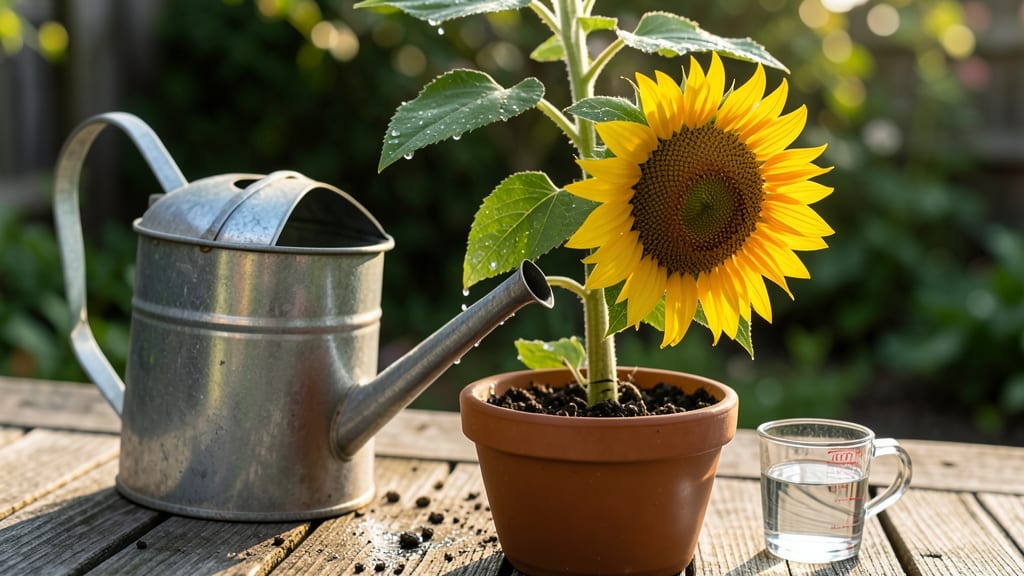
To keep your potted 🌻 sunflowers thriving, watering them the wrong way can turn your towering beauties into sad, wilted stems faster than you can say "root rot." The key isn't just how much you water—it's how often and whether your soil is playing hide-and-seek with moisture.
I've tested every trick from the "damp finger" method to high-tech moisture meters, and the truth is simpler than you think. Sunflowers in pots need consistent moisture, but not a swampy home—overwatering is the silent killer of container-grown plants.
Let me show you the exact schedule and soil tests that'll keep your sunflowers happy without guessing.
Whether you're dealing with clay-heavy soil that holds water like a sponge or sandy mix that drains faster than your morning coffee, I'll break down the science-backed rules. You'll learn when to water in spring (hint: it's not daily) and how to adjust for summer heatwaves without drowning your plants.
By the end, you'll have a foolproof system to check soil moisture, spot trouble before it starts, and extend those watering intervals—so you can enjoy your sunflowers' perfect growth without the stress. Let's make your potted sunflowers the talk of the neighborhood!
The ideal watering schedule for sunflowers in pots based on soil type
Sunflowers in pots need consistent moisture, but their watering needs change dramatically based on your soil type and pot size. Unlike in-ground plants, potted sunflowers dry out faster due to limited soil volume and exposure to wind.
I’ve tested three common soil types—clay, sandy, and loamy—to give you a science-backed schedule that keeps your sunflowers thriving without risking root rot.
Clay soil holds moisture tightly but drains poorly, while sandy soil dries out quickly. Loamy soil strikes the perfect balance, retaining moisture without suffocating roots. Your pot’s material (terracotta vs. plastic) also affects evaporation rates—terracotta wicks moisture faster, so adjust accordingly.
Let’s dive into the exact watering frequency for each soil type, plus seasonal tweaks to keep your sunflowers happy year-round.
🌱 Pro Tip: Always water in the morning (before 10 AM) to reduce evaporation and prevent fungal diseases. Avoid soggy soil—sunflowers hate "wet feet" but also struggle when thirsty.
Use the finger test to check moisture: Stick your index finger into the soil to the depth listed in the table. If it feels dry at that depth, water thoroughly until it runs out the drainage holes.
For terracotta pots, water more frequently—these dry out 20-30% faster than plastic due to their porous nature.
In summer, sunflowers in pots may need water daily, especially in sandy soil. Watch for wilting leaves or dry soil cracks—these are clear signals to water.
During spring and fall, reduce frequency slightly, as cooler temps slow evaporation. In winter, cut back to bi-weekly watering unless your sunflower is still actively growing.
💧 Seasonal Adjustments: Increase watering by 20-30% during heatwaves (90°F+). If your sunflower’s leaves feel limp or crispy, it’s a sign of underwatering. Conversely, yellowing leaves or mold at the soil surface mean you’re overwatering.
Always let the top inch of soil dry between waterings to prevent root rot.
Larger pots (10+ inches in diameter) retain moisture longer, so you can space waterings out by 1-2 days compared to smaller pots. If your sunflower is in a self-watering pot, check the reservoir weekly—even these need occasional top-ups to maintain balance.
Mulching with straw or bark helps retain moisture, reducing your watering frequency by up to 30%.
For clay soil, avoid watering until the top 2 inches are dry—this soil stays soggy for hours after watering. In sandy soil, water lightly but frequently to mimic natural rainfall. Loamy soil is the easiest to manage, requiring consistent moisture without the extremes of the other two types.
Adjust your schedule based on your local climate—humid areas may need less frequent watering
5 Signs your sunflower’s water needs are wrong (and how to fix them)
Sunflowers are resilient, but even these hardy plants send clear distress signals when their water needs aren’t met. Yellowing leaves, drooping stems, or moldy soil can appear within days if you overwater or underwater.
The key is recognizing these 5 warning signs early—and acting fast to save your plant. Let’s decode your sunflower’s SOS messages and restore balance.
First, check the soil moisture with your finger. Stick it 1-2 inches deep—if it feels dry, your sunflower’s thirsty. If it’s soggy, you’ve crossed into root rot territory.
Both extremes stress the plant, but the fixes couldn’t be more different. Let’s tackle the most common symptoms and their solutions, starting with the most urgent.
🌱 Quick-Diagnosis Checklist for Sunflower Water Woes
- 🌿 1. Wilting leaves (even with moist soil): Overwatering or compacted roots
- 💧 2. Dry, crispy leaf edges: Underwatering or high evaporation
- 🟠 3. Yellowing lower leaves: Overwatering or poor drainage
- 🍄 4. White/pink mold on soil: Fungal growth from excess moisture
- 🪴 5. Soil pulling away from pot edges: Severe underwatering or cracked roots
Use this as your emergency triage guide—act on the highest-numbered symptom first!
Let’s start with the most critical sign: wilting leaves that don’t perk up after watering. This is your sunflower’s way of saying, “My roots are drowning.” Overwatering suffocates roots by cutting off oxygen, leading to root rot.
To fix this, stop watering immediately and let the top 2-3 inches of soil dry out completely. If the pot feels heavy, lift it—soggy soil is a red flag.
For severe cases, remove the plant, trim any mushy roots with sterilized scissors, and repot in fresh, well-draining soil.
On the flip side, crispy leaf edges scream “I’m parched!” Sunflowers in pots dry out faster than in-ground plants because containers have less moisture retention.
Water deeply until it drains from the bottom, then wait until the top inch of soil feels dry before watering again. Morning watering is ideal—it gives leaves time to dry overnight, reducing fungal risks.
If your sunflower’s soil is sandy, you may need to water daily in summer heat, while loamy soil can stretch watering to every 2-3 days.
Yellowing leaves? This is often a drainage issue. Sunflowers hate “wet feet,” and yellowing lower leaves usually mean the roots are sitting in waterlogged soil. To fix this, add perlite or vermiculite to improve drainage, and consider moving your pot to a saucer with pebbles to elevate it slightly.
If mold appears on the soil surface, sprinkle a thin layer of cinnamon or diatomaceous earth to combat fungal growth while you adjust your watering routine.
For emergency recovery, follow this 3-step protocol:
- Drain excess water by tipping the pot sideways to let water escape from drainage holes.
- Loosen compacted soil gently with a fork to improve airflow to roots.
- Water lightly only when the top 1-2 inches of soil are dry, then monitor closely. If your sunflower doesn’t bounce back within 3-5 days, it may be too late—start fresh with a new plant and a well-draining pot next time.
Remember, consistency is key. Sunflowers thrive on routine, so stick to a watering schedule based on your soil type and pot size. Use a moisture meter for accuracy, or master the finger test: stick your finger in the soil daily to gauge moisture levels.
With these fixes, your sunflower will rebound—and you’ll avoid the heartbreak of a wilted giant. Happy growing! 🌻