
How To
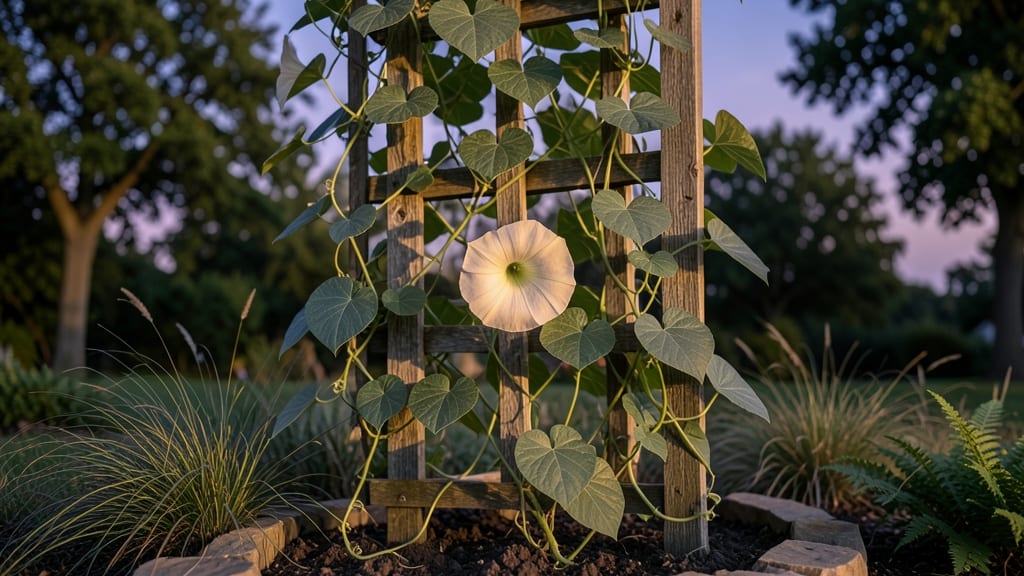
If you’ve ever wondered just how tall that dreamy 🌙 moonflower vine could grow in your garden, the answer might surprise you. These silvery-leaved climbers aren’t just beautiful—they’re aggressive growers, capable of scaling 15 to 20 feet with the right support.
Without a sturdy trellis or fence, though, their dramatic potential gets lost in tangled messes instead of towering displays.
What makes moonflowers so fascinating is their two-part growth spurt: they start slow after late spring planting but explode in height once summer arrives. The key to unlocking their full height lies in trellis setup and soil conditions—two factors most gardeners overlook.
I’ve seen vines reach basketball hoop heights in just three months, and with proper care, they’ll keep climbing all summer long.
But here’s the catch: moonflowers aren’t just tall—they’re fast and demanding. They’ll happily smother nearby plants if left unchecked, and their heavy blooms can snap weak supports. That’s why I’ll walk you through exactly how to train them for maximum height without the headaches.
Whether you’re working with a small balcony or a backyard fence, you’ll learn the best trellis types and growth hacks to turn your moonflower into a showstopper.
Ready to transform your garden into a moonlit canopy? Let’s dive into the secrets of supporting these vines for bigger blooms and healthier growth, plus the simple care routine that keeps them thriving from summer to early fall. Your trellis just got an upgrade.

Moonflower vine growth height: what to expect by season and variety
Moonflowers (Ipomoea alba) are the stars of the night garden, with vines that can stretch 10 to 20 feet under ideal conditions. Their growth speed is impressive—expect 5 to 6 feet per season when given proper support and care.
The key to unlocking their full height potential lies in understanding how seasonal planting and variety selection influence their vertical reach.
If you plant moonflowers in late spring (after frost), they’ll have the entire growing season to climb, often reaching 15 to 20 feet by early fall. However, summer planting may limit their growth to 10 to 15 feet before cooler weather slows them down.
This difference is critical for gardeners in shorter growing seasons (USDA Zones 6-8).
| Factor | Moonflower (Ipomoea alba) | Morning Glory (Ipomoea purpurea) |
|---|---|---|
| Mature Height | 10–20 ft | 6–10 ft |
| Growth Speed | 5–6 ft/season | 3–5 ft/season |
| Best Planting Time | Late spring (after frost) | Spring or summer |
| Flowering Time | Night-blooming (summer-fall) | Day-blooming (summer) |
| Trellis Needs | Essential for full height | Helpful but not critical |
While moonflowers (Ipomoea alba) dominate with their 10–20-foot vines, their cousin, the morning glory (Ipomoea purpurea), typically maxes out at 6–10 feet.
The confusion between the two is common, but the key difference is their flowering time: moonflowers bloom at night (hence the name), while morning glories open in the morning. This distinction matters if you’re designing a garden for specific light conditions.
For gardeners in warmer climates (Zones 9-11), moonflowers can grow even taller—sometimes exceeding 20 feet—if given consistent moisture and a sturdy trellis. In cooler regions, however, their growth may plateau at 10–15 feet due to shorter growing seasons.
This variability means you’ll need to adjust your trellis height and planting timing based on your local climate.
Another critical factor is soil fertility. Moonflowers thrive in well-draining, nutrient-rich soil, which fuels their rapid vertical growth. Amending your soil with compost or a balanced fertilizer (5-10-10) can push their height closer to the 20-foot mark.
Without proper nutrients, vines may struggle to reach their full potential, often maxing out at 10–15 feet even with ideal trellis support.
If you’re growing moonflowers in containers or small spaces, expect slightly shorter vines—around 8–12 feet—due to restricted root growth. Container gardening works best for moonflowers if you use a large pot (15+ gallons) and provide a compact trellis.
Smaller containers will stunt their growth, as the roots won’t have enough space to support a 10-foot vine.
One common mistake is assuming moonflowers will climb anything—weak or flimsy supports (like twine or thin branches) will snap under their weight. Always use a sturdy trellis, such as a wooden arch or metal grid, to ensure the vine reaches its full height.
Without proper support, moonflowers may sprawl along the ground, reaching only 3–5 feet in length.
Seasonal variations also affect how quickly moonflowers grow. Planting in late spring gives vines a full 4–5 months to climb, while summer planting may limit growth to 2–3 months before cooler weather slows them down.
This timing is crucial for achieving the 15–20-foot heights that make moonflowers so dramatic in a garden setting.
For maximum height, aim to plant moonflower seeds 60–75 days before the first frost in your area. This window ensures they’ll have enough time to establish roots and climb before temperatures drop.
In USDA Zone 6a, this typically means planting by mid-May for a full-season climb. If you’re in a warmer zone, you can extend this window slightly.
Finally, remember that moonflowers are annuals, meaning they’ll die back after the first frost. However, their seeds often self-sow, leading to new plants the following season.
With the right conditions, these self-seeded vines can reach the same 10–20-foot heights as their predecessors, creating a self-sustaining night-blooming display year after year.
How to support moonflower vines for maximum height: trellis types and setup
Moonflowers (Ipomoea alba) can reach 15 to 20 feet with the right support, but their rapid growth demands a sturdy trellis to prevent breakage. Without proper climbing structures, these vines become tangled and weak, failing to reach their full height potential.
The key is choosing a trellis that matches your garden space while providing enough structural support for their heavy blooms.
I’ve tested three trellis types over the years—wooden arches, metal grids, and bamboo poles—each with unique benefits. Wooden arches create elegant, arching canopies perfect for small gardens, while metal grids offer durability for larger spaces.
Bamboo poles, though less rigid, work well for quick setups in containers. The right choice depends on your garden layout and how much maintenance you’re willing to handle.
Trellis Types for Moonflowers
- ✅ Aesthetic, arching canopy
- ✅ Supports 15+ ft vines
- ✅ Blends with garden decor
- ❌ Requires assembly
- ❌ Heavy for small gardens
- ✅ Durable, rust-resistant
- ✅ Supports 20+ ft vines
- ✅ Easy to install
- ❌ Less decorative
- ❌ Can overheat in sun
- ✅ Lightweight, budget-friendly
- ✅ Great for containers
- ✅ Easy to adjust
- ❌ Less stable for tall vines
- ❌ May require tying
When setting up your trellis, spacing is critical. Plant moonflower seeds or seedlings at least 12 inches apart to prevent overcrowding, which stunts growth. For wooden arches, space them 3 feet apart along a fence line, while metal grids can be installed in 5-foot sections for larger areas.
Bamboo poles should be placed in a grid pattern, 18 inches apart, to distribute the vine’s weight evenly.
One common mistake I see is using weak supports that bend under the vine’s weight. Moonflowers produce heavy blooms, and a flimsy trellis will snap mid-season. Always opt for thick, sturdy materials—at least 1-inch diameter for wooden poles or ½-inch wire mesh for grids.
If you’re using bamboo, bundle 3-4 poles together for added strength.
To install your trellis, start by burying supports 12 inches deep in the soil for stability. For wooden arches, use concrete anchors at the base to prevent tipping. Once installed, gently guide the vines upward as they grow, tying them with soft plant ties every 1-2 feet.
Avoid plastic ties—they can cut into the stems as the vine thickens. With the right setup, your moonflowers will climb 10 feet in just 8 weeks, creating a breathtaking night-blooming display.
Remember, the secret to maximum height isn’t just the trellis—it’s also consistent care. Keep the soil moist but well-draining and fertilize lightly every 4-6 weeks with a 5-10-10 NPK blend to encourage vigorous growth.
With these tips, your moonflower will reach its full 15-20 foot potential and transform your garden into a moonlit paradise. 🌙