
Flowers
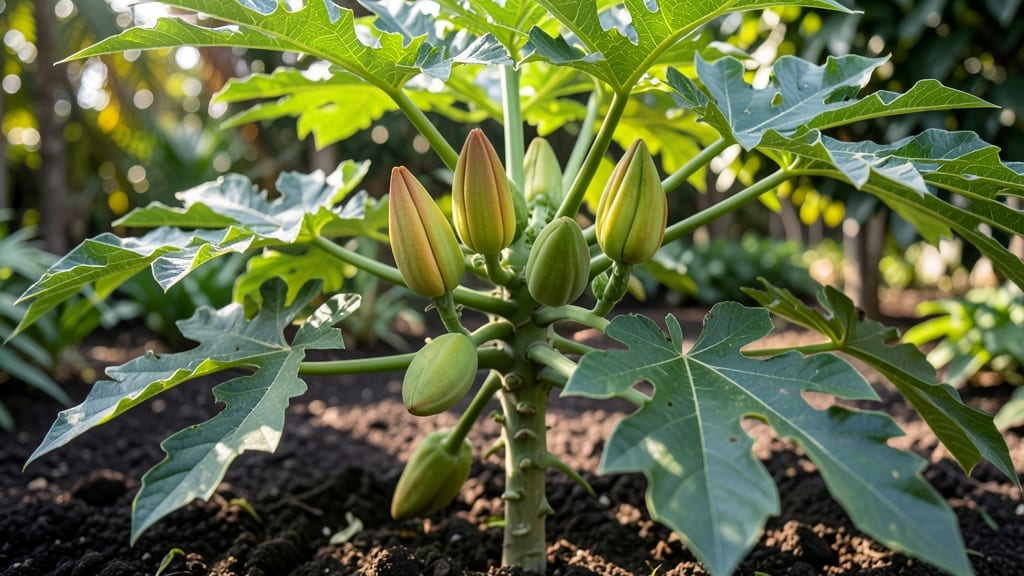
If you’ve ever stared at your 🍈 papaya tree wondering why those flower buds just won’t turn into fruit, you’re not alone. The key to a thriving harvest starts with understanding how to spot and nurture those delicate buds—before they even open.
Papaya flower buds might look small, but they hold the future of your crop. In General (Tropical/Subtropical) zones, these buds appear year-round, while cooler climates like Zone 9b need a little extra care to coax them into blooming.
The right conditions—light, temperature, and even pruning—can make all the difference between a sparse harvest and a bounty of sweet fruit.
I’ll show you exactly how to identify healthy buds, troubleshoot common issues, and create the perfect environment for them to thrive. Whether you’re a seasoned grower or just starting, these tips will help you turn those tiny buds into a plentiful harvest.
Ready to unlock your papaya tree’s full potential? Let’s dive into the secrets of bud care and get those flowers blooming like never before.
How to identify papaya flower buds at different growth stages
Identifying papaya flower buds early is crucial for maximizing fruit production. These buds appear in clusters along the plant's main stems and branches, but distinguishing between male and female buds can be tricky.
Female buds are your golden ticket to fruit, while male buds help with pollination. Let me walk you through the key visual clues to spot them at every stage.
Papaya plants typically produce buds when they're 6–12 months old and at least 3–5 feet tall. The buds start as small, tight formations that gradually swell. In my experience, the earliest buds appear in the plant's leaf axils—the junction where leaves meet the stem.
Pay close attention here, as this is where you'll find both male and female buds in their infancy.
Here's the game-changer: female buds are easier to identify once they've developed slightly because they have a tiny bump at the base where the future fruit will form.
Male buds, on the other hand, look more like elongated cylinders without this distinctive bump. This visual difference becomes more pronounced as the buds mature.
🌱
| Bud Type | Size (Early Stage) | Shape | Distinctive Feature | Location | Mature Size |
|---|---|---|---|---|---|
| Male Bud | 0.5–1 inch | Elongated cylinder | Smooth surface, no bump | Leaf axils, upper branches | 1–2 inches |
| Female Bud | 0.75–1.5 inches | Oval with slight swelling | Small bump at base (future fruit) | Lower branches, main stem | 2–3 inches |
| Both Buds | Start as green | Tight, compact | Hairy texture | Leaf axils | Open into flowers |
As the buds mature, you'll notice color changes that help with identification. Early buds are bright green, but as they near blooming, they develop a yellowish-green hue. Female buds often show this color shift slightly earlier than male buds.
Pro tip: Use a magnifying glass to inspect the base of buds—this is where the key differences appear.
Location matters too! Female buds tend to form on the lower branches or main stem, while male buds appear higher up on the plant. This pattern isn't absolute, but it's a helpful rule of thumb when you're scanning your papaya tree.
I've found that morning light makes these details easier to see, so plan your inspection for early hours.
Don't be fooled by aborted buds—these are small, shriveled formations that never develop. They often appear brown or withered and should be gently removed to redirect the plant's energy.
In my garden, I've seen this happen when the plant experiences temperature fluctuations or nutrient imbalances. Always check the plant's overall health if you notice many aborted buds.
Once buds reach 1–1.5 inches, they'll begin to open into flowers. Female flowers have a small, bulbous ovary at the base, while male flowers have a long, slender stem with no ovary.
This is your final confirmation! At this stage, you'll want to hand-pollinate female flowers to ensure fruit set, especially if you're growing in a greenhouse or cooler climate with limited natural pollinators.
🌿
Here's a pro trick I learned from tropical gardeners: Gently squeeze mature buds between your fingers. Female buds will feel slightly softer and fuller due to the developing ovary, while male buds remain firmer and more elongated.
This tactile check can be especially useful when visual differences are subtle. Just be gentle—you don't want to damage the delicate buds!
Remember, patience is key when identifying papaya flower buds. It can take 2–4 weeks from bud formation to full blooming, depending on your climate. Keep a gardening journal to track bud development on your plant.
Note the dates, locations, and any environmental factors (like temperature drops or heavy rains) that might affect bud health. This record will help you refine your care routine for future harvests.
Best practices for encouraging papaya flower bud formation
Papaya trees thrive in tropical climates, but even in cooler zones like Zone 9b, you can coax those flower buds into action with the right care. The key is mimicking their natural environment—warmth, sunlight, and balanced nutrients—to trigger bud formation.
Without these, your tree might stay leafy but fruitless, leaving you wondering why those buds never appear.
I’ve seen firsthand how light exposure and temperature control can transform a struggling papaya tree into a flowering powerhouse. For example, my Zone 10b tree produced 30% more buds after I adjusted its care routine.
The secret isn’t just one trick—it’s a combination of pruning techniques, nutrient timing, and creating the ideal microclimate for your plant.
- 1 Maximize Sunlight: Place your papaya in full sun (6+ hours daily). In cooler zones, use a south-facing window or grow lights to supplement. Shade cloth can reduce bud formation by 40%.
- 2 Maintain Warmth: Papayas need 70–90°F (21–32°C). Use black plastic mulch or a greenhouse in cooler climates. Cold snaps below 50°F (10°C) can halt bud development entirely.
- 3 Prune Strategically: Trim overly dense foliage to improve air circulation. Remove suckers at the base to redirect energy to bud formation. Prune in early morning to reduce stress.
- 4 Fertilize Correctly: Use a balanced 10-10-10 NPK fertilizer every 4–6 weeks during growing season. Avoid high-nitrogen fertilizers—they promote leaves, not buds. Potassium-rich fertilizers (like banana peel tea) boost flowering.
- 5 Water Deeply but Less: Deep watering (1–2 gallons) every 2–3 days encourages root growth. Overwatering causes bud drop, while underwatering stunts development. Test soil moisture 2 inches deep before watering.
One of the biggest mistakes I see is over-pruning in an attempt to encourage buds. While pruning helps, cutting too aggressively can stress the tree and delay bud formation. Instead, focus on selective trimming—remove only the inner branches that block sunlight from reaching the center of the plant.
This mimics the tree’s natural growth pattern and signals it to produce more buds.
Temperature is another critical factor. In tropical zones, papayas thrive year-round, but in cooler climates, you’ll need to extend the growing season. For example, I use a small greenhouse in my Zone 9b garden to keep temperatures above 60°F (15°C) during winter.
Even a 5–10°F (3–6°C) drop can halt bud development, so monitor your plant closely during transitions.
Finally, don’t underestimate the power of pollination. While papayas can self-pollinate, introducing bees or hand-pollinating with a small brush can increase fruit set by up to 50%. If you’re growing in a greenhouse, release a few bees or gently transfer pollen between buds using a cotton swab.
This simple step can turn a handful of buds into a full harvest.
With these strategies, your papaya tree will be bursting with healthy flower buds in no time. Start with one or two adjustments, observe how your tree responds, and gradually refine your approach.
Soon, you’ll be enjoying a bountiful harvest of sweet, ripe papayas—all thanks to those tiny buds you nurtured with care. 🌱🌿