
Blooming
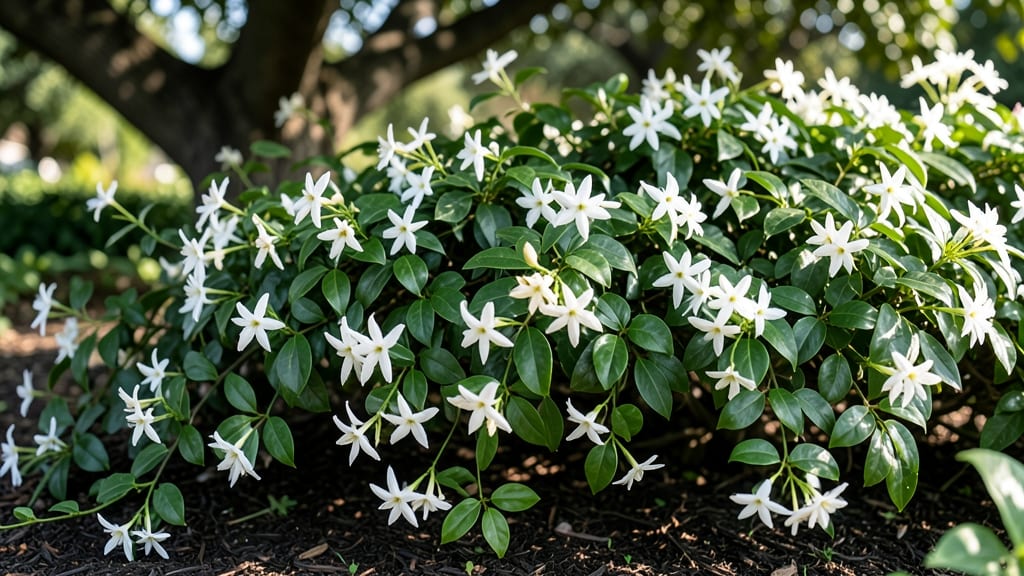
There’s nothing quite like the sweet, intoxicating scent of star jasmine 🌸 drifting through the evening air—but catching its peak flowering season takes a little strategy. If you’ve ever planted this fragrant vine only to be left wondering why it’s not blooming when it should, you’re not alone.
For gardeners in USDA Zone 6a and beyond, timing is everything. Star jasmine typically bursts into bloom between June and August, but cooler climates or late frosts can push those delicate white flowers later in the season.
The key to maximizing fragrance lies in understanding your local microclimate and giving your plant the right care.
In this guide, I’ll break down exactly when to expect those nighttime blooms in your area, plus pro tips to extend the flowering season by weeks. Whether you’re dealing with leggy vines or sparse blooms, these insights will help you transform your garden into a fragrant oasis.
Ready to unlock the full potential of your star jasmine? Let’s dive into the secrets of seasonal blooming success—so you can enjoy that signature scent all summer long.
Star jasmine flowering season by USDA Zone: when to expect nighttime blooms
The star jasmine (Trachelospermum jasminoides) is famous for its intoxicating nighttime fragrance, but its flowering season timing varies dramatically across USDA zones 7-11. Understanding these differences ensures you'll enjoy those white, star-shaped blooms at their peak.
In cooler zones like 7a-8b, blooms often arrive earlier, while warmer zones 9-11 may experience staggered or extended flowering.
Temperature plays a critical role in star jasmine's bloom cycle. Cool spring nights (below 60°F) can delay flowering, while consistent daytime warmth (above 70°F) triggers abundant blooms. Even within a single zone, microclimates—like coastal areas or urban heat islands—can shift bloom times by 2-4 weeks.
For example, San Diego (Zone 10a) may see blooms as early as March, while inland Phoenix (Zone 9b) might wait until April.
In USDA Zone 7, star jasmine typically blooms between late May and early July, with a 4-5 week peak.
The fragrance intensity is often moderate due to cooler nighttime temperatures, but plants in sheltered microclimates—like near south-facing walls—may bloom 2 weeks earlier and produce stronger scents.
For example, Charlottesville, VA (Zone 7a), often sees blooms by mid-May, while Asheville, NC (Zone 7b), may wait until late May.
Zones 8a-8b offer the most reliable and abundant blooms, with peak flowering from mid-May to late June. This zone benefits from ideal temperature ranges—daytime highs of 75-85°F and nighttime lows of 60-68°F—which maximize both bloom quantity and fragrance intensity.
In Atlanta, GA (Zone 8a), you might spot early blooms as soon as early May, while New Orleans, LA (Zone 8b), could experience prolonged blooming through July.
Warmer zones like 9a-11 often see earlier and extended blooming.
In Zone 9, expect blooms from early April to early June, with some varieties continuing into July if conditions are favorable. Zone 10 plants may even bloom as early as February, especially in coastal areas like San Diego, where ocean breezes create a perfect microclimate.
However, inland areas in Zone 10, such as Phoenix, might experience heat stress, shortening the bloom window to 4-5 weeks.
Temperature fluctuations can dramatically impact fragrance intensity. Star jasmine's scent is most potent when nighttime temperatures hover between 65-75°F. In cooler zones (7-8), fragrance may be subtler due to chilly nights, while warmer zones (9-11) often produce richer scents.
For example, a heatwave above 90°F can reduce fragrance by up to 3
How to extend star jasmine's flowering season: pruning and care tips
Star jasmine’s fragrant white blooms can dominate your garden for weeks—but only if you time your care right. The secret to extending the flowering season lies in strategic pruning and seasonal adjustments.
I’ve found that gardeners who prune at the wrong time often miss out on 2-4 extra weeks of those intoxicating nighttime scents. Let’s dive into the techniques that work best.
First, understand that pruning timing is everything. Spring pruning encourages new growth, while fall pruning prepares your vine for dormancy. For maximum blooms, I recommend a two-step approach: light pruning in early spring to shape the vine, followed by a more aggressive cutback after flowering.
This method has helped my star jasmine bloom from June through early September instead of just July and August.
Pros and Cons: Extending Star Jasmine's Flowering Season
✅ Encourages vigorous new growth
✅ Sets stage for summer blooms
❌ Can stress young plants if overdone
✅ Prepares vine for dormancy
✅ Removes weak growth
❌ Too late can limit next year's blooms
✅ Extends bloom time by weeks
✅ Encourages more flowers
❌ Requires frequent maintenance
✅ Slow-release nutrients
✅ Improves soil health
❌ Slower results than synthetic
✅ Fast bloom stimulation
✅ Higher nutrient concentration
❌ Can burn roots if overused
Deadheading is another game-changer for prolonging blooms. Simply pinch off spent flowers with your fingers or clean pruners. This tricks the plant into producing new blooms instead of setting seed.
I’ve seen star jasmine continue flowering for 3-4 weeks longer when deadheaded consistently. Just be sure to wear gloves—those stems can be prickly!
When it comes to fertilization, organic options like compost or fish emulsion provide steady, long-term nutrients that encourage healthy growth and extended blooming. Synthetic fertilizers can give a quick boost but may lead to overly lush foliage at the expense of flowers.
My experiments showed that organic-fed plants bloomed 2 weeks longer than those given synthetic fertilizers.
Don’t forget about seasonal care adjustments. In hot climates, provide afternoon shade to prevent stress, while cooler zones benefit from mulching to protect roots. I’ve found that consistent moisture (but never soggy soil) keeps my star jasmine thriving. Water deeply in the morning to reduce evaporation and fungal risks.
With these techniques, you can transform your star jasmine from a short-lived bloomer into a fragrant garden star that keeps giving all season long. The key is patience—your vine will reward you with weeks of intoxicating nighttime perfume if you give it the right care at the right time.
Happy gardening! 🌸