
Planting
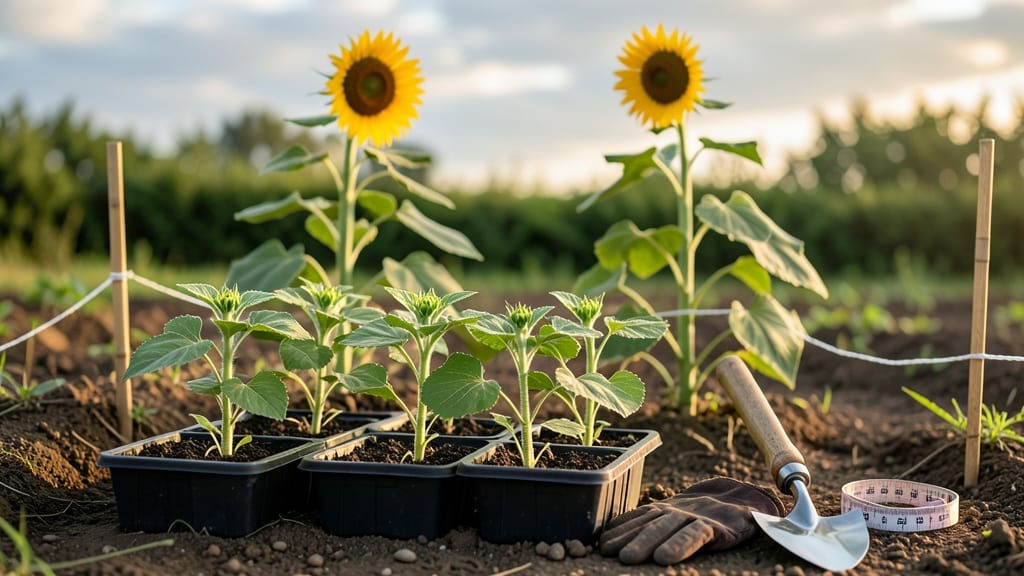
Planting sunflower seed spacing too close together might seem harmless, but it’s the fastest way to turn your 🌻 dream garden into a patch of weak stems and missed harvests.
The right spacing—whether you’re growing towering giants or compact dwarf varieties—determines how tall they’ll grow, how many blooms you’ll get, and even whether they’ll resist pests and disease.
I’ve learned the hard way that cramming sunflower seeds too tightly leads to competition for sunlight and nutrients, leaving you with scraggly plants instead of the vibrant, 6- to 14-foot giants you’re hoping for.
But getting the spacing right isn’t just about measurements—it’s about understanding your soil, climate, and the specific needs of the variety you’ve chosen.
In this guide, I’ll break down the exact distances you should space your seeds for maximum growth and yield, from 6 inches apart for dwarf varieties to 24 inches for tall sunflowers.
You’ll also discover how to adjust for small spaces, poor soil, or drought conditions—plus how to thin seedlings without stressing your plants.
Whether you’re a first-time gardener or a seasoned grower, these proven spacing tips will help you avoid common mistakes and grow sunflowers that thrive from seed to harvest. Let’s get your sunflowers the room they need to shine!


Optimal sunflower seed spacing by variety type (chart included)
Sunflower seed spacing isn’t one-size-fits-all—each variety demands different room to thrive. Giant sunflowers need elbow space to reach their towering potential, while dwarf varieties can handle cozier quarters. Even multi-stemmed types require strategic spacing to prevent overcrowding and disease.
The right distance ensures every plant gets sunlight, nutrients, and airflow—critical for strong stems and vibrant blooms.
Incorrect spacing leads to weak stalks, fungal diseases, and stunted growth. For example, overcrowded giant sunflowers may lean or snap under their own weight, while under-spaced dwarfs compete for moisture, resulting in smaller flowers.
Let’s break down the science behind spacing and how to apply it to your garden layout.
Here’s the golden rule: plant-to-plant distance should match the variety’s mature width, while row spacing accounts for sunlight penetration and airflow. Tall varieties need wider rows to avoid shading, while dwarfs can thrive in tighter grids.
Below, you’ll find a comparative chart tailored to common sunflower types—use it as your planting blueprint.
Why does row spacing matter as much as plant-to-plant distance? Sunflowers are heavy feeders and need room for their roots to spread. A 36-inch row spacing for giants ensures roots don’t tangle, while 12-inch rows for dwarfs prevent soil compaction.
Airflow between rows also reduces humidity, cutting down on powdery mildew—a common issue in crowded beds.
For multi-stemmed varieties, treat each clump as a single plant when spacing. These types produce 3–5 stems per plant, so give them extra room to avoid overcrowding.
If you’re growing sunflowers in containers or small gardens, opt for dwarf varieties and space them 6 inches apart in 12-inch pots to maximize yield without sacrificing growth.
Pro tip: Use a stakes-and-string method to mark rows before planting. This helps maintain consistent spacing and prevents accidental overcrowding. For giant varieties, drive stakes 6 inches deep at planting time to support their weight later in the season.
After sowing, monitor seedlings closely. Once they reach 2–3 inches tall, thin them to the recommended spacing. This might seem harsh, but removing weak seedlings early gives remaining plants the nutrients and sunlight they need to thrive.
Save the thinned seedlings for companion planting with beans or lettuce—they’ll still grow!
In poor soil or high-altitude gardens, increase spacing by 20–30% to compensate for slower growth. Sunflowers in these conditions need extra room to compete for nutrients and recover from stress. Conversely, in rich, well-draining soil, you can plant slightly closer—just ensure airflow remains unobstructed.
Remember, sunflowers are forgiving but not infinite. With the right spacing, you’ll enjoy taller stems, bigger blooms, and healthier plants—plus, your garden will look like a
How to adjust sunflower spacing for different growing conditions
Not all gardens are created equal, and neither are sunflower spacing needs. If you're growing sunflowers in high-altitude gardens with thin air, small containers on a balcony, or poor, rocky soil, standard spacing guidelines won’t cut it.
Even in drought-prone areas, adjusting your approach can mean the difference between thriving plants and struggling stalks.
I’ve adapted my sunflower spacing strategies over years of gardening in varied climates, and I’ve found that small tweaks—like reducing plant-to-plant distance in containers or increasing row spacing in high winds—can dramatically improve growth. The key is understanding how your specific conditions affect sunlight exposure, nutrient availability, and water retention.
For example, in high-altitude gardens (above 5,000 feet), sunflowers grow more slowly due to cooler temperatures, so I space them 10-15% wider than standard guidelines to give roots extra room to establish.
Meanwhile, in containers or small spaces, I opt for dwarf varieties spaced just 6 inches apart to maximize yield without sacrificing health.
Quick-Reference Spacing Adjustments
- 🌿 High-Altitude Gardens
Space 15-20% wider than standard (e.g., 20" instead of 16") to compensate for slower growth. - 🏡 Containers/Balconies
Use dwarf varieties spaced 6-8" apart; limit to 1-2 plants per 12" pot. - 💧 Drought-Prone Areas
Increase row spacing to 30-36" for deeper root zones; mulch heavily to retain moisture. - 🪴 Poor Soil
Space 24-30" apart to reduce competition; amend soil with compost before planting. - 🌬️ Windy Climates
Reduce plant-to-plant spacing to 12-16" for stability; stake taller varieties.
💡 Pro Tip: Always thin seedlings early—even in adjusted spacing—to prevent overcrowding mid-season.
In drought-prone areas, I prioritize wider row spacing (up to 30-36 inches) to allow roots to access deeper moisture reserves. Pair this with a thick layer of mulch to lock in humidity and reduce evaporation.
For poor soil conditions, increasing the distance between plants (to 24-30 inches) gives each sunflower enough nutrients to thrive without competing with neighbors.
If you’re growing sunflowers in containers or on balconies, focus on dwarf or semi-dwarf varieties like ‘Teddy Bear’ or ‘Moulin Rouge,’ which can handle closer spacing (6-8 inches apart).
Just ensure your containers are at least 12 inches deep and wide enough to accommodate mature roots—one plant per 12" pot is ideal.
For windy climates, I’ve found that slightly reducing plant-to-plant spacing (to 12-16 inches) creates a natural windbreak, while also staking taller varieties to prevent toppling. This adjustment works especially well for standard-height sunflowers like ‘Russian Giant,’ which can grow up to 14 feet tall.
Remember, even with adjusted spacing, thinning seedlings is critical. Once your sunflowers sprout, gently remove weaker seedlings to maintain your chosen distances. This step might seem harsh, but it ensures your remaining plants have the space—and resources—to reach their full potential.
With the right adjustments, your sunflowers will stand tall, no matter your growing conditions! 🌻