
Planting
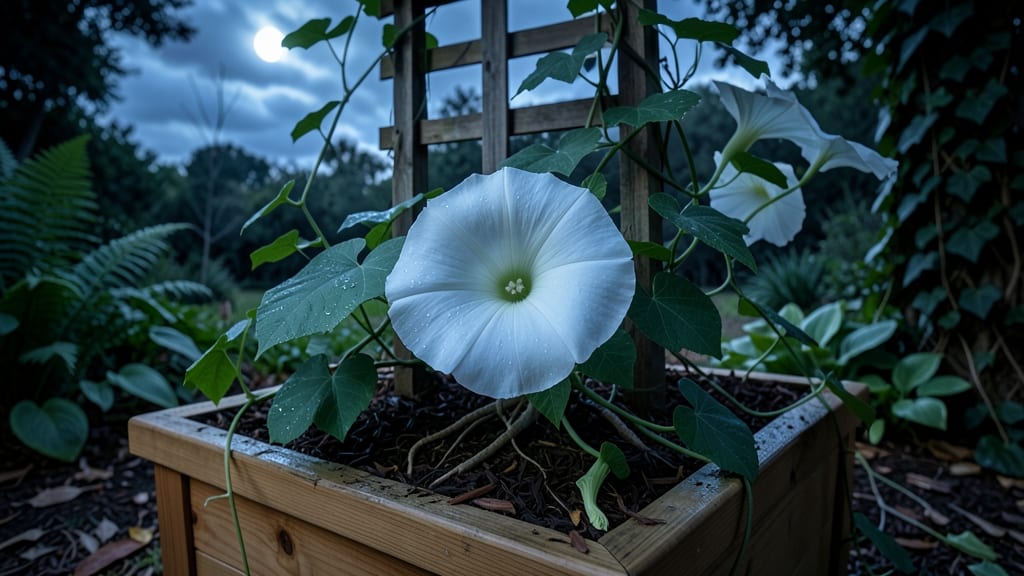
If you’ve ever wondered, what does a moonflower plant look like during the day, you might’ve spotted a Ipomoea alba in your garden at dusk—but its daytime appearance holds its own subtle charm.
Unlike its nocturnal glow, the moonflower hides its most striking features until nightfall, leaving many gardeners curious about its daytime form.
The moonflower’s large, heart-shaped leaves (about 3–6 inches wide) are its most obvious daytime clue. These glossy, deep green foliage grow on fast-climbing vines that can reach 10–12 feet if given a trellis or fence to twine around.
The vines themselves are smooth and hairless, making them easy to spot winding through garden beds or up structures.
Before the evening show, the moonflower reveals star-shaped buds that look like tightly folded white paper lanterns. These buds are the plant’s signature—pale green with a hint of pink—and they’re the first hint that a magical nighttime display is coming.
Unlike morning glories or other climbers, moonflowers bloom only after sunset, their fragrant white petals unfurling to reveal a yellow center that glows under moonlight.
So how can you tell if that vine in your garden is a moonflower? Look for heart-shaped leaves, twining vines, and those distinctive star-shaped buds—the daytime version of its evening star.
Once you spot these, you’ll know your garden is about to put on a moonlit light show every night. Ready to grow your own? Let’s break down what to watch for.


Moonflower plant identification: key visual features of its leaves, vines, and flowers
The moonflower (Ipomoea alba) is a captivating vine that steals the show after sunset, but its daytime appearance is equally striking.
If you're trying to identify this nocturnal beauty before its evening performance, focus on three key features: its large, heart-shaped leaves, its twining vines, and its iconic star-shaped buds. These visual cues will help you distinguish it from other vines in your garden or at the nursery.
One of the first things you'll notice about a moonflower is its deep green, glossy leaves, which are broad and heart-shaped, measuring about 3 to 6 inches long.
The leaves have a slightly pointed tip and a smooth, waxy texture that makes them stand out against other garden foliage. These leaves grow alternately along the vine, creating a lush, climbing canopy that can reach heights of 10 to 12 feet when fully mature.
The vines themselves are another giveaway. Moonflowers are twining vines, meaning they spiral around supports like trellises, fences, or even nearby plants as they grow. Unlike some vines that cling or sprawl, moonflowers use a dexterous, clockwise twining motion to climb, which is a charming behavior to watch.
Young vines are slender but become thicker and more robust as the plant matures, often reaching 1/4 to 1/2 inch in diameter.
Perhaps the most distinctive feature of the moonflower is its buds, which are the precursor to its famous nighttime blooms. During the day, you'll see star-shaped buds that are tightly closed and range in color from pale green to light yellowish-green.
These buds are usually about 1 to 2 inches wide and have a slightly velvety texture, giving them a soft, almost delicate appearance. As evening approaches, these buds will begin to swell and change color, preparing for their nocturnal display.
| Feature | Description | Key Identification Markers |
|---|---|---|
| Leaves | Large, heart-shaped | 3-6 inches long, deep green, glossy, pointed tips |
| Vines | Twining, climbing | Spiral clockwise, 10-12 ft tall, slender to thick |
| Daytime Buds | Star-shaped, closed | 1-2 inches wide, pale green/yellow, velvety texture |
| Nighttime Flowers | Large, white, fragrant | 6-10 inches wide, star-shaped, sweet scent at dusk |
| Growth Habit | Annual vine | Fast-growing, requires support, dies back in frost |
The flowers themselves are the pièce de résistance, but since they only bloom at night, you’ll need to rely on the daytime buds to predict their appearance. Once the moonflower blooms, it unfurls into a stunning, white, star-shaped flower that can reach 6 to 10 inches in diameter.
The petals are delicate and slightly ruffled at the edges, creating a dreamy, ethereal look. At the center of the flower, you’ll find a yellow throat, which is a key identifier when the bloom is fully open.
One of the most unique aspects of the moonflower is its nocturnal blooming habit. During the day, the buds remain tightly closed, but as the sun sets, they begin to open, revealing their sweet, intoxicating fragrance.
This scent is often described as vanilla-like or sweetly floral, and it’s one of the reasons moonflowers are so beloved by gardeners.
If you’re trying to identify a moonflower in your garden, pay close attention to the buds’ behavior—they’ll swell and change color as evening approaches, signaling that the nighttime show is about to begin.
Moonflowers thrive in full sun to partial shade, making them a versatile addition to many gardens. They prefer well-draining soil and benefit from a support structure, such as a trellis or fence, to climb.
When planting, choose a location where the vine can spread out and showcase its lush foliage and dramatic blooms. With the right conditions, a single moonflower vine can create a stunning vertical display that will be the highlight of your garden after dark.
If you’re still unsure whether you’ve spotted a moonflower, compare its features to other common vines in your area. Unlike morning glories, which have funnel-shaped flowers, or four o’clock flowers, which bloom in the late afternoon, moonflowers are strictly nocturnal.
Their large, heart-shaped leaves and twining growth habit also set them apart from other climbing plants. With these visual cues in mind, you’ll be able to confidently identify a moonflower and enjoy its magical nighttime display.
Next time you’re at the nursery or strolling through your garden, keep an eye out for those glossy, heart-shaped leaves and star-shaped buds. Once you spot them, you’ll know you’re on the verge of discovering one of nature’s most enchanting night-blooming wonders. 🌙🌿
How to spot a moonflower at different growth stages: from seedlings to full bloom
Watch a moonflower transform from a tiny seedling to a towering vine is like witnessing a garden magic trick. The first clue appears just 7–10 days after sowing, when delicate seedling leaves emerge.
These initial leaves are round and smooth, measuring only about 1/4 to 1/2 inch wide, and grow in pairs along the stem. At this stage, the vine is still prostrate and hair-like, barely reaching 1–2 inches tall.
The key is to spot the tiny, heart-shaped cotyledons—the first true leaves—before the vine starts its rapid ascent.
By 3–4 weeks, your moonflower will have developed its signature climbing habit. The vines begin twining clockwise around any nearby support, even if it’s just a thin stake or another plant.
Look for larger, glossy leaves—now about 1–2 inches long—with the classic pointed tips and smooth edges. This is when the vine starts its explosive growth, adding 6–12 inches per week if conditions are ideal.
Pay attention to how the leaves alternate along the stem, creating a spiral pattern as the vine climbs.
Here’s what to watch for at each stage—your visual guide to spotting a moonflower’s progression:
- 1 Seedling Stage (7–14 days): Tiny round cotyledons appear first, followed by miniature heart-shaped leaves (1/4–1/2 inch). Vine is prostrate and non-climbing.
- 2 Early Vine Stage (3–4 weeks): Leaves grow to 1–2 inches with glossy texture. Vine begins clockwise twining around supports, reaching 1–2 feet tall.
- 3 Bud Formation (6–8 weeks): Star-shaped buds (1–2 inches wide) appear, pale green to yellowish-green. Buds have a velvety texture and swell slightly as evening approaches.
- 4 Pre-Bloom (8–10 weeks): Buds darken slightly and swell noticeably by late afternoon. Look for a pinkish tint near the edges—this signals the evening bloom is imminent.
- 5 Full Bloom (10+ weeks): White star-shaped flowers (6–10 inches wide) unfurl at dusk, closing by dawn. Leaves are now 3–6 inches long, and the vine can reach 10+ feet with proper support.
The most exciting transformation happens in the pre-bloom stage, when those star-shaped buds begin to swell and darken. By late afternoon, you’ll notice a pinkish hue near the edges of the buds—this is your cue that the nighttime show is about to begin.
If you gently touch a bud at this stage, you might even feel it slightly yielding, a sign the petals are preparing to unfurl. This is also when the sweet fragrance starts to develop, though it’s most intense after dark.
Once the moonflower reaches full bloom, the vine will be a dramatic vertical display, with leaves reaching 3–6 inches long and flowers spanning 6–10 inches wide. The white petals with their ruffled edges and yellow center create a striking contrast against the deep green foliage.
At this point, the vine may have climbed 10–12 feet, so ensure it has a sturdy trellis or fence to support its weight.
The flowers will open at dusk and close by dawn, so if you miss the evening display, check for wilted but intact petals in the morning—a sure sign of a successful nighttime bloom.
To keep your moonflower thriving through all stages, provide full sun to partial shade, well-draining soil, and consistent moisture. Watch for buds that fail to open—this often signals stress from drought or poor soil. With the right care, your moonflower will reward you with a mesmerizing nightly performance from summer through early fall. 🌙🌱