
Flowers
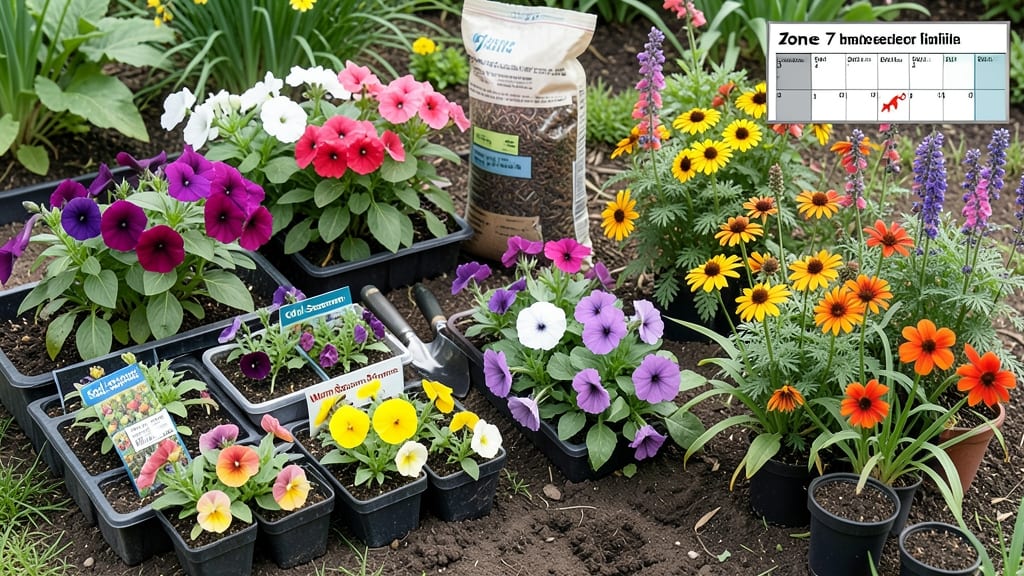
Planting your 🌸 flowers at the right time in Zone 7 can mean the difference between a garden bursting with color and one that struggles to take root.
Too early, and frost will nip delicate seedlings in the bud; too late, and summer’s heat will stress them before they even bloom. The key lies in understanding your local microclimate and the unique needs of each flower type.
Most gardeners in Zone 7 know spring is prime planting season, but did you know fall offers another chance to get a head start?
Cool-season flowers like pansies and snapdragons thrive when planted in early spring or late summer, while warm-season favorites like marigolds and cosmos wait patiently until the soil warms. I’ll break down the exact months to plant for maximum blooms, so you never miss a window again.
What if your spring arrives early or late? Or what if you’re dealing with a particularly harsh winter? I’ve got you covered with adjustments for regional variations—whether you’re in the Piedmont or the Appalachian foothills.
By the end, you’ll know not just when to plant, but why timing matters so much for your Zone 7 garden’s success.
Ready to transform your garden into a year-round paradise? Let’s dive into the proven planting schedule that’ll have your flowers thriving from spring through fall—and maybe even winter, if you’re feeling bold.
Zone 7 flower planting calendar by season (with exact months)
In Zone 7, knowing the exact timing to plant your flowers can transform your garden from mediocre to magnificent.
The last frost date typically lands around April 15, but this can shift by 2-3 weeks depending on your microclimate—whether you're in the Piedmont's rolling hills or the Appalachian foothills' cooler elevations. These variations mean your planting schedule might need adjustments, even within the same zone.
For most annual flowers, wait until the soil reaches at least 60°F—usually mid-April in warmer Piedmont areas, but closer to early May in cooler foothills. Perennials and bulbs, however, have different rules: some thrive when planted in early spring, while others prefer fall.
I’ll walk you through each month’s opportunities, so you never miss a bloom-worthy season.
The summary table below breaks down the best times to plant by flower type, accounting for soil warmth, frost risk, and regional nuances. Bookmark this for your next gardening season!
If your spring arrives early—say, frost-free by March—you can push up your warm-season annuals like cosmos and sunflowers by 2 weeks. Conversely, if you’re in a cooler microclimate, like the Appalachian foothills, delay planting tender flowers (e.g., impatiens) until mid-May to avoid frost damage.
Always check your local extended weather forecast for adjustments.
For succession planting, aim to sow quick-growing annuals like bachelor’s buttons or nasturtiums every 3 weeks from May through July. This ensures continuous blooms through fall. In Zone 7’s Piedmont, where summers are hotter, prioritize shade-loving flowers like coleus or begonias for late-season color.
Don’t overlook fall planting—it’s your secret weapon for early spring blooms. Bulbs like tulips and daffodils need 6-8 weeks of chilling to bloom beautifully.
Plant them by October 15 in Piedmont areas or November 1 in cooler foothills. Perennials like Russian sage or catmint also benefit from fall planting, as they establish roots before winter dormancy.
Pro tip: Use row covers or cold frames to extend your spring planting window by 2-3 weeks. This lets you sow cool-season crops earlier and warm-season flowers slightly later. Just remove covers when nighttime temps stay above 50°F consistently.
Remember, soil temperature matters just as much as air temperature. Use a soil thermometer to confirm warmth before planting heat-loving flowers like petunias or geraniums. If your soil is still chilly in May
Best flowers to plant in Zone 7 by growth cycle (fast vs. slow starters)
Not all flowers play by the same rules in Zone 7. Some, like pansies and snapdragons, are cool-season speed demons that thrive when planted early, while others, such as marigolds and cosmos, need warm soil to take off.
Understanding this growth cycle divide is key to maximizing your garden’s bloom time.
I’ve tested these varieties over years in my own Zone 7 garden, and the difference between fast starters and slow growers can mean the difference between a garden that blooms nonstop and one that leaves gaps in your seasonal color.
The secret to a garden that never stops flowering? Succession planting. By strategically planting fast-growing cool-season flowers in early spring and late summer, then following up with warm-season favorites, you can create a continuous bloom from March through November.
This approach works especially well in Zone 7, where our growing season is shorter than in warmer zones but longer than in colder ones. Let’s dive into the top performers for each category and how to use them to keep your garden vibrant all season.
- 1
- Pansies – 3-4 weeks to bloom; plant March-April or September for fall color.
- Snapdragons – 6-8 weeks to bloom; sow February-March indoors or September outdoors.
- Sweet Alyssum – 4-6 weeks to bloom; direct sow March-April or August-September.
- 2
- Marigolds – 6-8 weeks to bloom; wait until after May 15 when soil is 65°F+.
- Cosmos – 8-10 weeks to bloom; sow April-May after frost risk passes.
- Zinnias – 60-70 days to bloom; plant May-June for summer-long color.
- 3
If you’re planting cool-season flowers like pansies or violas, aim for early spring (March) or late summer (September). These varieties tolerate light frosts and will give you color even in cooler months.
I’ve found that snapdragons and stock plants are particularly resilient in Zone 7, often reblooming after a light frost if protected with a light mulch. For maximum impact, pair them with calendula, another fast starter that thrives in both spring and fall.
On the other hand, warm-season flowers like marigolds and cosmos need to wait until the soil warms to at least 60°F. In my garden, I’ve learned the hard way that planting these too early leads to leggy, weak stems that struggle to support blooms.
Instead, wait until mid-May or after your last frost date (typically April 15 in Zone 7). For a head start, sow cosmos indoors in March and transplant after the soil warms.
One of my favorite tricks for extending the bloom season is succession planting. For example, I’ll plant snapdragons in early March for spring blooms, then again in late August for fall color. Similarly, I replace pansies (which bolt in summer heat) with zinnias in late May.
This simple strategy ensures my garden stays lively from March through November without any bare patches. Even in Zone 7’s shorter growing season, this method works wonders.
Don’t overlook perennials like coneflowers or black-eyed Susans, which establish roots in early spring but reward you with years of blooms. These slow-and-steady growers are perfect for adding structure to your garden while filling in gaps left by annuals.
I always plant them in March or September to give their roots time to settle before summer’s heat sets in.
Remember, Zone 7’s microclimates can vary dramatically. If you’re in the Piedmont, you might have an earlier last frost, while Appalachian foothills areas could hold onto cooler temps longer. Adjust your planting dates accordingly—when in doubt, wait a week or two longer for warm-season flowers.
With these fast and slow starters in your garden, you’ll have colorful blooms all season long, no matter what surprises Zone 7 throws your way. 🌷