
Flowers
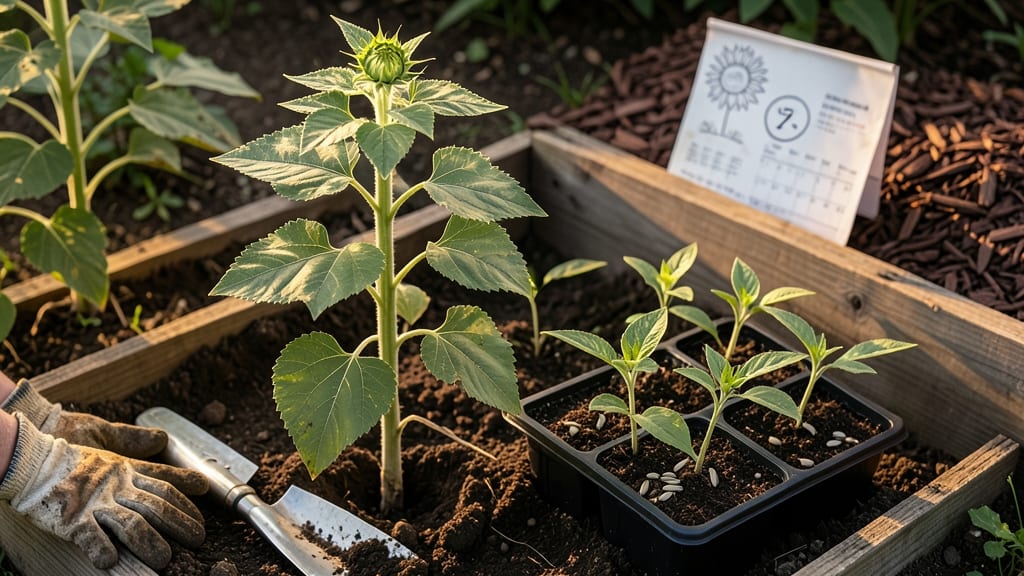
Planting sunflowers in Missouri isn’t just about grabbing seeds and sticking them in the ground—it’s about timing them perfectly to outsmart 5b-6b zone frost risks and humidity swings that can derail your 🌻 dreams before they even sprout.
The wrong window, and you’ll either be waiting months for blooms or watching them wilt in a late spring chill.
Missouri’s frost dates shift dramatically from north to south, with northern counties like St. Louis needing to wait until mid-April while southern regions can start as early as late March. But here’s the kicker: soil temperature matters just as much as the calendar.
Cold, damp earth can stall germination, so we’ll show you how to check for that 60°F threshold—your sunflowers’ secret weapon for a head start.
Whether you’re a first-time gardener or a veteran with a few failed batches behind you, this guide cuts through the guesswork.
We’ll break down exactly when to plant in your county, how to extend your season with cold-hardy varieties, and even when to give up on early starts and wait for warmer soil. No more second-guessing—just sunflowers that thrive.
Ready to turn your backyard into a sea of golden blooms? Let’s dive into the frost-free timeline that’ll have your sunflowers reaching for the sky—without the frustration of Missouri’s unpredictable spring.
Missouri sunflower planting dates by USDA heat Zone (with frost risk charts)
Missouri’s USDA zones 5a-7a create a patchwork of planting opportunities—where northern counties like St. Anthony (Zone 5b) might wait until mid-April, while southern regions like Poplar Bluff (Zone 7a) can start as early as late March.
The difference? A 3-week window that determines whether your sunflowers grow into towering giants or sad, stunted shrubs. Let’s break down the exact frost-free timeline for each zone, including soil temperature thresholds that most gardeners overlook.
Sunflowers need soil temperatures above 60°F to germinate properly. Cold, damp soil in early spring can leave your seeds sitting in the ground for weeks—if they sprout at all. That’s why I recommend using a soil thermometer (just $10 at garden centers) to confirm readiness.
In Zone 5a, where frosts linger until April 25 on average, waiting for 60°F soil might push your planting date to late April. Meanwhile, Zone 7a gardeners can often start by March 15.
Here’s the visual frost-risk comparison you need to plan your sunflower timeline—complete with last frost dates, ideal planting windows, and soil temperature benchmarks for each zone:
Pro tip: If you’re in Zone 5a or 5b and want to push your planting date earlier, try black plastic mulch or a mini greenhouse to warm the soil. I’ve seen gardeners in St. Joseph (Zone 5b) start sunflowers by April 1 using these tricks—just monitor soil temps closely.
For Zone 7a, you can even plant early varieties like ‘Teddy Bear’ as soon as March 1 with minimal frost risk.
Adjusting for late seasons? If your area experiences a late frost (like the April 2021 freeze that hit northern Missouri), wait until May 1 to plant. Sunflowers are resilient, but they’ll bolt (flower too early) if stressed by cold.
For extended seasons, opt for short-day varieties like ‘Autumn Beauty,’ which mature faster in cooler conditions.
Missouri’s humidity also plays a role—southern zones (6b-7a) may need better drainage to prevent fungal issues. Amend heavy clay soil with compost or sand to keep roots happy. And remember: direct-sown seeds germinate faster than transplants, so skip the nursery starts unless you’re
How to extend your Missouri sunflower season: cold-hardy varieties and soil prep tips
Missouri’s short growing season can feel like a race against time for sunflowers, but with the right cold-hardy varieties and soil prep, you can push your planting window by weeks. The key?
Choosing sunflowers that tolerate cooler soils and using techniques to warm the earth faster, like black plastic mulch or cloches. These methods let northern Missouri gardeners start planting as early as late March—even when frost still lingers.
For northern counties in USDA Zone 5b, where soil stays cold well into April, the secret lies in ‘Autumn Beauty’ and ‘Moulin Rouge’ varieties. These sunflowers thrive in cooler temperatures and even produce stunning blooms when planted early.
Meanwhile, southern Missouri gardeners in Zone 6b can opt for ‘ProCut’ or ‘Russian Giant’ for a longer harvest window.
Here’s how to maximize your sunflower season with proven techniques:
Don’t overlook the power of soil preparation. Before planting, till in 2-3 inches of compost to improve drainage and warmth. In northern Missouri, where soil stays damp longer, raised beds with straw mulch can create a microclimate that’s 10°F warmer than open ground.
This simple tweak lets you plant 2-3 weeks earlier without risking frost damage.
For gardeners in St. Louis or Kansas City, where late frosts are common, combine these tips with row covers after planting. They add an extra layer of protection while still allowing sunlight to reach your sunflowers.
By following these steps, you’ll extend your blooming season from July to October, giving you golden sunflowers well into fall.
Remember: the earlier you start, the taller your sunflowers will grow. With the right varieties and soil prep, Missouri’s short season won’t stand in your way—just watch your 10-foot giants reach for the sky. 🌻