
Flowers
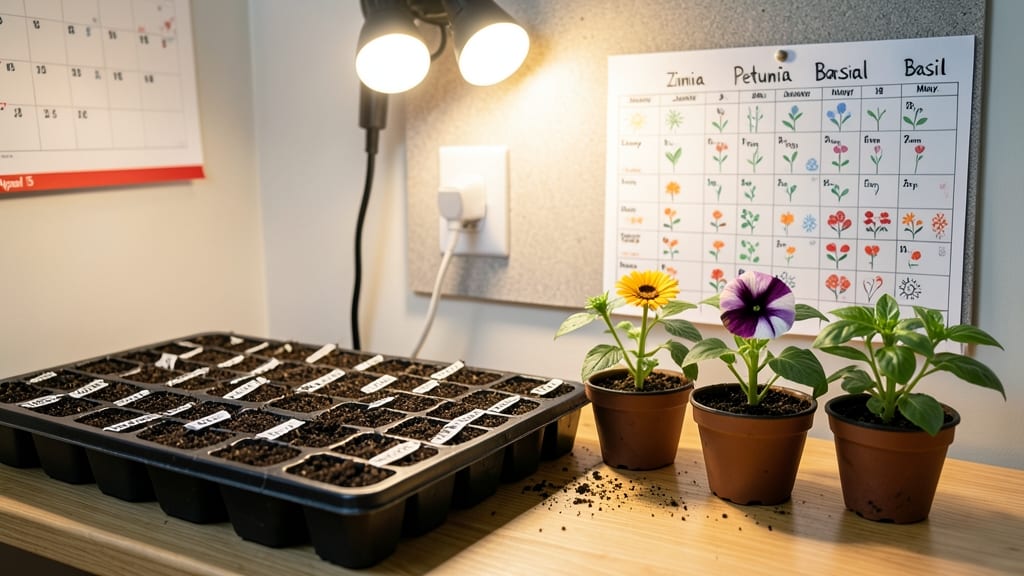
Starting your 🌸 flower seeds indoors using the when to start flower seeds indoors chart can turn your dream garden into a vibrant reality—without the guesswork. But with USDA zones ranging from 1 to 11, figuring out the perfect timing feels like solving a puzzle.
One wrong move, and you're either stuck with leggy seedlings or waiting months for flowers that should've been in bloom by May.
What if you could skip the guesswork and plant with confidence? I’ve cracked the code for USDA Zone 6a (and beyond) by breaking down exactly when to start popular flowers like petunias, marigolds, and snapdragons—down to the week.
Whether you’re a first-time gardener or a seasoned pro, this chart will save you from costly mistakes and give you vibrant blooms right on schedule.
The key isn’t just knowing when—it’s understanding how your zone’s last frost date and seedling maturity timelines work together. For example, in Zone 6a, most flowers need to hit the soil 4-8 weeks before April 15, but some varieties (like dahlias) demand a head start in February.
I’ll show you how to adjust for your exact location so you’re never left scrambling.
Ready to transform your indoor seed-starting game? Let’s dive into the zone-specific deadlines that’ll have your garden bursting with color—without the trial and error. Grab your calendar and a pen; we’re about to make planting season your easiest (and most rewarding) yet.
USDA Zone deadlines for starting flower seeds indoors by variety
Getting your flower seeds started indoors at the right time ensures vigorous seedlings ready for transplanting when last frost passes. But with USDA zones 1-11 having wildly different climates, timing varies dramatically.
For example, in Zone 3, you might start petunias in early February, while in Zone 10, you could wait until late January. The key is calculating your last frost date and working backward based on each flower’s seedling maturity timeline.
Most annual flowers need 4-8 weeks indoors before transplanting, while perennials like dahlias may require 10-12 weeks due to their longer growth cycle. Below, I’ve created a zone-specific chart for popular varieties, including last-frost calculations and ideal start windows to help you plan like a pro.
Pro tip: Use a seedling heat mat to speed up germination in cooler zones!
| Flower Variety | USDA Zones | Weeks Before Last Frost | Indoor Start Window | Notes |
|---|---|---|---|---|
| Petunias | 3-10 | 6-8 weeks | Zone 3: Feb 1-15 Zone 6: Jan 15-Feb 10 Zone 10: Jan 1-15 |
Needs bright light; pinch back for bushier growth. |
| Marigolds | 2-11 | 4-6 weeks | Zone 2: Feb 20-Mar 5 Zone 7: Jan 20-Feb 10 Zone 11: Dec 15-Jan 5 |
Drought-tolerant; great for pests like aphids. |
| Snapdragons | 3-9 | 8-10 weeks | Zone 4: Jan 15-Feb 10 Zone 8: Dec 20-Jan 15 Zone 9: Dec 1-Jan 10 |
Cool-season plant; avoid heat stress. |
| Geraniums (Pelargoniums) | 5-10 | 6-8 weeks | Zone 5: Feb 1-Mar 5 Zone 8: Jan 15-Feb 10 Zone 10: Dec 20-Jan 15 |
Needs full sun; deadhead for continuous blooms. |
| Dahlias | 7-11 | 10-12 weeks | Zone 7: Jan 1-Feb 10 Zone 9: Dec 1-Jan 15 Zone 11: Nov 15-Dec 10 |
Perennial; tubers need winter protection in cooler zones. |
| Cosmos | 3-10 | 4-6 weeks | Zone 3: Mar 1-Apr 1 Zone 6: Feb 15-Mar 10 Zone 10: Jan 15-Feb 10 |
Drought-resistant; self-seeds easily. |
| Zinnias | 2-11 | 6-8 weeks | Zone 2: Mar 1-Apr 1 Zone 7: Feb 1-Mar 15 Zone 11: Jan 1-Feb 15 |
Attracts pollinators; great for cut flowers. |
| Calendulas | 3-10 | 4-6 weeks | Zone 3: Feb 15-Mar 5 Zone 6: Jan 20-Feb 10 Zone 10: Dec 20-Jan 15 |
Edible petals; edible and pest-repellent. |
For USDA Zone 1-2, add 2-4 extra weeks to the start times to account for shorter growing seasons. For example, in Zone 1, start
How to adjust your indoor seed starting schedule for early or late blooms
Living in USDA zones 3-5 means shorter growing seasons, but with the right adjustments, you can enjoy longer bloom periods and vibrant gardens. The key is staggered sowing and choosing varieties that thrive in cooler climates.
For gardeners in zones 8+, the challenge is avoiding summer wilting—so timing matters just as much!
Start by calculating your last frost date and work backward. For cooler zones, begin seeds 8-10 weeks before the last frost to extend blooms into fall. In warmer zones, aim for early spring sowing or late summer sowing to avoid peak heat stress.
Heat-tolerant varieties like zinnia or celosia are perfect for zones 8+.
- 1 Cooler Zones (3-5): Start 8-10 weeks before last frost for longer bloom seasons. Use cold-hardy varieties like pansies or snapdragons.
- 2 Warmer Zones (8+): Sow early spring (Feb-March) or late summer (Aug-Sept) to avoid peak heat. Opt for heat-tolerant flowers like portulaca or lantana.
- 3 Staggered Sowing: Plant new batches every 2 weeks to ensure continuous blooms. Example: Start marigolds in early March, then again in late April for extended color.
- 4 Heat-Tolerant Tricks: Use shade cloth for seedlings in zones 8+ and water deeply in the morning to reduce stress. Mulch to retain moisture.
- 5 Extend Blooms: In cooler zones, use row covers or greenhouses to protect late-season flowers. In warmer zones, choose drought-resistant varieties like verbena.
For cooler climates, focus on slow-growing perennials like coneflowers or black-eyed Susans. These thrive when started early and can bloom from early summer to fall. In warmer zones, prioritize fast-maturing annuals like cosmos or sunflowers to avoid wilting in the heat.
Don’t forget to harden off seedlings properly before transplanting, especially in zone 3-5. Gradually expose them to outdoor conditions over 7-10 days to prevent shock. In zone 8+, transplant in early morning or late afternoon to reduce heat stress on young plants.
With these adjustments, you’ll enjoy longer bloom seasons regardless of your zone. Experiment with staggered sowing and heat-tolerant varieties to find what works best for your garden! 🌸