
Light Requirements
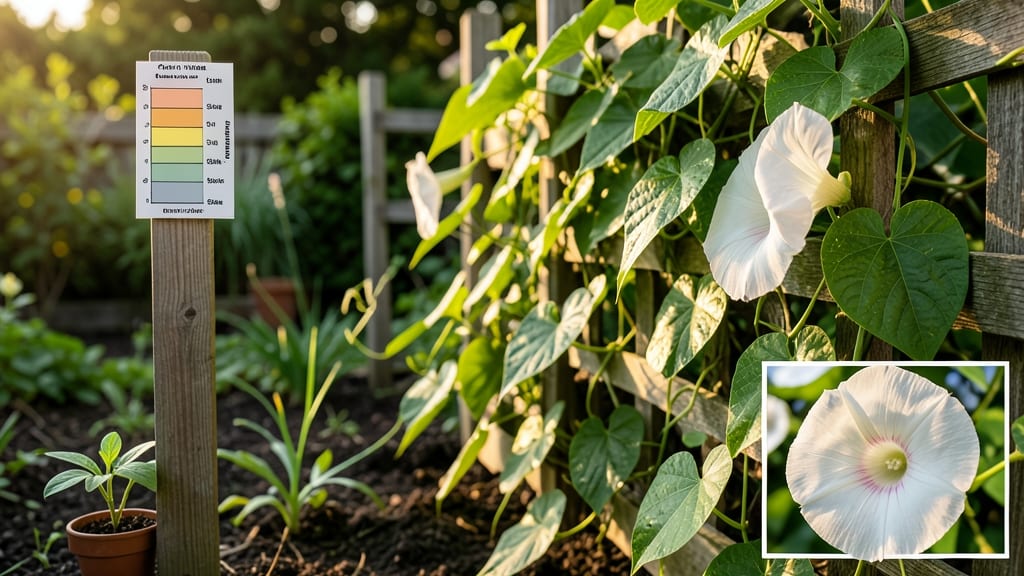
Moonflowers don’t need full sun to thrive—though you’ll hear that advice everywhere. The truth? These night-blooming vines actually prefer bright, indirect light for 6+ hours daily, which means they can handle partial shade better than most gardeners realize.
Too much harsh afternoon sun, and you’ll end up with crispy leaves instead of those dreamy 🌙 blooms.
If you’re planting in Zone 6a or hotter climates, morning sun paired with afternoon shade is often the sweet spot. But here’s the game-changer: moonflowers adapt surprisingly well to dappled light, making them perfect for patios, pergolas, or even shaded garden corners where other plants struggle.
The key is avoiding deep, dark spots where they’ll stretch and produce fewer flowers.
Let me show you exactly how to position your moonflowers for maximum blooms—whether you’ve got a sun-drenched backyard or a cozy balcony with limited light. We’ll cover regional tweaks, companion plants that play well together, and even simple hacks to boost light in shady spots.
By the end, you’ll know exactly where to plant yours for nighttime magic every evening.
Ready to stop guessing and start growing? The right light setup could mean the difference between a few blooms and a full-on evening garden party. Let’s get started.

How much sun moonflowers actually need (and why full sun isn’t always best)
You’ve probably heard moonflowers thrive in full sun, but that’s not always true. While they do love bright light, direct afternoon sun can scorch their delicate leaves and reduce those magical nighttime blooms.
The key is finding the sweet spot of bright indirect light—think dappled shade or morning sun with afternoon relief.
Moonflowers actually prefer 6 to 8 hours of bright, filtered sunlight daily. This means they’re happier in partial shade gardens than in the harsh glare of a southern exposure.
Too much direct sun can cause leaf burn and stunted growth, while too little shade may result in leggy vines and fewer flowers.
| Light Condition | Ideal Sun Exposure | Effect on Growth | Best For |
|---|---|---|---|
| Bright Indirect Light | 6-8 hours (morning sun + afternoon shade) | Healthy vines, abundant blooms | Urban gardens, partial shade areas |
| Full Sun | 8+ hours (direct, unfiltered) | Leaf scorch, reduced blooms | Hot, dry climates (use shade cloth) |
| Partial Shade | 3-6 hours (filtered light) | Slower growth, fewer blooms | Woodland gardens, north-facing walls |
| Deep Shade | <3 hours | Leggy stems, no blooms | Avoid entirely |
In hot climates (Zones 8-10), moonflowers benefit from afternoon shade protection. Use a lightweight shade cloth (30-50%) or plant them near taller plants like sunflowers or corn to filter harsh rays.
I’ve seen moonflowers in my Zone 9 garden thrive under a trellis with morning sun and afternoon shade—producing dozens of blooms each night.
For cooler regions (Zones 3-6), they can handle more direct sun, but morning sun is gentler than afternoon heat. If your garden gets intense afternoon sun, position your moonflowers on the east side of a trellis or under a lattice that provides dappled shade.
One common mistake is assuming all sun equals full sun. Moonflowers detest midday glare, especially in summer. I once grew them in a south-facing container and ended up with brown leaf tips—until I moved them to a west-facing spot with afternoon shade.
The difference was night-and-day (literally!).
If you’re in an urban setting with limited space, try growing moonflowers in containers near a south-facing window. They’ll get enough light without overheating. Just rotate the pot weekly to ensure even growth. I’ve had great success with 5-gallon grow bags placed on a balcony railing.
For maximum blooms, aim for bright indirect light combined with good airflow. Prune nearby plants to avoid crowding, and avoid placing moonflowers in reflective heat zones like black mulch or dark pavement. Instead, use light-colored mulch or gravel to keep roots cool.
Remember, moonflowers bloom at night—so their daytime needs are about setting them up for success, not mimicking a full sun desert. With the right balance, you’ll enjoy those fragrant white blooms opening up every evening, like nature’s own nightlight. 🌙
Signs your moonflowers aren’t getting the right light (and how to fix it)
Your moonflowers might be sending you clear distress signals if they’re not getting the right light. One of the first red flags is yellowing leaves, especially on older foliage. This often means they’re getting too much direct sun or struggling with poor soil drainage from overheating.
Check the undersides of leaves—if they look crispy or browned, that’s a sure sign of sunburn from harsh afternoon rays.
Another telltale sign is sparse or no blooms at night. Moonflowers need adequate light to produce energy for their nighttime flowers. If you’re seeing mostly leaves with tiny buds that never open, they’re likely not getting enough bright indirect light.
Even worse, if your vines are stretching excessively (a condition called etiolation), they’re reaching for light in a deep shade situation.
🌱 Leggy stems with large gaps between leaves mean your moonflowers are starving for light. This happens when they’re planted in shady corners or under dense tree canopies that block filtered sunlight.
The vines will grow tall and weak, producing fewer flowers. I once had this happen with moonflowers under a maple tree—they grew like tall, skinny poles instead of bushy, blooming vines.
Here’s the kicker: morning sun vs. afternoon sun makes a huge difference. Moonflowers love gentle morning sunlight because it’s less intense than midday heat. But if they’re getting hot afternoon sun (especially in Zones 7-10), their leaves will curl and crisp at the edges.
This is your body telling you to move them to a shadier spot or add afternoon shade protection.
⚠️To fix light-related issues, start with pruning nearby plants to improve airflow and light penetration. If your moonflowers are in containers, rotate them weekly to ensure even light exposure.
For ground-planted vines, adjust their trellis position—place it on the east side of a structure to catch morning light while avoiding afternoon glare.
If you’re in a shady garden, try these light-boosting hacks: Use reflective surfaces like white walls or mirrors to bounce light onto the vines. Or plant taller, sun-loving companions (like sunflowers) nearby to filter light gently without blocking it completely.
I’ve even seen gardeners use LED grow lights on a timer for 2-3 hours in the evening to supplement low light.
Remember, moonflowers bloom at night, so their daytime job is to store energy. Give them the right light balance, and they’ll reward you with dozens of fragrant white blooms every evening—like nature’s own moonlight lanterns. 🌙