
Flowers
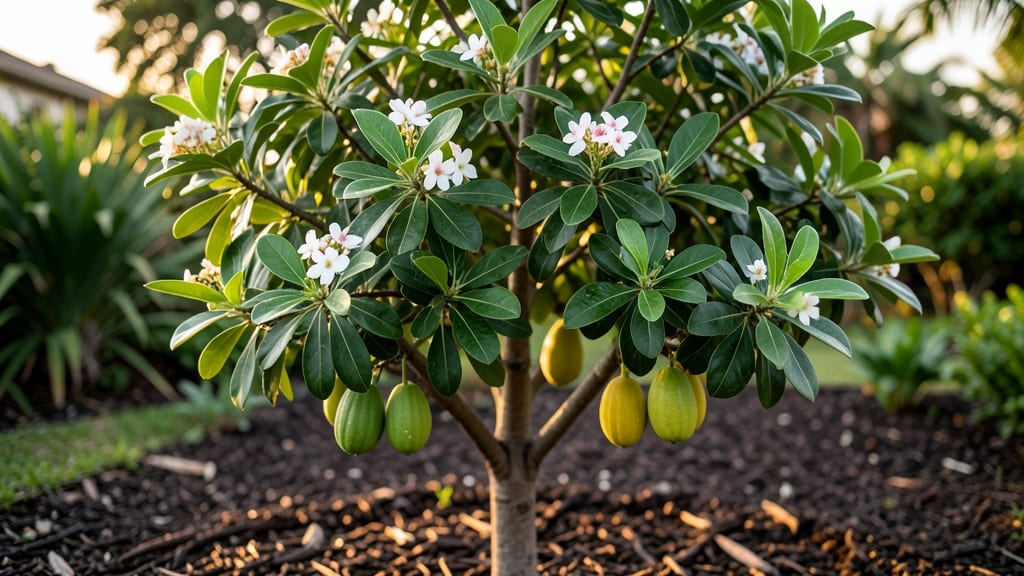
Transforming a guava flower 🥝 into a juicy, fragrant fruit is one of nature’s most satisfying processes—but many gardeners miss the mark by overlooking the critical steps between bloom and harvest.
If you’ve ever watched your guava tree burst with white blossoms only to see most drop off before fruiting, you’re not alone. The key to success lies in understanding the plant’s growth stages, from pollination to fruit development, and how small adjustments—like pruning or environmental tweaks—can dramatically boost your yield.
In this guide, I’ll walk you through the exact stages of guava flower to fruit development, including when and how to prune for maximum production.
Whether you’re dealing with poor fruit set or just want to grow bigger, sweeter guavas, these insights will help you turn more blooms into harvest-ready fruit.
Ready to maximize your guava tree’s potential? Let’s dive into the science—and simple strategies—behind turning flowers into a bountiful crop.
Guava flower to fruit: the complete growth stages explained
Understanding the guava flower to fruit journey is key to maximizing your harvest. From delicate white blossoms to ripe, fragrant fruit, each stage requires specific conditions. Let’s break down the 6-12 month process so you can nurture every bloom into a bountiful harvest.
Guava trees thrive in USDA Zones 10-12 with full sun exposure, but even in ideal climates, pollination challenges and environmental stressors can derail fruit development. By recognizing each growth stage, you’ll spot issues early—like dropping flowers or stunted fruit—and take corrective action.
🌸 Step-by-Step Guava Fruit Development
-
1
Flowering Stage (0-2 Weeks)
Delicate white or pink flowers appear in clusters. Natural pollinators (bees, butterflies) or manual pollination (gentle brushing) is critical here. -
2
Fruit Set (2-4 Weeks)
Flowers develop into small green fruits (pea-sized). Thin out overcrowded fruit to ensure larger, healthier specimens. Remove weak or deformed fruit early. -
3
Rapid Growth (4-8 Weeks)
Fruit grows rapidly to golf-ball size. Monitor for pests (fruit flies, mites) and nutrient deficiencies (yellowing leaves = nitrogen lack). Apply balanced fertilizer (6-6-6 NPK). -
4
Color Development (8-12 Weeks)
Fruit changes color (yellow, pink, or white depending on variety). Reduce watering slightly to prevent cracking. Shade cloth may help in extreme heat. -
5
Ripening (12+ Weeks)
Fruit softens slightly and emits a sweet fragrance. Harvest when easily detachable and skin is leathery. Overripe fruit may fall prematurely.
During the flowering stage, guava trees rely heavily on pollinators. If you notice dropping flowers without fruit set, try manual pollination using a soft brush to transfer pollen between flowers. This mimics how bees and butterflies naturally pollinate your tree.
In the rapid growth phase, guava fruit demands consistent moisture but avoid waterlogging, which can cause root rot. A deep watering schedule (15-20 gallons per tree) every 7-10 days keeps roots happy without over-saturating the soil. Mulch around the base to retain moisture and regulate soil temperature.
As fruit enters the color development stage, watch for nutrient imbalances. Yellow leaves? Your tree needs more nitrogen. Brown edges? It’s likely calcium-deficient.
A soil test can pinpoint exactly what your guava tree needs to thrive. Adjust your fertilizer blend accordingly—guava trees love a balanced 6-6-6 NPK during this phase.
One of the most frustrating challenges is premature fruit drop. This often happens due to poor pollination, nutrient deficiencies, or extreme heat stress.
To prevent this, ensure your tree gets 6+ hours of sunlight daily and provide light shade during peak afternoon heat if you’re in a hotter climate.
When fruit finally ripens, you’ll know it’s ready when it releases easily from the tree with a gentle twist and emits a sweet, tropical aroma. Harvest at this stage for the best flavor and texture.
If left too long on the tree, guava fruit may become overripe and mushy, attracting pests like fruit flies.
Pro tip: Thin out overcrowded fruit during the fruit set stage to ensure larger, healthier guavas. Aim to leave 6-8 inches of space between each fruit. This improves air circulation, reducing the risk of fungal diseases like anthracnose.
By mastering these growth
Pruning guava trees for maximum fruit production: when and how
Pruning your guava tree isn’t just about shaping its branches—it’s a critical step to ensure those delicate white flowers develop into sweet, abundant fruit. When done correctly, pruning improves air circulation, boosts sunlight penetration, and redirects energy toward fruit production instead of excessive foliage.
The best time to prune is just after the harvest season, typically in late winter or early spring, before new growth begins.
Guava trees thrive with open-center pruning, which encourages a balanced canopy. Start by removing dead or diseased branches first—these can harbor pests and diseases that stifle fruit development. Next, thin out crowded branches to reduce competition for nutrients, focusing on those growing inward or crossing over others.
This creates an ideal framework for sunlight to reach all parts of the tree, which is essential for fruit set.
⚠️ callout warning ⚠️
Pruning during the flowering or fruiting stage can shock your guava tree and cause premature fruit drop. Avoid heavy pruning when flowers are already forming—this disrupts the guava flower to fruit transition. Instead, save major cuts for dormant season (late winter/early spring) or immediately after harvest.
🌱 Pro Tip: Light pruning (removing only dead branches) is safe during fruiting, but avoid removing more than 20% of the canopy at once.
Use sharp, disinfectant-clean pruning shears to make clean cuts just above a leaf node or bud. Avoid leaving stubs, which can invite disease. For larger branches, use a pruning saw and seal the cuts with pruning sealant to prevent sap loss.
Focus on structural pruning first—remove branches that grow straight up or downward, as these are less efficient for fruit production.
In tropical climates, guava trees may benefit from a second, lighter pruning in mid-summer to encourage new growth and prepare for the next flowering cycle. However, avoid pruning when temperatures exceed 90°F (32°C), as this stresses the tree.
Always prune on a dry, overcast day to reduce stress on the plant.
Common pruning mistakes include over-pruning, which weakens the tree, or under-pruning, leading to dense foliage that blocks sunlight and promotes disease. Aim for a balanced approach: remove 20-30% of the canopy annually for young trees and 10-20% for mature trees.
This keeps the tree healthy while maximizing fruit yield.
After pruning, apply a layer of mulch around the base of the tree to retain moisture and regulate soil temperature. Water deeply to help the tree recover, and monitor for new growth.
With consistent pruning, your guava tree will develop a stronger structure, better air flow, and—most importantly—a higher rate of successful guava flower to fruit conversion. 🌿