
Companion Plants
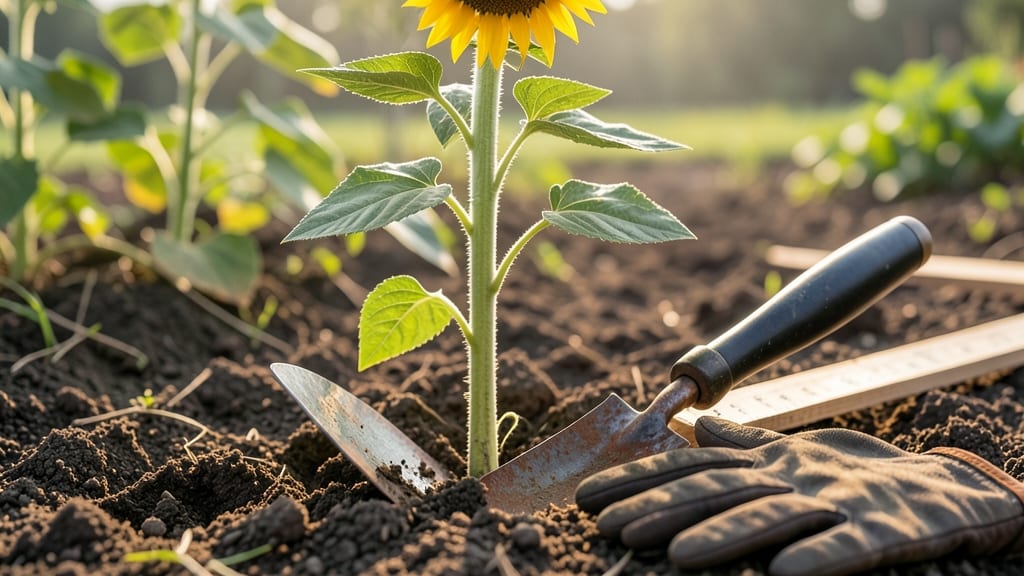
Planting your sunflower seeds 1 inch deep might seem simple, but getting this right is the secret to those towering 🌻 blooms you've been dreaming of. Too shallow, and they'll struggle to anchor; too deep, and germination takes forever.
I've learned the hard way that this tiny detail makes all the difference between scraggly stems and plants that reach their full, sun-loving potential.
You might think all seeds are created equal when it comes to depth, but sunflowers actually have specific needs that most gardeners overlook. The right planting technique isn't just about measurement - it's about creating the perfect environment for those seeds to sprout quickly and grow strong.
Trust me, once you master this step, your sunflowers will thank you with faster growth and healthier stems that can support their massive blooms.
What if I told you that adjusting your planting depth could also help prevent common problems like weak stems or rot? That's right - the same simple technique that ensures proper germination also sets your sunflowers up for success from day one.
In this guide, I'll walk you through everything you need to know to plant your seeds at the perfect depth, plus pro tips for soil preparation that will give your sunflowers the best possible start in your 6a zone.
Whether you're a beginner with your first sunflower patch or a seasoned gardener looking to improve your results, these insights will help you grow sunflowers that stand out in your garden.
Let's get those seeds in the ground the right way so you can enjoy those vibrant blooms from July right through September!


Optimal sunflower seed planting depth by seed type and soil conditions
Sunflowers thrive when planted at the right depth, but the ideal measurement depends on your seed type and soil conditions. Giant varieties with thick seed coats need slightly deeper planting than delicate dwarf seeds, while heavy clay soils require adjustments to prevent rot.
Let's break down the perfect planting depth for each scenario to ensure strong, healthy stems and vibrant blooms.
Most sunflower seeds should be planted 1 inch deep in well-draining soil, but this general rule changes based on your specific growing conditions. For example, sandy soils dry out faster, so you might plant seeds a tiny bit deeper (up to 1.25 inches) to retain moisture during germination.
Meanwhile, clay-heavy soils can suffocate seeds if planted too deep, so a shallower depth of 0.75 inches may be better.
The seed coat thickness also plays a role. Giant sunflower varieties like 'Mammoth' have thick, protective seed coats that benefit from slightly deeper planting (1.25 inches), while dwarf varieties like 'Teddy Bear' have thinner coats and should stay closer to the surface (0.75-1 inch).
This adjustment helps prevent rot in giant seeds while ensuring dwarf seeds get enough light to sprout.
| Seed Type | Soil Type | Climate | Planting Depth | Pro Tip |
|---|---|---|---|---|
| Giant Varieties | Sandy | Hot/Dry | 1.25 inches | Add compost to retain moisture |
| Giant Varieties | Clay | Cool/Moist | 1 inch | Loosen soil with sand |
| Dwarf Varieties | Loamy | Hot/Dry | 0.75 inches | Use mulch to conserve water |
| Dwarf Varieties | Sandy | Cool/Moist | 0.5 inches | Plant in containers for better drainage |
| Standard Varieties | Any | Any | 1 inch | Standard rule for most conditions |
Climate also influences planting depth. In hot, dry regions, planting seeds slightly deeper helps them access moisture stored in the soil, while in cool, moist climates, shallower planting prevents waterlogging.
For example, in Arizona's desert conditions, I plant giant sunflower seeds at 1.5 inches deep to protect them from rapid evaporation, whereas in Pacific Northwest's damp climate, I stick to 0.75 inches for dwarf varieties.
Another key factor is soil moisture levels before planting. If your soil is already saturated, reduce planting depth by 25% to avoid rot. Conversely, in bone-dry soil, increase depth by 25% to help seeds access water.
Always check soil moisture by digging a small hole—if it's dry 2 inches down, deeper planting is ideal. If it's damp, keep seeds shallower.
For container gardening, adjust depth based on pot size. In small pots (under 12 inches), plant seeds at 0.5 inches deep to prevent root crowding, while larger containers (18+ inches) can accommodate the standard 1 inch depth.
Use well-draining potting mix to avoid waterlogged roots, which can cause seed rot even at correct depths.
One common mistake is planting seeds too deep, which can lead to weak stems and stunted growth. If you're unsure about depth, use your finger as a guide: the seed should be buried to the first knuckle for standard varieties.
For giant seeds, aim for the second knuckle. Always plant seeds on their sides if they're very large, as vertical planting can cause them to rot.
After planting, gently firm the soil around seeds to ensure good contact with the earth. This step is crucial for moisture retention and stable germination. Water lightly but thoroughly to settle the soil without displacing seeds.
Avoid soaking the soil, as this can create air pockets that prevent proper root contact. For best results, water in the morning to allow excess moisture to evaporate during the day.
Monitor your seeds closely after planting. If germination takes longer than 10-14 days, check soil moisture and consider covering seeds with a thin layer of mulch
Common mistakes that kill sunflower germination (and how to fix them)
Sunflower seeds are surprisingly delicate during germination, and even small planting errors can spell disaster. Many gardeners accidentally bury seeds too deep, suffocating them before they can sprout, or plant them too shallow, leaving them exposed to drying winds.
The ideal 1-inch depth is just the starting point—soil type, moisture, and spacing also play critical roles in whether your seeds will break through the soil or rot underground.
Another frequent mistake is overcrowding seeds in the same hole, which leads to weak, leggy stems competing for sunlight. I’ve seen entire rows of sunflowers flop over because they were planted too close together—a simple spacing adjustment could’ve saved them.
Even watering habits can undo your hard work, as inconsistent moisture either drowns seeds or leaves them parched before germination.
⚠️ Critical Depth Warning
Planting sunflower seeds deeper than 1.5 inches risks rot and failure—their delicate roots can’t break through compacted soil. Shallower than 0.5 inches exposes seeds to drying and pests. Use your finger as a guide: press seeds into soil until covered by your first knuckle (about 1 inch). For sandy soil, plant slightly deeper (1.25 inches) to retain moisture.
One of the most frustrating issues is waterlogging, which turns seedbeds into anaerobic zones where seeds suffocate. I’ve watched entire trays of seeds mold because they were watered too frequently after planting.
The fix? Water lightly but consistently, keeping soil moist but not soggy. A spray bottle or drip irrigation works best—avoid heavy overhead watering that compacts soil around seeds.
Weak stems often stem from poor spacing or uneven germination. Sunflowers need 6–12 inches between plants (depending on variety) to develop strong, sturdy stalks. If you’re growing dwarf varieties, reduce spacing to 4–6 inches, but never let them compete.
Thin seedlings early to avoid root-bound stress, which weakens structural integrity. Use scissors to snip at soil level rather than pulling—this prevents disturbing remaining roots.
Even after proper planting, temperature fluctuations can derail germination. Sunflower seeds need soil temps between 70–90°F to sprout reliably. If your spring nights are still chilly, use row covers or wait until after the last frost.
I’ve had better luck planting in late May than rushing in April—patience pays off with stronger, more resilient plants.
To troubleshoot failed germination, check for these red flags: no sprouts after 10–14 days, blackened seeds (rot), or yellowing seedlings (overwatering). If you suspect depth issues, dig up a failed seed—if it’s buried deeper than 1.5 inches or dry and shriveled, adjust your technique.
With these fixes, your sunflowers will emerge vigorous and ready to grow.