
Flowers
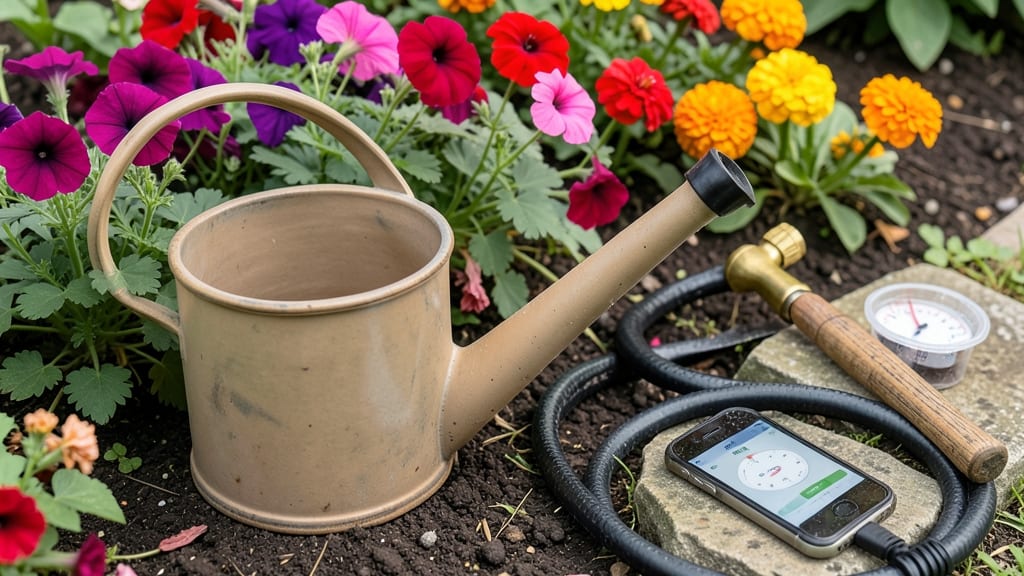
To water flowers the right way, you’re probably guessing more than you should—because overwatering actually kills more blooms than underwatering. That’s right: even the most vibrant 🌸 can wilt from too much love if you don’t follow a science-backed approach tailored to their needs.
Think about it—your petunias might need a drink every 2-3 days in summer, while lavender could survive on just a sip every 7-10 days. The key isn’t just how much you water but when and how deeply.
I’ll break down the exact schedules for different flower types, plus how to spot the subtle signs of thirst or drowning before it’s too late.
Whether you’re battling dry soil in Zone 6a or dealing with unpredictable spring rains, this guide cuts through the guesswork.
You’ll learn how to adjust your watering routine for seasonal shifts, avoid common pitfalls (like watering leaves instead of roots), and even use a simple finger test to perfect your timing.
Ready to stop playing floral roulette? Let’s dive into the exact watering strategies that keep your flowers thriving—no more wasted water, no more wilted dreams.


Science-backed watering schedule for common flowers by type
Overwatering kills more plants than underwatering—yet most gardeners guess their flower care instead of following science-backed watering schedules tailored to each bloom type. The key to vibrant blooms lies in understanding soil moisture levels, root depth, and seasonal adjustments.
Research from the American Society for Horticultural Science shows that 1 inch of water per week is the baseline for most flowers, but this varies wildly between annuals, perennials, and tropical varieties.
Annual flowers like petunias and marigolds thrive with frequent, shallow watering, while drought-tolerant perennials like lavender and coneflowers prefer deep, infrequent soakings. Tropical flowers such as hibiscus and orchids demand consistent humidity and moisture, mimicking their native rainforest environments.
Let’s break down the science-backed schedules for each type to keep your garden flourishing.
For annual flowers, like petunias and marigolds, the goal is to keep the top 1-2 inches of soil consistently moist. These plants have shallow root systems and wilt quickly when thirsty.
Use a soaker hose or drip irrigation to deliver water directly to the soil, avoiding wet foliage that can
How to adjust your watering routine for climate and season
Your watering routine isn’t one-size-fits-all—it’s a living strategy that must shift with seasonal changes and local climate conditions. In Zone 6a, where I garden, summer heatwaves can dry soil twice as fast as spring showers.
The same petunias that thrive with morning water every 2-3 days in July might need only weekly drinks in October. Without adjusting, you risk root rot or stunted growth.
Climate plays a bigger role than most gardeners realize. Humid zones like the Southeast require less frequent watering because moisture lingers in the air, while arid regions demand deep, infrequent soakings to prevent evaporation.
Even winter dormancy changes the game—many perennials need barely any water when temperatures drop below 40°F. I’ve learned the hard way that ignoring these shifts leads to wasted water and wilting blooms.
Here’s how to fine-tune your approach using science-backed adjustments—no more guesswork, just thriving flowers.
- 🌡️ For Drought Conditions: Water deeply 1x/week (1-2 inches) instead of daily shallow drinks. Focus on root zones, not foliage, to encourage deep root growth.
- 🌧️ In Humid Zones: Reduce frequency to every 5-7 days—excess moisture in air + soil = fungal risks. Water early to let foliage dry before evening.
- ❄️ During Winter Dormancy: Cut back to bi-weekly or monthly watering. Most perennials (like lavender) enter survival mode—overwatering suffocates roots.
- ☀️ In Summer Heatwaves: Increase to daily deep watering (1-1.5 inches) in the early morning. Mulch with 2-3 inches of straw to retain moisture.
- 👆 Master the Finger Test: Stick your finger 1-2 inches into soil. If dry, water; if damp, wait. Adjust depth based on plant type (succulents need drier soil than impatiens).
Seasonal transitions are where most gardeners stumble. I once nearly lost my roses by keeping their summer schedule through fall—until I learned to halve watering as temperatures dropped. Start by tracking your local rainfall averages and adjusting your schedule 2 weeks before each seasonal shift.
For example, when Zone 6a hits 50°F nights, it’s time to taper off.
Pro tip: Group flowers by water needs. Place drought-tolerant varieties like yarrow near the center of beds where they’ll get less frequent water, and keep thirsty petunias at the edges for easier access.
This zoning strategy saves time and prevents over/underwatering mix-ups. Pair it with a simple rain gauge to monitor natural inputs—your plants will thank you with longer-lasting blooms.
Remember, the goal isn’t perfection—it’s consistency. Even a 10-minute daily check of soil moisture (especially in potted flowers) prevents costly mistakes. With these adjustments, your garden will stay resilient through any climate challenge, and your flowers will reward you with vibrant, healthy growth all season long.