
Plants
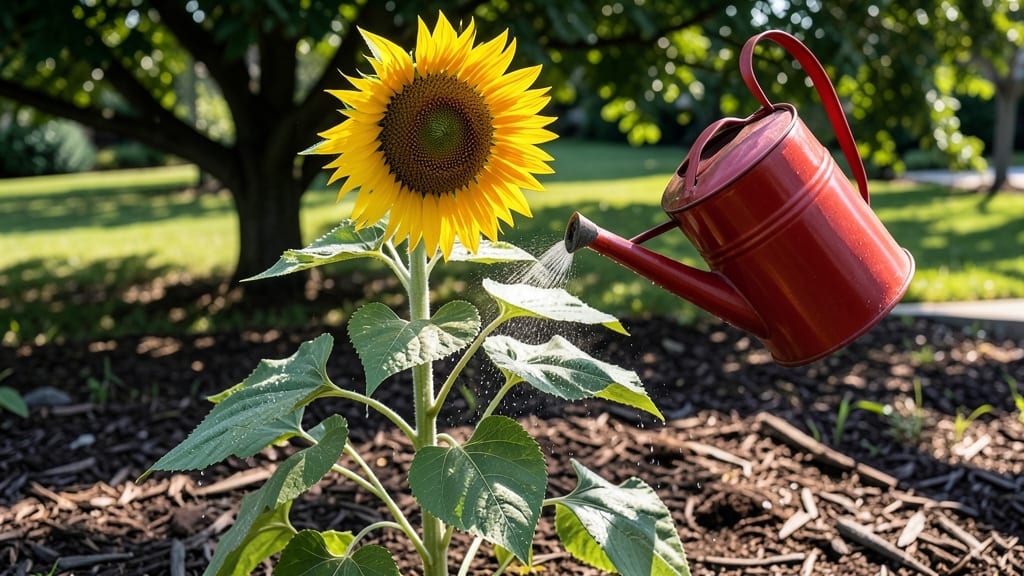
To water a sunflower plant just right, you're actually balancing a delicate act—too much and you risk weak stalks, too little and those towering 🌻 giants won't reach their potential. What most gardeners miss is that sunflowers thrive on deep, infrequent watering, not daily sprinkles.
Think of their roots as a thirsty straw reaching 2-3 feet down by maturity. Skipping the surface water and soaking the soil instead is the key to preventing those iconic stalks from snapping under their own weight.
I’ve learned this the hard way—literally watching 6-foot sunflowers topple after weeks of shallow watering.
Your watering schedule should shift with the seasons: seedlings need consistent moisture, but mature plants can handle 3-5 days between deep drinks once established. The trick? Check soil moisture 2 inches down—if it’s dry, it’s time to water.
Ready to master this? I’ll walk you through the exact schedule by growth stage, plus how to adjust for your local climate and soil type. No more guesswork—just tall, thriving sunflowers that stand proud all summer long.
The ideal sunflower watering schedule by growth stage
Sunflowers thrive when their watering schedule matches their developmental stages, from delicate seedlings to towering blooms. Each phase demands different moisture levels to trigger root expansion, stem elongation, and bud formation.
Too much or too little water at the wrong time can derail your sunflowers' potential—think weak stalks or stunted growth. Let's break down the science-backed approach to keep your sunflowers reaching for the sky.
Understanding your sunflower's growth stages is key. The seedling stage (first 2-3 weeks) is the most delicate, while the vegetative stage (3-6 weeks) fuels rapid stem growth. Finally, the flowering stage (6-12 weeks) requires precise hydration to support those iconic blooms.
Each stage has unique water needs tied to soil moisture triggers that encourage healthy development.
| Growth Stage | Water Frequency | Depth | Key Trigger | Soil Moisture Goal |
|---|---|---|---|---|
| Seedling (0-3 weeks) | Every 2-3 days | 1-2 inches | Root expansion | Consistently moist |
| Vegetative (3-6 weeks) | Every 3-5 days | 4-6 inches | Stem elongation | Deep moisture |
| Flowering (6-12 weeks) | Every 5-7 days | 6-8 inches | Bud formation | Moderate moisture |
| Mature (12+ weeks) | Every 7-10 days | 8-10 inches | Seed development | Drought-tolerant |
During the seedling stage, your sunflowers need frequent shallow watering to keep the top 1-2 inches of soil moist. This encourages root development without overwhelming the tiny plants. Think of it like giving them a gentle drink every couple of days—enough to keep them hydrated but not soggy.
Overwatering here can lead to fungal diseases like damping-off, which can wipe out your seedlings overnight.
As your sunflowers enter the vegetative stage, they'll start growing like crazy—sometimes up to 3 inches per day! This is when deep watering becomes crucial. Aim to soak the soil to a depth of 4-6 inches every 3-5 days.
This encourages strong root systems and prevents the stalks from becoming weak and prone to snapping. Morning watering is ideal to let excess moisture evaporate during the day, reducing disease risk.
The flowering stage is where your sunflowers show off their full potential, but it's also when water needs shift slightly. Reduce frequency to every 5-7 days while maintaining deep moisture. This helps trigger bud formation and supports the heavy weight of those giant blooms.
Too much water now can cause the flower heads to split or rot. Pay attention to your soil—it should feel moist but not soggy when you check it with your finger.
Once your sunflowers reach maturity (around 12 weeks), they become surprisingly drought-tolerant. At this stage, watering every 7-10 days with deep soakings is perfect. This helps the seeds develop properly without encouraging excess foliage growth.
If you're growing sunflowers for seeds, this reduced watering actually improves seed quality by slowing down vegetative growth and allowing more energy to go into seed production.
Adjust your watering schedule based on weather conditions and soil type. During heatwaves, you may need to water daily, while cool, cloudy days can stretch your watering intervals. Clay soils hold moisture longer, so you'll water less frequently than in sandy soils, which dry out quickly.
Always check the soil moisture by sticking your finger about 2 inches down—if it's dry, it's time to water.
One common mistake is surface watering, which only wets the top layer of soil. Instead, use a soaker hose or water deeply at the base of the plant to encourage deep root growth. Avoid getting water on the leaves and flower heads, as this can promote fungal diseases.
Early morning is the best time to water, giving your plants plenty of time to dry out during the day.
Pro tip: Mulch around your sunflowers with straw or wood chips to help retain moisture and regulate soil temperature. This reduces the frequency of watering needed and keeps roots cool during hot summer days.
Just be sure to keep the mulch a few inches away from the stem base to prevent rot. With the right watering approach, your sunflowers will grow tall, strong, and ready to brighten up your garden all season long.
Remember, sunflowers are resilient plants, but they do reward careful attention to their water needs. By matching your watering schedule to their growth stages and understanding the soil moisture triggers for each phase, you'll set your sunflowers up for success. Happy growing! 🌻
Deep-soil watering techniques to prevent sunflower stalk weakness
Sunflowers develop their iconic tall stalks through deep root systems that crave consistent moisture—just not the shallow kind. The key to preventing weak, snapping stems lies in deep-soil watering, which encourages roots to grow downward rather than spread superficially.
When I first tried surface watering, my 6-foot sunflowers leaned dramatically by mid-summer. That changed when I switched to soaking the soil 6-8 inches deep every 3-5 days.
This technique isn't just about volume—it's about timing and soil type. Clay soils hold moisture longer, while sandy soils dry out faster. Even the 'drought-stress method' (briefly withholding water during hot spells) can strengthen stalks by forcing roots to seek deeper moisture.
The goal is to mimic natural rainfall patterns, where water penetrates deeply rather than sitting on the surface.
⚠️ callout-warning ⚠️
How often should you water a sunflower plant? Most gardeners err by watering too frequently—this leads to root rot and weak stalks. The danger zone is daily watering for seedlings or shallow sprinkles that never reach 4+ inches deep. Instead, focus on:
- ✅ Deep watering (1-2 gallons per plant) every 3-5 days
- ✅ Morning watering (before 10 AM) to prevent fungal diseases
- ❌ Avoid evening watering (promotes mildew)
- ❌ Never let soil stay soggy—sunflowers hate "wet feet"
For clay-heavy soils, reduce frequency to every 5-7 days—these soils retain moisture for days after watering. In sandy soils, increase to every 2-3 days to prevent rapid drying.
I once grew sunflowers in a sandy loam garden and nearly drowned them by sticking to a rigid schedule. The fix? Using a moisture meter to guide watering instead of guessing.
During the flowering stage (60-90 days after planting), maintain consistent deep watering to support bloom size. This is when sunflowers need the most moisture—skipping water here can lead to smaller, less vibrant flowers.
I’ve seen 12-inch blooms from properly watered plants compared to 6-inch ones from neglected ones. The difference? Deep, infrequent watering that keeps roots hydrated without drowning them.
For container-grown sunflowers, the rules change slightly. Pots dry out faster, so water every 2-3 days in summer, ensuring water drains completely. I’ve had dwarf varieties in 5-gallon pots thrive with this schedule, while larger varieties need 10+ gallons of soil to support their weight.
Always check the bottom of the pot—if water runs out within hours, you’re not watering deeply enough.
Finally, don’t forget the drought-stress method for hardier varieties. When temperatures hit 90°F+, let the soil dry out slightly between waterings. This triggers deeper root growth and thicker stalks.
I’ve used this with 'Moulin Rouge' sunflowers in my Zone 8b garden, and they’ve stood 2 feet taller than their non-stressed counterparts. Just monitor for wilting—if leaves droop permanently, it’s time to water.