
Flowers
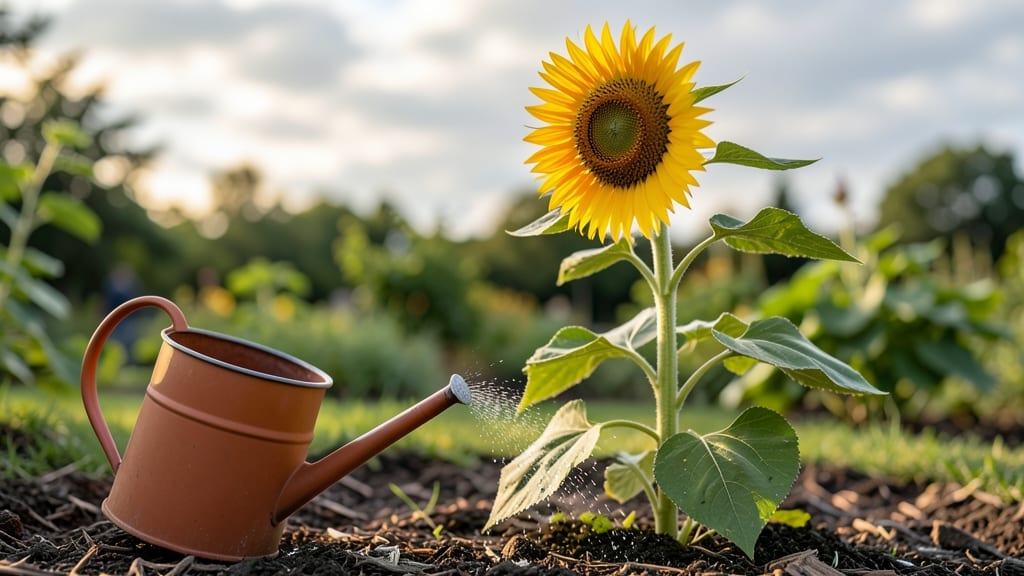
To grow perfect sunflowers, you’ll need to master how often to water sunflowers—not too much, not too little. These towering beauties 🌻 might look tough, but they’re actually quite sensitive to moisture, and getting it wrong can mean the difference between a 6-foot giant and a sad, wilted shrub.
Most gardeners overthink it—checking the soil daily or drowning their plants in water—but the truth is far simpler. With the right approach, you’ll keep your sunflowers thriving from those tiny seedlings in April all the way through their golden harvest in September.
Let’s break down the exact schedule and soil checks you need to avoid common mistakes.
Here’s the game-changer: sunflowers hate soggy roots but also can’t handle drought stress. I’ll show you how to tell when it’s time to water—no guesswork, just a quick soil check that takes 30 seconds.
Whether you’re dealing with Zone 6a heat or unexpected rain, these tips will keep your plants happy and growing.
Ready to stop second-guessing and start growing sunflowers that reach their full potential? Let’s dive into the easiest way to water them right, every time.
Sunflower watering schedule by growth stage: when and how much
Sunflowers thrive on consistency, but their water needs change dramatically as they grow. From delicate seedlings to towering giants, each stage demands a different approach. Too much water drowns roots, while too little stunts growth—both can leave you with sad, droopy blooms instead of sunlit giants.
I’ve grown sunflowers from 1-inch seedlings to 12-foot stalks, and the key to success lies in understanding their stage-specific needs. Let’s break down exactly how often and how much to water sunflowers at every growth phase, plus how to adjust for your local climate.
| Growth Stage | Water Frequency | Soil Moisture Target | Climate Adjustments |
|---|---|---|---|
| Seedling (0-2 weeks) | Every 2-3 days | Keep soil evenly moist, never soggy | Cool/moist: Every 3 days; Hot/dry: Daily misting |
| Vegetative (3-6 weeks) | Every 3-5 days | Top 2 inches dry between waterings | Hot/dry: Deep water every 2 days; Cool: Every 5-7 days |
| Flowering (7-10 weeks) | Every 5-7 days | Let soil dry to 4 inches deep | Extreme heat: Every 3-4 days; Rainy: Skip if soil is wet |
| Maturity (10+ weeks) | Every 7-10 days | Allow soil to dry completely between waterings | Drought: Reduce to bi-weekly; Humid: Monitor closely |
During the seedling stage, sunflowers need frequent watering to establish roots, but avoid oversaturating the soil. I use a spray bottle to mist seedlings daily in hot climates, ensuring the soil stays moist but not waterlogged.
Overwatering at this stage can cause fungal diseases like damping-off, which kills young plants before they sprout.
As sunflowers enter the vegetative stage (3-6 weeks), they develop deep roots and can handle slightly drier conditions. Aim to water when the top 2 inches of soil feel dry.
In my garden, I check this by sticking my finger into the soil—if it’s dry past my first knuckle, it’s time to water. This stage is where most growth happens, so consistent moisture is key.
The flowering stage (7-10 weeks) is when sunflowers need balance. Too much water can cause buds to rot, while too little stresses the plant. I deep-water my sunflowers every 5-7 days, letting the soil dry to about 4 inches deep before the next watering.
In hot, dry climates, I increase frequency to every 3-4 days and water in the early morning to reduce evaporation.
Once sunflowers reach maturity (10+ weeks), they become more drought-tolerant. At this point, I let the soil dry completely between waterings, typically every 7-10 days. Overwatering mature sunflowers can lead to root rot or weakened stems, especially in heavy clay soils.
If you’re growing sunflowers for seeds, reduced watering helps the seed heads dry properly.
Climate plays a huge role in adjusting your watering schedule. In cool, moist climates, you can stretch watering intervals by 2-3 days, while hot, dry regions may require daily watering during the seedling stage.
I also mulch around the base of my sunflowers with straw or wood chips to retain moisture and keep roots cool—this reduces how often I need to water by up to 30%.
For container-grown sunflowers, watering needs shift dramatically. Potted plants dry out faster, so I water them every 2-3 days regardless of the stage. Always check the soil moisture before watering—if the top 1 inch feels dry, it’s time.
Containers also benefit from drainage holes to prevent root rot, which is a common issue in overwatered potted sunflowers.
One of the biggest mistakes I see is watering at night, which promotes fungal growth. Always water in the early morning so excess moisture evaporates quickly.
Another tip: use a soaker hose or drip irrigation to deliver water directly to the roots, reducing waste and preventing leaf diseases caused by overhead watering.
By following this stage-specific schedule, your sunflowers will grow strong and vibrant, reaching their full potential. Remember, the goal is to keep the soil consistently moist but never soggy, adjusting for your local climate and soil type.
With the right watering routine, you’ll be rewarded with sunflowers that tower over your garden like cheerful skyscrapers. 🌻
3 Soil check tricks to avoid overwatering or drought stress
Sunflowers 🌻 might look like they can handle anything, but their roots are actually quite sensitive. The key to keeping them thriving lies in understanding three simple soil checks that tell you exactly when to water.
These tricks work for both container-grown and in-ground plants, and they’ll save you from the two biggest watering mistakes: overwatering (which causes root rot) and underwatering (which leads to stunted growth).
I’ve tested these methods in my own garden, and they’ve helped me grow sunflowers that reach their full 6-14 foot potential without any guesswork. The best part? Each check takes less than a minute and requires no special tools—just your fingers, eyes, and a little common sense.
Let’s start with the most reliable trick: the finger-depth test.
3 Soil Check Tricks for Sunflowers
-
1. Finger-Depth Test (1-2 inches)
Stick your finger 1-2 inches into the soil. If it feels dry, it’s time to water. For containers, check daily; for in-ground, check every 2-3 days. -
2. Visual Soil Cues
Look for cracked soil (underwatered) or shiny, clumpy soil (overwatered). Healthy soil should look crumbly and dark, not muddy or dusty. -
3. Weight-Based Assessment
Lift a small handful of soil. If it feels light and dry, water immediately. If it’s heavy and damp, wait 1-2 more days before checking again.
Pro Tip: Always water deeply (1-2 liters per plant) to encourage strong root growth. Shallow watering leads to weak stems and shallow roots. 💧
For container-grown sunflowers, the soil dries out much faster than in-ground plants, so you’ll need to check your soil daily during hot June or July days. I keep a small watering can nearby and test the soil at the same time every morning.
If the top 1 inch feels dry, I give it a thorough watering until water runs out of the drainage holes.
In-ground sunflowers, on the other hand, have more natural moisture retention, especially if you’ve amended the soil with compost. Here, I focus on the weight-based trick—lifting a handful of soil to gauge moisture.
If it feels light and crumbly, I know it’s time to water. This method works especially well in Zone 6a climates where summer heat can dry out the soil quickly.
One common mistake I see is relying solely on a watering schedule rather than checking the soil. Weather changes—like unexpected rain or a heatwave—can throw off even the most precise schedule. That’s why these three tricks are so valuable: they adapt to your environment in real time.
For example, after a heavy rain, I might skip watering for a day or two, but if the sun comes out and the soil dries out quickly, I’ll water again the next morning.
Remember, sunflowers are drought-tolerant once established, but they still need consistent moisture during their early growth stages. By mastering these soil checks, you’ll ensure your sunflowers grow strong, tall, and ready for harvest by September.
The next time you’re unsure whether to water, just reach for the soil—your plants will thank you with vibrant blooms that reach for the sky! 🌻