
How To
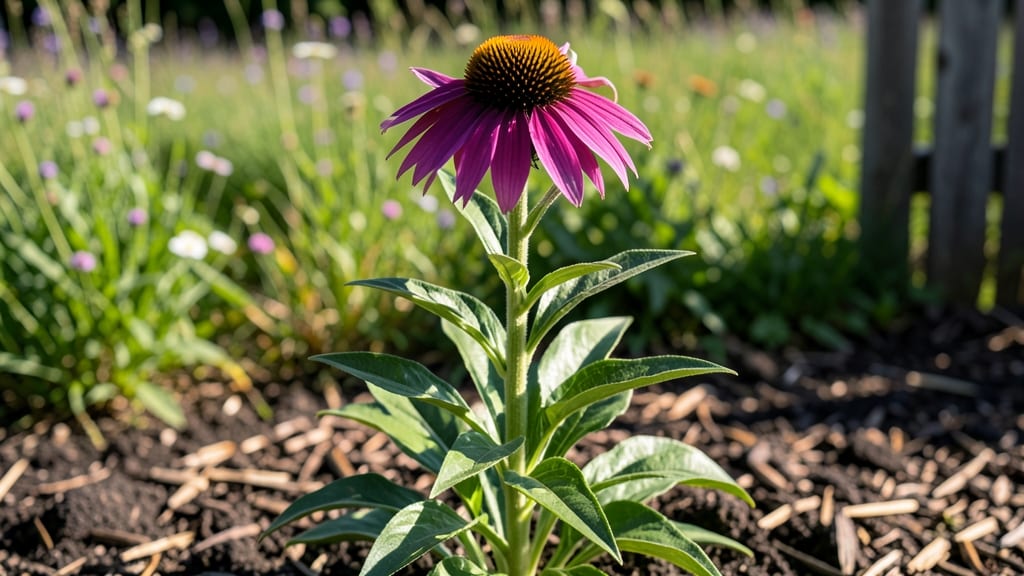
If you're planning your garden layout and wondering how tall does this coneflower grow, the answer depends more on the variety than you might think. Some stay compact enough for borders, while others can rival small shrubs in your landscape design.
Standard coneflowers like Echinacea purpurea typically grow between 3 to 5 feet tall, making them perfect for mid-border planting where they can shine without overwhelming smaller plants. But don't let that intimidate you—dwarf varieties like 'White Swan' top out at just 18 inches, ideal for containers or front-of-the-bed displays.
The key to getting the height you want starts with choosing the right variety for your space. I'll show you how sunlight, soil, and even your planting location in Zone 6a can influence their growth patterns—plus how to manage their height naturally through simple techniques.
Whether you're dreaming of a pollinator magnet or a low-maintenance perennial, understanding these growth factors will help you create a stunning display that fits perfectly in your garden vision. Let's break down exactly what to expect from each type.

Coneflower height by variety: dwarf to giant growth comparisons
Choosing the right coneflower variety depends on your garden layout and vision. Some varieties stay compact at just 18 inches tall, while others reach towering heights of 5 feet or more. Understanding these differences helps you plan spacing, companion plants, and even container gardening.
Whether you're designing a pollinator-friendly border or a cut-flower garden, knowing the mature height ensures your coneflowers thrive without overcrowding.
Coneflowers (Echinacea) are prized for their drought tolerance and long bloom season, but their height varies dramatically. The shortest varieties like 'White Swan' work beautifully in rock gardens or front-of-border plantings, while the tallest cultivars like 'Magnus' make stunning backdrop plants or cut-flower stalks.
Let’s explore how these heights translate into real-world planting scenarios and care needs.
| Variety | Mature Height | Spread | Bloom Time | USDA Zones | Spacing Needs | Best For |
|---|---|---|---|---|---|---|
| White Swan 🌼 | 18-24 inches | 18-24 inches | Mid to late summer | 3-9 | 12-18 inches apart | Front borders, containers, rock gardens |
| Green Envy 🌿 | 24-30 inches | 20-24 inches | Early to mid summer | 4-9 | 18-24 inches apart | Pollinator gardens, mixed borders |
| Hot Papaya 🌻 | 24-30 inches | 18-24 inches | Mid to late summer | 4-9 | 18-24 inches apart | Cut flowers, cottage gardens |
| Magnus 🌳 | 48-60 inches | 24-30 inches | Mid to late summer | 3-9 | 24-36 inches apart | Backdrop plants, cut flowers, prairies |
| Cheyenne Spirit 🌈 | 30-36 inches | 20-24 inches | Mid to late summer | 4-9 | 18-24 inches apart | Pollinator gardens, wildflower meadows |
| White Beauty ❄️ | 36-48 inches | 24-30 inches | Mid to late summer | 3-9 | 24-36 inches apart | Cut flowers, statement plants, borders |
When selecting coneflowers, consider not just their height but also their spread and bloom time. For example, 'White Swan' stays under 2 feet tall and blooms later in the season, making it ideal for small spaces or container gardens.
In contrast, 'Magnus' reaches 5 feet tall and thrives as a backdrop plant in larger gardens or prairie-style plantings. Always check the USDA zone compatibility to ensure your climate supports the variety you choose.
Proper spacing is critical for healthy growth. Dwarf varieties like 'White Swan' need only 12-18 inches between plants, while towering 'Magnus' requires 24-36 inches to prevent overcrowding. Overcrowding can lead to reduced airflow, increasing the risk of fungal diseases like powdery mildew.
For container gardening, opt for dwarf varieties in 5-gallon pots with well-draining soil to mimic their natural growing conditions.
Another key factor is light exposure. All coneflowers prefer full sun (6+ hours daily), but taller varieties may need additional support in windy areas. Staking can prevent stem flopping, especially for 'Magnus' or 'White Beauty,' which can reach 4-5 feet tall.
Use bamboo stakes or lightweight cages to keep stems upright without restricting growth. For cut-flower gardens, taller varieties like 'Magnus' provide long-lasting stems, while dwarf varieties offer quick, easy access to blooms.
If you're planning a pollinator garden, mix heights and bloom times for continuous nectar. For instance, pair 'Green Envy' (blooms early) with 'Cheyenne Spirit' (blooms mid-season) to attract butterflies and bees from spring through fall.
Always mulch around the base to retain moisture and suppress weeds, which is especially important for drought-tolerant varieties like coneflowers. A 2-3 inch layer of mulch also protects roots during extreme heat or cold.
For first-year growth, expect coneflowers to reach about half their mature height. For example, 'White Swan' may only grow to 12 inches in its first year, while 'Magn
How fast coneflowers grow: timeline from seed to full bloom
Watch your coneflowers transform from tiny seeds to towering pollinator magnets in as little as 90 days—if you give them the right conditions.
Most varieties follow a predictable growth pattern, but factors like sunlight exposure, soil quality, and watering consistency can speed up or slow down their development. Understanding these stages helps you plan your garden layout and anticipate when those stunning blooms will appear.
From the moment you plant those seeds, your coneflowers will go through distinct phases: germination (7–14 days), seedling growth (2–4 weeks), foliage development (4–8 weeks), and finally flowering (8–12 weeks after planting).
Each stage requires slightly different care, and knowing what to expect keeps your plants on track for a vibrant summer display.
Here’s a breakdown of the growth timeline with pro tips to maximize speed and health at each stage:
Seed Germination (7–14 Days)
Plant seeds ¼ inch deep in well-draining soil and keep moist. Germination occurs fastest in 60–70°F soil. Use a heat mat if your climate is cool—this cuts germination time by 3–5 days.
Seedling Stage (2–4 Weeks)
True leaves appear after 14–21 days. Thin seedlings to 12 inches apart to prevent competition. Place in full sun (6+ hours/day) to boost early growth—seedlings grow 2x faster with proper light.
Foliage Development (4–8 Weeks)
Roots establish deeply by week 6. Water at the base (not overhead) to prevent fungal issues. Add compost-rich soil for nutrient boost—plants grow 1–2 inches per week in ideal conditions.
Bud Formation (8–10 Weeks)
Flower buds form by week 8. Fertilize lightly with 10-10-10 to encourage blooms. Remove spent blooms to extend flowering—this triggers 2–3 weeks of continuous blooms.
Full Bloom (10–12 Weeks)
Peak blooming occurs at 90–120 days from seed. Tall varieties (like 'Magnus') may need staking to prevent flopping. Deadhead regularly to promote second flushes in late summer.
To accelerate growth, focus on consistent moisture and full-sun exposure. I’ve found that coneflowers planted in well-draining, slightly acidic soil (pH 6.0–7.0) reach maturity 2–3 weeks faster than those in heavy clay. Mulch around the base to retain moisture and suppress weeds—this reduces stress and encourages taller, sturdier stems.
Remember, dwarf varieties like 'White Swan' may take slightly longer to bloom (up to 120 days) because they focus energy on bushier growth rather than height. But with the right care, you’ll have a pollinator haven in no time—just in time for summer’s peak blooming season! 🌻