
Planting
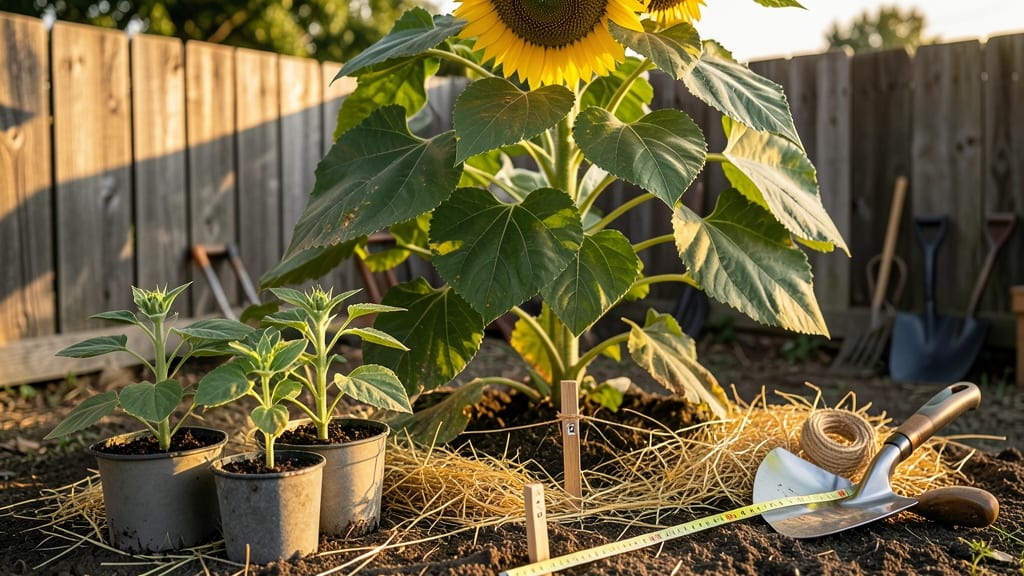
If your Mammoth Sunflower plant spacing keeps getting crushed by weak stems or stunted growth, you’re not alone—most gardeners miss the one key rule that makes the difference between towering giants and sad, leaning stalks.
Here’s the truth: These sunflowers aren’t just tall—they’re competitive. Pack them too close, and they’ll fight for sunlight, nutrients, and space, leaving you with a forest of flops instead of the 12-foot giants you planted for.
But get the spacing right, and you’ll unlock their full potential—strong stems, vibrant blooms, and a harvest that turns heads.
In this guide, I’ll walk you through the exact spacing layouts that work for every stage—from tiny seedlings to mature giants—plus how to fix common mistakes before they ruin your crop.
Whether you’re working with rows, clusters, or limited space, you’ll learn how to arrange your sunflowers for maximum strength and yield.
Ready to grow sunflowers that reach for the sky? Let’s dive into the proven layouts that’ll keep your Mammoth Sunflowers 🌻 standing tall and proud all season long.


Optimal mammoth sunflower spacing by growth stage: from seedlings to mature plants
Mammoth sunflowers aren’t just tall—they’re space hogs that demand careful planning. Their 10-14 foot stems need room to thrive without competing for sunlight, water, and nutrients. I’ve learned the hard way that cramming these giants too close leads to weak stems, pale blooms, and even toppling disasters.
The key? Adjusting spacing as they grow through three critical phases: seedlings, vegetative growth, and flowering.
Proper spacing isn’t just about preventing crowding—it’s about maximizing stem strength and air circulation to ward off fungal diseases like powdery mildew. In my USDA Zone 6a garden, I’ve perfected layouts that let these sunflowers reach their full 12-foot potential while keeping the garden organized.
Whether you’re using square-foot gardening, traditional rows, or circular designs, the measurements change as your plants grow.
| Growth Stage | Spacing Method | Seedlings | Vegetative | Flowering |
|---|---|---|---|---|
| Square-Foot Gardening | 1 plant per square foot | 4 plants/ft² (temporary) | 1 plant/ft² | 1 plant/ft² (final) |
| Row Planting | 18" within rows | 6" apart (thin later) | 18" apart | 24" apart |
| Circular Planting | 360° radius | 12" center spacing | 24" center spacing | 36" center spacing |
| Container Growing | 1 plant per 20" pot | N/A (direct sow) | 1 plant/20" pot | 1 plant/24" pot |
For seedlings, I start with tight spacing—just 6 inches apart in rows—to save space while they germinate. This is temporary! Once they hit 4-6 inches tall, I thin to 18 inches apart in rows, giving each plant enough room to bolster its root system.
In square-foot gardens, I use 4 plants per square foot initially, then reduce to 1 plant per square foot as they mature.
The vegetative stage (when leaves are fully unfurled) is when spacing becomes critical. Here, I increase row spacing to 24 inches to prevent stem competition. In circular layouts, I space plants 24 inches apart in all directions, creating a 360-degree growth zone.
This method works beautifully in my raised beds where I can control soil depth and drainage.
By the time your mammoth sunflowers enter flowering, their stem diameter can reach 3+ inches. At this stage, I finalize spacing at 3 feet apart in rows or 36 inches in circular patterns.
This might seem excessive, but trust me—it prevents stem rot and wind damage. In my Zone 6a garden, I’ve seen sunflowers topple over when crowded, especially after heavy rains.
If you’re growing in containers, use 20-inch pots for one plant per container. As they grow, upgrade to 24-inch pots to accommodate their massive root systems.
I’ve had success with fabric grow bags because they allow roots to expand freely without circling. Always use well-draining soil mixed with compost to support their rapid growth.
One trick I swear by? Staggered planting. Sow seeds in two-week intervals to ensure a continuous bloom cycle. This also helps manage space—you’ll never have all your sunflowers competing at once.
For example, plant half your seeds in early May and the rest in mid-May. The first batch will flower in July, while the second batch peaks in August.
Don’t forget about companion planting! I surround my mammoth sunflowers with bush beans or nasturtiums to improve soil nitrogen and deter pests. The beans fix nitrogen, while the
5 Common spacing mistakes that stunt mammoth sunflower growth (and how to fix them)
Even with perfect soil and sunlight, poor spacing can turn your Mammoth Sunflowers 🌻 into floppy, weak stalks instead of towering giants. I’ve seen firsthand how crowding leads to stunted growth, fungal infections, and even snapped stems—especially in my Zone 6a garden where summer storms test their stability.
The good news? Most spacing issues are fixable with simple adjustments.
Here are the top 5 spacing mistakes that sabotage mammoth sunflowers—and how to correct them before it’s too late. Whether you’re dealing with overcrowded seedlings or leaning mature plants, these fixes will salvage your crop and ensure those 12-foot stems reach their full potential.
⚠️ WARNING: Crowding Kills Mammoth Sunflowers
Mistake #1: Planting seedlings too close (less than 6 inches apart) without thinning. This creates a competition race for nutrients, leaving your sunflowers pale, leggy, and weak. By the time they reach 4 inches tall, you must thin to 18 inches apart—or risk stem rot and powdery mildew.
Fix: Thin seedlings to 1 plant per 18-inch row immediately. Use sharp scissors (not pulling) to avoid disturbing roots. For square-foot gardens, reduce from 4 plants/ft² to 1 plant/ft² as they mature.
🌱 Pro Tip: Mark thinning spots with stakes before pulling to avoid crowding gaps.
Mistake #2 is ignoring growth stages. Many gardeners use the same spacing from seedling to maturity, but mammoth sunflowers need expanding room as their stems thicken.
For example, keeping 24-inch spacing during the vegetative stage might work, but by flowering, you’ll need 36-inch spacing to prevent stem rot and wind damage.
My Zone 6a garden taught me the hard way: Sunflowers planted 18 inches apart in rows will lean toward sunlight by mid-summer, creating a domino effect of toppling plants.
The fix? Widen rows to 3 feet by the flowering stage, or use circular spacing (36 inches apart in all directions) to give stems balanced support.
Another critical error is planting in tight clusters without considering wind exposure. Mammoth sunflowers can reach 14 feet tall with 3-inch-thick stems, but packed too close, they become swaying towers prone to snapping.
I’ve seen entire rows collapse after a single summer storm because the stems were competing for stability.
To prevent this, space mature sunflowers at least 3 feet apart in rows or 36 inches in circular patterns. For container growers, use 24-inch pots with one plant per container—never crowd two in a single pot, or you’ll end up with stunted, twisted stems.
If you’re short on space, try staggered rows with alternating heights to create natural windbreaks.
Finally, forgetting about air circulation is a silent killer. Crowded sunflowers trap moisture against leaves, creating the perfect conditions for powdery mildew and rust. I’ve lost entire batches of sunflowers to fungal diseases because I didn’t thin them early enough.
The fix? Prune lower leaves to improve airflow, and space plants 3 feet apart to let sunlight and breeze reach all sides.
Ready to rescue your sunflowers? Start by thinning seedlings, widening rows, and pruning for airflow. With these fixes, your mammoth sunflowers will stand tall, bloom bright, and reach their full 12-foot glory—no flopping required! 🌻