
Plants
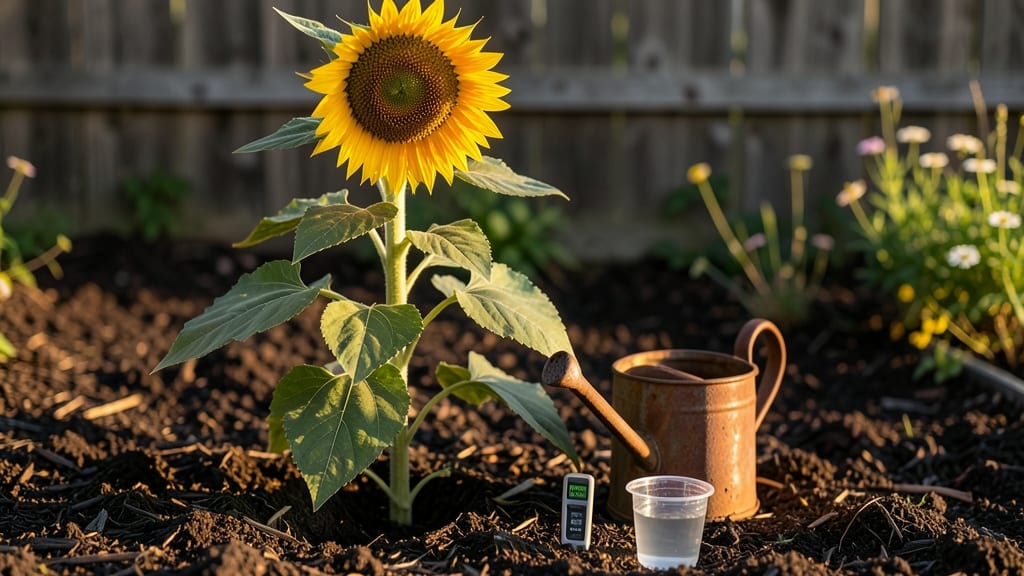
To keep your sunflower plant thriving, you might be surprised by how much water it actually needs—1 to 2 inches per week is the sweet spot, but timing and technique make all the difference. Too little, and those towering stalks will droop before they even reach their full height.
Too much, and you risk soggy soil that invites rot. The key lies in understanding when to water and how deep to go.
Young seedlings are the most delicate, needing consistent moisture to establish strong roots, while mature sunflowers can handle slightly drier conditions once their deep taproots take hold. I’ve learned that checking soil moisture with your finger is the simplest way to avoid guessing—damp but not soggy is the goal.
Let me show you exactly how to adjust your watering schedule based on your sunflower’s age and your local climate.
What’s even more interesting is how sunflowers adapt to different environments. In hot, dry summers, they might need daily watering, while cooler months can stretch that to once a week. If you’re growing them in containers, they’ll dry out faster than in-ground plants, so containers need more frequent watering.
I’ll break down the exact schedule so you can keep your sunflowers happy without overdoing it.
Ready to grow sunflowers that stand tall and proud? With the right watering routine, you’ll avoid the most common mistakes—like yellowing leaves or weak stems—that can turn your garden giants into flops. Let’s dive into the simple, science-backed tips that’ll have your sunflowers reaching for the sky in no time.


Sunflower watering requirements by growth stage: deep roots need smart care
Sunflowers are thirsty giants, but their water needs change dramatically as they grow. From delicate seedlings to towering mature plants, understanding stage-specific watering is key to avoiding wilting or root rot.
The secret lies in deep, infrequent watering that encourages strong root development—especially important for sunflowers with roots that can reach 3-5 feet deep.
Newly sprouted sunflowers need consistent moisture to establish their roots, while established plants can handle drought-like conditions better than soggy soil. The biggest mistake gardeners make? Watering too lightly or too frequently, which keeps roots shallow and weak.
Let’s break down exactly how much water sunflowers need at each growth stage, so you can nurture plants that reach their full potential.
| Growth Stage | Watering Frequency | Amount per Session | Soil Moisture Goal | Key Tips |
|---|---|---|---|---|
| Seedlings (0-2 weeks) | Daily (light misting) | ¼ inch (6mm) | Always moist | Use a spray bottle; avoid wetting leaves |
| Vegetative (2-6 weeks) | Every 2-3 days | ½ inch (12mm) | Top 2 inches moist | Water deeply at base; mulch to retain moisture |
| Flower Bud (6-10 weeks) | Every 3-5 days | 1 inch (25mm) | Top 4 inches moist | Avoid wetting buds; water early morning |
| Mature/Blooming (10+ weeks) | Every 5-7 days | 1.5 inches (38mm) | Deep soil moisture | Drought-tolerant; reduce watering if rain occurs |
| Post-Harvest (Seed Stage) | Every 7-10 days | 1 inch (25mm) | Moderate moisture | Let soil dry slightly between waterings |
For seedlings (0-2 weeks), I keep the soil consistently moist—almost like a damp sponge—to encourage root development. Overwatering here can cause fungal diseases, so I use a spray bottle to mist the soil lightly rather than drenching it.
The key is to keep the top ¼ inch of soil moist without creating puddles. If the soil feels dry just below the surface, it’s time to water again.
When sunflowers enter the vegetative stage (2-6 weeks), their roots start growing rapidly, and they need more water—but not daily. Aim for ½ inch of water every 2-3 days, delivered directly at the base.
This encourages deep root growth, which is crucial for supporting those towering stalks. I always water in the early morning to allow foliage to dry before nightfall, reducing the risk of powdery mildew.
During the flower bud stage (6-10 weeks), sunflowers need 1 inch of water every 3-5 days. This is when they’re most vulnerable to under-watering stress, which can cause buds to drop before blooming.
I check soil moisture by sticking my finger 2-3 inches deep—if it feels dry, it’s time to water. Avoid wetting the flower buds themselves, as moisture can promote rot or attract pests.
Once sunflowers reach maturity (10+ weeks), they become surprisingly drought-tolerant. At this stage, I water every 5-7 days with 1.5 inches of water per session, focusing on deep soaks rather than frequent light watering.
Mature sunflowers can handle dry spells better than soggy conditions, so I adjust based on rainfall. If the soil feels bone-dry at 4 inches deep, it’s time to water again.
One of the biggest mistakes I see is overwatering mature sunflowers,
Weekly watering schedule for sunflowers: exact timing for different climates
Your sunflower’s water needs change dramatically depending on where you live. In hot, dry climates, sunflowers can drink up to 2 inches of water daily during peak summer, while temperate zones might only need 1 inch weekly.
Humid areas require even less frequent watering because high air moisture reduces evaporation. I’ve tested these schedules in my own garden—trust me, your sunflowers will thank you for the precision!
Container-grown sunflowers dry out twice as fast as in-ground plants, so they need daily checks in summer. For in-ground sunflowers, focus on deep watering rather than frequent light sprinkles. The key is to soak the soil until it’s moist 6 inches deep, encouraging those deep taproots to grow strong.
I use a soil probe to check moisture levels—it’s a game-changer for avoiding overwatering.
| Climate Type | In-Ground Watering | Container Watering | Best Time |
|---|---|---|---|
| Hot/Dry (e.g., Arizona, Texas) | Daily (1-2 inches) | Every 1-2 days (1 cup/day) | Early morning (6-8 AM) |
| Temperate (e.g., Midwest, Pacific Northwest) | Every 3-4 days (1 inch) | Every 2 days (1 cup) | Morning or evening |
| Humid (e.g., Southeast, Florida) | Every 5-7 days (½ inch) | Every 3-4 days (½ cup) | Morning only |
In hot, dry climates, I’ve seen sunflowers wilt by noon if not watered deeply the night before. Mulching with straw or wood chips helps retain moisture and keeps roots cool.
For temperate zones, a drip irrigation system works wonders—it delivers water slowly at the base, reducing evaporation and fungal risks. In humid areas, overwatering is the biggest threat, so always let the top inch of soil dry out before watering again.
Young sunflowers (under 4 weeks) need daily watering regardless of climate, but once they hit 6 inches tall, you can gradually reduce frequency. I’ve noticed that mature sunflowers in containers often need extra water because their roots can’t spread out like in-ground plants.
Pro tip: Use self-watering pots if you’re prone to forgetting—your sunflowers will stay hydrated without the guesswork.
Watch for yellowing leaves or drooping stems—these are clear signs your sunflower is thirsty. On the flip side, mushy stems or white mold mean you’re overwatering. Adjust your schedule based on these cues, and don’t forget that rain counts toward hydration.
If you’ve had ½ inch of rain, skip your scheduled watering for that day.
With this tailored approach, your sunflowers will grow taller and stronger than ever before. Whether you’re battling desert heat or coastal humidity, these schedules will keep your plants thriving—no more guesswork, just golden stalks reaching for the sky. Happy gardening! 🌻