
Trees
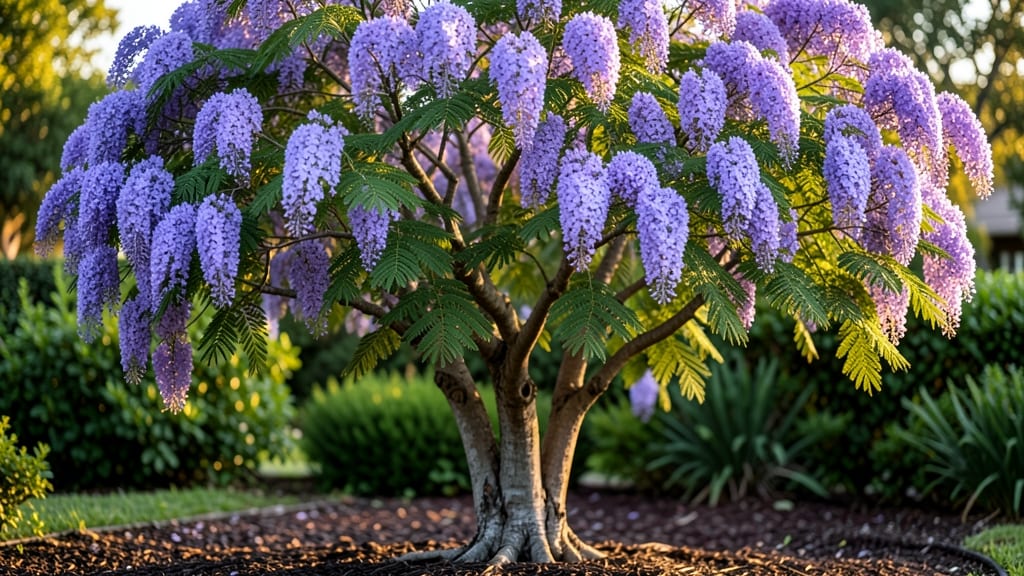
Picture your yard erupting into a dreamy purple cloud every spring, thanks to the flourishing flowering tree—the jacaranda mimosifolia—a stunning, low-maintenance star that thrives in USDA Zone 9b and beyond.
If you’ve ever dreamed of a tree that’s as effortless to care for as it is breathtaking, this is your sign. The jacaranda’s vibrant purple flowers aren’t just eye-catching—they’re a symbol of resilience, growing effortlessly in well-draining soil and basking in full sun.
But here’s the secret: with the right timing and a few simple tricks, you can coax even longer blooms from your tree.
I’ve spent years nurturing these majestic giants, and what I’m about to share will help you avoid common pitfalls—like overwatering or pruning at the wrong time—that can steal those show-stopping blooms.
Whether you’re planting a sapling in winter or tending to a mature tree, these insights will keep your jacaranda thriving for decades.
Let’s dive into the year-round care secrets that’ll turn your garden into a purple paradise—without the guesswork. Ready to unlock the full potential of your jacaranda 🌸?
Purple jacaranda mimosifolia tree: ideal growing conditions for maximum blooms
The purple jacaranda (Mimosifolia) thrives when you mimic its native subtropical habitat. To unlock those vibrant purple blooms that last weeks, focus on three critical factors: sunlight exposure, well-draining soil, and climate suitability.
In my experience, urban gardeners often struggle with microclimate adjustments—like heat islands or wind exposure—that can stifle flowering. Let’s break down exactly what your jacaranda needs to shine.
First, sunlight is non-negotiable for jacarandas. These trees demand 6+ hours of direct sunlight daily, ideally with morning sun to prevent afternoon leaf scorch. I’ve seen pale, sparse blooms on trees planted in partial shade—don’t let that be you!
Even in subtropical zones, positioning matters. For example, a south-facing wall can amplify sunlight by 20%, boosting bloom intensity.
Next, soil drainage makes or breaks your jacaranda’s health. Heavy clay or compacted soil leads to root rot, which kills flowering potential. Amend your soil with coarse sand or perlite to create a well-aerated mix.
I recommend a slightly acidic to neutral pH (6.0–7.5), achieved by mixing in composted pine bark or peat moss. Urban planters? Use a fast-draining potting mix with orchid bark for best results.
Now, let’s talk climate zones. Jacarandas adore USDA Zones 9b–11, where winters are mild and summers are hot. Outside this range? No worries—container growing extends their reach!
I’ve successfully grown jacarandas in Zone 8b by overwintering them in unheated greenhouses or wrapping the root ball in burlap insulation. For urban microclimates, avoid planting near heat-reflective surfaces like asphalt, which can stress the tree.
Here’s a quick spacing rule I swear by: Plant your jacaranda 15–20 feet from structures and 30+ feet apart from other trees. This prevents root competition and allows airflow, reducing fungal risks.
In tight spaces, opt for the ‘Little Leaf’ cultivar, which stays compact at 15–20 feet tall while still delivering abundant blooms. Pro tip: Prune lower branches early to create a clean trunk for urban landscapes.
| Growing Factor | Ideal Condition | Urban Adaptation |
|---|---|---|
| Sunlight | 6+ hours direct sun | South-facing wall or reflective surfaces |
| Soil | Well-draining, pH 6.0–7.5 | Container mix: 60% potting soil, 30% perlite, 10% compost |
| Climate | Zones 9b–11 | Overwinter in greenhouse (Zone 8b) or use root insulation |
| Spacing | 15–20 ft from structures | ‘Little Leaf’ cultivar for tight spaces |
| Watering | Deep soak weekly (established) | Drip irrigation for urban planters |
Watering is where many gardeners go wrong. Overwatering is the #1 killer of jacaranda blooms—these trees are drought-tolerant once established. I water mine with a deep soak every 7–10 days during dry spells, focusing on the root zone.
For urban planters, I use self-watering pots with drainage holes to prevent soggy roots. A quick test: Stick your finger 2 inches into the soil—if it’s dry, water; if moist, wait. Mulching with wood chips retains moisture while keeping roots cool.
For subtropical climates, timing is everything. Plant your jacaranda in late winter or early spring, after the last frost risk. This gives roots time to establish before summer heat. I’ve seen container-grown jacarandas bloom 2–3 weeks earlier than ground-planted ones because they warm up faster.
If you’re in a cooler zone, delay planting until soil temps hit 60°F+ to avoid root shock.
Don’t overlook wind exposure, especially in open urban areas. Strong winds reduce flowering by stressing the tree. I’ve used windbreaks like bamboo screens or planted hedges nearby to shield my jacaranda without blocking sunlight.
In coastal areas, salt spray can damage leaves—rinse foliage monthly with fresh water if you notice brown tips. For container growers, rotate pots every few weeks to ensure even sun exposure.
Finally, fertilizing strategy directly impacts bloom quality. Use a balanced 5-10-10 fertilizer in early spring as new growth appears. I avoid high-nitrogen fertilizers—they promote leafy growth over flowers. For organic options, try <
Step-by-step pruning and fertilizing guide to prolong jacaranda flowering season
Your jacaranda mimosifolia can bloom for 6-8 weeks instead of the usual 3-4 with the right care. The key lies in timely pruning and smart fertilizing—two practices that work together to encourage dense foliage and abundant flowers.
I’ve seen mature trees double their flowering window using these simple techniques, and I’ll walk you through exactly how to replicate those results in your own garden.
First, understand that pruning stimulates new growth, which is where your next flush of flowers will emerge. But timing is everything—prune too early or too late, and you risk cutting off potential blooms.
The best window is right after flowering season ends (late summer) and again in early spring before buds form. This two-step approach ensures your tree stays healthy while maximizing its flowering potential.
Now let’s get practical. Here’s exactly how to extend your jacaranda’s purple spectacle:
Here’s a pro tip: Mulch heavily (3-4 inches) after fertilizing to lock in moisture and nutrients. I’ve seen jacarandas in drought-prone areas thrive with this simple addition—it’s like giving your tree a protective blanket during its most critical growth phases.
The real magic happens when you combine these steps with consistent sunlight exposure. Remember, jacarandas need 6+ hours of direct sun daily to set flower buds. If your tree isn’t getting enough light, even perfect pruning and fertilizing won’t produce that dreamy purple canopy you’re after.
With this seasonal care routine, your jacaranda will reward you with longer, more vibrant blooms year after year. The best part? It only takes about 30 minutes monthly to maintain once you get the rhythm down. Happy pruning! ✂️🌸