
Vegetables
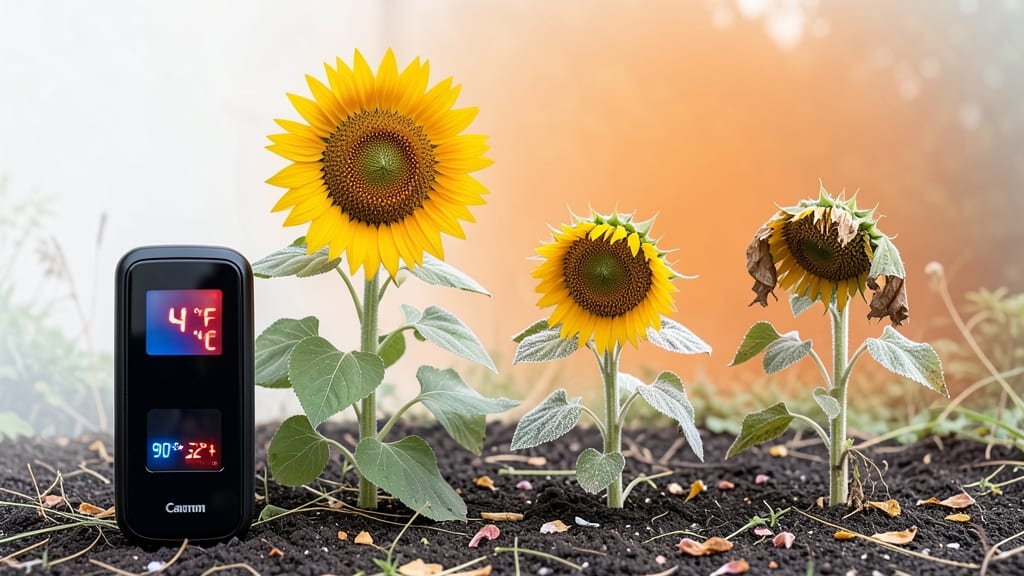
Understanding sunflower temperature tolerance is the difference between a thriving 🌻 that reaches for the sky and one that wilts before it even blooms.
These towering beauties love warmth, but push them too far—either with scorching heat or sudden chills—and you’ll watch their growth stall or worse, their leaves turn brown. I’ve learned the hard way that sunflowers aren’t as resilient as they look, especially when the thermometer spikes or dips unexpectedly.
The key to growing sunflowers that stand tall and proud lies in knowing their ideal temperature ranges at every stage—from the moment those first seeds sprout to when they burst into full, golden bloom. Too cold during germination, and your plants may never break through the soil.
Too hot during flowering, and you might end up with underdeveloped seed heads. Let me break down exactly what temperatures your sunflowers can handle, so you can avoid common pitfalls and give them the best shot at success.
Whether you’re in USDA Zone 6a or a warmer climate, the right variety and a few smart strategies can make all the difference. We’ll cover how to protect your sunflowers from heat stress, shield them from early frost, and even choose the best types for your local conditions.
By the end, you’ll know exactly how to create the perfect growing environment—no guesswork required.
Ready to grow sunflowers that reach their full potential? Let’s dive into the science and practical tips that will help you cultivate sunflowers that not only survive but thrive—no matter what Mother Nature throws their way.
Ideal temperature ranges for sunflower growth by development stage
Sunflowers are sun lovers, but their temperature tolerance varies dramatically depending on their growth stage. From delicate seedlings to towering mature plants, each phase has specific ideal temperature ranges that maximize growth and seed production.
I’ve grown sunflowers in USDA Zone 6a and hotter climates, and I can tell you firsthand that pushing these ranges too far will leave you with stunted plants or empty seed heads.
The secret to success lies in understanding these critical thresholds. Too cold during germination, and your seeds may rot before sprouting. Too hot during flowering, and your plants may produce fewer seeds.
Let’s break down the perfect temperature ranges for each stage of sunflower development, so you can give your plants the best chance to thrive.
During the germination stage, sunflower seeds need consistent warmth to break dormancy. Soil temperatures between 60-75°F are ideal—any cooler, and germination slows or stops entirely. I’ve seen seeds take weeks to sprout when soil temps dipped below 55°F, and they often rot if the ground stays too cold.
If you’re planting in early spring, use black plastic mulch or a seedling heat mat to maintain warmth.
Once your sunflowers sprout, they enter the vegetative growth stage, where temperatures between 70-85°F fuel rapid stem elongation and leaf development. This is when your plants grow fastest, but extreme heat above 95°F can cause leaf scorch or wilting.
In my garden, I’ve noticed that afternoon shade cloth becomes essential during heatwaves to protect young plants from sunburn.
The flowering stage is where temperature sensitivity peaks. Sunflowers need 75-85°F to produce vibrant blooms and set seeds properly. If temperatures drop below 60°F during this phase, flowering may stall, and you’ll end up with fewer seeds.
I once grew sunflowers in a cooler summer, and the blooms opened but never developed seed heads—until I moved them to a sunnier spot with better warmth.
Finally, during seed production, temperatures between 70-80°F ensure healthy seed development. Too much heat above 95°F can cause seeds to shatter prematurely, while cold snaps below 55°F reduce seed viability.
In my experience, harvesting seeds early in the morning when temps are cooler helps preserve their quality, especially in hot climates.
Knowing these temperature thresholds helps you plan your sunflower garden around your local climate. For example, in USDA Zone 6a, I start seeds indoors in late April when soil temps reach 50°F, then transplant after the last frost.
In warmer zones, I opt for heat-tolerant varieties like 'Moulin Rouge' to handle higher temps without stress.
If you’re growing sunflowers in extreme conditions, don’t worry—there are ways to adjust. Mulching with straw, providing afternoon shade, and choosing the right variety can make all the difference. The key is paying attention to your plants and adjusting as needed.
With the right temperature management, your sunflowers will reward you with towering stems and abundant seeds year after year.
Now that you know the ideal temperature ranges, you’re ready to give your sunflowers the perfect growing environment. Next, we’ll explore practical strategies to protect them from heat stress and cold damage—so stay tuned!
How to protect sunflowers from heat stress and cold damage
Extreme temperatures can turn your sunflower dreams into disappointment, but don't worry—there are simple ways to shield these sun-loving plants from both scorching heat and chilly nights.
I’ve seen firsthand how a heatwave can cause sunflowers to wilt midday, while early frost can kill young seedlings before they reach their full height. The good news? With the right strategies, you can create a protective environment that keeps your sunflowers thriving, no matter the weather.
Sunflowers are surprisingly sensitive to temperature swings, especially during critical growth stages. For example, seedlings need consistent warmth to germinate, while mature plants can handle brief cold snaps—but only if they’re well-prepared. The key is understanding how to adjust your care routine based on your local climate.
Whether you’re battling 100°F afternoons or 30°F nighttime chills, these practical tips will help you keep your sunflowers safe and growing strong.
One of the most effective ways to protect sunflowers from extreme heat is to mulch around their base. A thick layer of organic mulch—like straw or wood chips—helps retain soil moisture and regulate root-zone temperatures.
This is especially important in hot, dry climates where soil can bake hard and dry out quickly. I’ve found that mulching can reduce soil temperature by up to 10°F, giving your sunflowers a fighting chance during heatwaves. Plus, it suppresses weeds, so you get double the benefit!
⚠️ Sunflower Temperature Tolerance Limits
Germination: Soil must stay above 50°F—cold soil slows or stops sprouting. Below 45°F, seeds may rot.
Vegetative Growth: Ideal range is 70-85°F. Above 90°F causes wilting; below 55°F stunts growth.
Flowering: Needs 60-75°F for pollination. Below 50°F or above 95°F reduces seed production.
Mature Plants: Can tolerate brief dips to 28°F but may suffer leaf damage. Prolonged cold below 32°F risks death.
If you’re dealing with intense afternoon heat, consider providing temporary shade using lightweight shade cloth (30-50% coverage). I’ve used this trick in my garden during summer heatwaves, and it makes a noticeable difference.
Just be sure to remove the shade in the mornings and evenings so your sunflowers still get their full sun requirements. Another trick is to water deeply in the early morning, which helps cool the soil and keeps roots hydrated.
Avoid evening watering, as wet foliage can attract pests and invite fungal diseases.
For cold protection, focus on root insulation and windbreaks. A thick layer of mulch combined with a row cover can shield young plants from light frost. I’ve also had success using black plastic mulch in early spring to warm the soil faster and give seedlings a head start.
If a hard freeze is forecasted, consider covering mature plants with frost cloth or even old blankets. Just remember to remove covers during the day to prevent overheating.
Choosing the right sunflower variety for your climate can also make a big difference. Heat-tolerant varieties like 'Moulin Rouge' or 'Autumn Beauty' handle high temperatures better, while cold-hardy types like 'Russian Mammoth' can survive light frosts.
If you’re in a short growing season, opt for early-maturing varieties that can complete their life cycle before the first frost. Always check the days to maturity on seed packets to ensure your sunflowers will have enough time to thrive in your specific climate.
With these strategies, you’ll be well on your way to growing healthy, resilient sunflowers that stand tall no matter the weather. The secret is proactive care—whether it’s mulching, shading, or selecting the right variety. Your sunflowers will thank you with vibrant blooms and abundant seeds all season long! 🌻