
Light Requirements
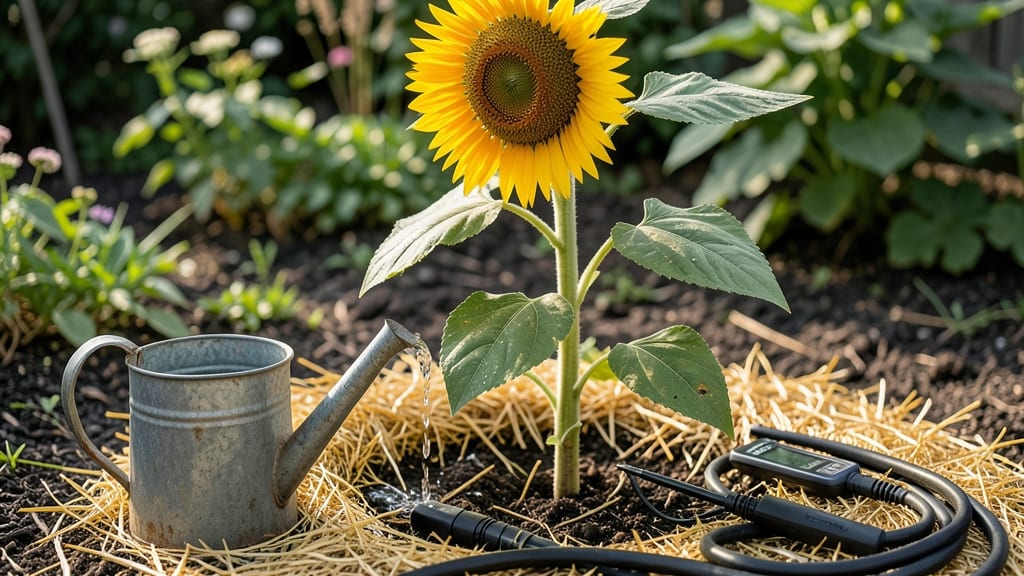
How much water do sunflowers need by growth stage?
Sunflowers thrive on consistency, but their water needs shift dramatically as they grow. From delicate seedlings to towering mature plants, understanding these stages helps you avoid stunted growth or root rot.
Their deep taproots mean they prefer deep watering over frequent shallow soaks—think of it as giving them a long drink rather than a quick sip.
Young sunflowers are the most vulnerable, needing daily moisture to establish roots. As they mature, their drought tolerance improves, but flowering and seed development remain critical periods where water stress can reduce yields. Let’s break down the science-backed approach for each growth phase.
🌱 Growth Stage | Water Needs | Frequency | Key Tips
| Stage | Water Amount | Frequency | Notes |
|---|---|---|---|
| Seed Germination | ½ inch (1.25 cm) | Daily | Keep soil consistently moist, not soggy |
| Seedling (1-4 weeks) | 1 inch (2.5 cm) | Every 2-3 days | Shallow roots need frequent water |
| Vegetative Growth (4-8 weeks) | 1.5 inches (3.8 cm) | Every 3-4 days | Encourage deep root penetration |
| Flowering (8-12 weeks) | 2 inches (5 cm) | Every 4-5 days | Critical for bud development |
| Seed Development (12+ weeks) | 1.5 inches (3.8 cm) | Every 5-7 days | Reduce water as seeds mature and dry |
| Maturity (Harvest) | Minimal (dry soil) | Bi-weekly | Prevent seed sprouting in head |
During the seed germination stage, focus on maintaining even moisture in the top 1-2 inches of soil. Use a spray bottle or gentle watering can to avoid displacing seeds. Once seedlings emerge, increase water volume but reduce frequency—this trains their roots to grow deeper, preparing them for future drought tolerance.
The vegetative growth phase (4-8 weeks) is when sunflowers shoot up rapidly. This is where deep watering pays off: aim for 1.5 inches per week, delivered in the early morning to prevent fungal diseases. If your soil drains poorly, consider raised beds or containers to avoid waterlogged roots.
Flowering (8-12 weeks) is the most water-sensitive stage. Buds need consistent moisture to open fully, but overwatering here can cause blossom end rot or split stems. Monitor soil moisture by sticking your finger 2 inches deep—water only when dry. Mulching with straw helps retain moisture while keeping roots cool.
As sunflowers enter seed development, reduce water slightly to 1.5 inches per week. This shift encourages seeds to dry properly for harvest. Overwatering now can lead to moldy seed heads or premature seed drop. If your region experiences high humidity, space plants wider to improve airflow.
Mature sunflowers are surprisingly drought-tolerant, but established plants still benefit from weekly deep waterings during dry spells. In arid climates, drip irrigation or soaker hoses deliver water directly to roots, minimizing waste. Avoid wetting foliage to prevent mildew, especially in humid summers.
One common mistake is assuming "more water = better growth." Overwatering suffocates roots by cutting off oxygen, while underwatering causes wilting and stunted stems. Strike a balance by checking soil moisture daily during critical stages—your sunflowers will reward you with vibrant blooms and heavy seed heads.
Pro tip: Group sunflowers with companion plants like borage or beans to improve soil moisture retention. These plants act as living mulch, reducing evaporation and keeping roots hydrated naturally.
Smart watering techniques to maximize sunflower growth
Sunflowers thrive with consistent moisture but hate soggy roots—balancing these needs is key to their towering success. The secret lies in deep watering that encourages strong root systems while avoiding wasteful surface evaporation.
I’ve learned that morning watering is non-negotiable, as it gives leaves time to dry before evening humidity sets in.
Your soil type plays a huge role in watering efficiency. Clay soil holds moisture longer, while sandy soil drains quickly, both requiring adjustments to your schedule. Mulching isn’t just decorative—it’s a game-changer for conserving soil moisture and regulating temperature.
Let me break down the essential techniques that’ll help your sunflowers reach their full potential without stress.
- 1 Deep Watering: Water 1-2 inches per week (5000ml per plant) directly at the base, encouraging roots to grow 3-4 feet deep. Use a soaker hose or drip irrigation for precision.
- 2 Mulch Magic: Apply 3-4 inches of mulch (straw or wood chips) to retain 30% more moisture and suppress weeds. Replenish every 2-3 months as it breaks down.
-
3
Soil Adjustments:
- Clay Soil: Water every 5-7 days (longer intervals) to prevent waterlogging.
- Sandy Soil: Water every 2-3 days (frequent shallow checks).
-
4
Seasonal Tweaks:
- Summer Heat: Increase to 1.5 inches per week and water early morning (before 8 AM).
- Drought Zones: Use drip irrigation with 50% less water but more frequency.
- 5 Signs of Success: Healthy sunflowers have deep green leaves and sturdy stems. Yellowing leaves or wilting? Adjust your watering immediately.
For young seedlings, keep soil consistently moist but never waterlogged—this is the most critical stage for root development. I’ve found that using a moisture meter ($15 at garden centers) takes the guesswork out of scheduling.
Once your sunflowers hit 2 feet tall, you can gradually reduce frequency but increase depth to 6-8 inches per watering.
In extreme climates, like my friend’s desert garden, sunflowers need additional shade cloth during peak heat (100°F+) to reduce water loss. Pair this with reflective mulch (like aluminum foil under black plastic) to boost root zone temperatures by 5-10°F, which surprisingly helps drought tolerance.
Pro tip: Collect rainwater in barrels for sunflowers—they thrive on chemical-free water and it’s free! Just ensure barrels are covered with mesh to keep out debris. With these techniques, your sunflowers will grow 20-30% taller and produce larger blooms—all while using 30% less water than average gardens.