
Vegetables
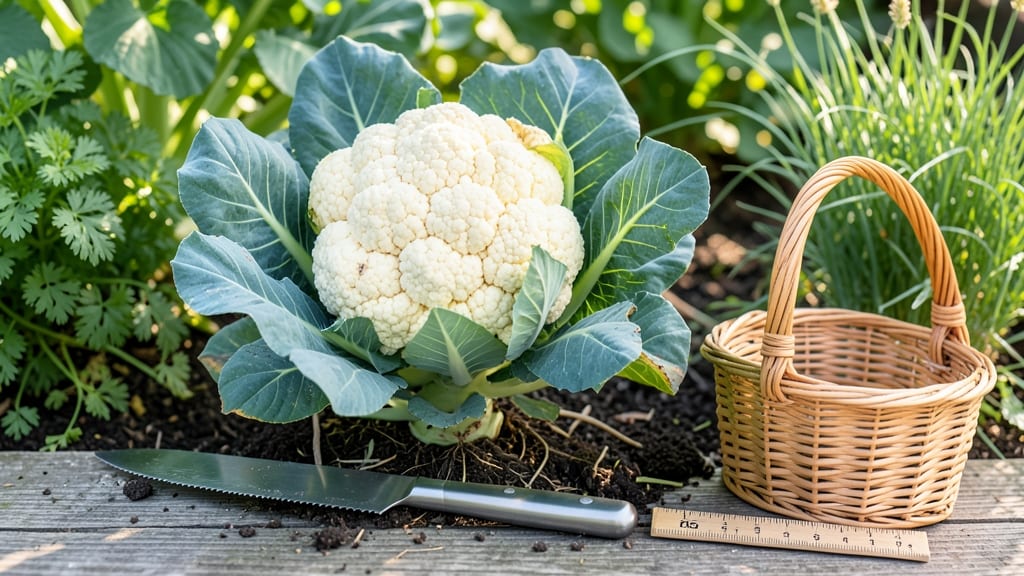
Knowing when is cauliflower harvested can mean the difference between a crisp, flavorful 🥬 and one that’s bitter or woody. The timing is everything—too early, and you lose sweetness; too late, and your crop turns tough.
But don’t worry, because with the right cues, you can master this window like a pro.
Most cauliflower varieties reach harvest readiness between 70 and 100 days after planting, typically landing in late spring to early summer. In USDA Zone 6a, that usually means June through August, but cooler climates may push it later.
The key is watching for firm, tightly packed curds and a clean stem break—signs your 🥬 is ready to pick.
Harvesting at the perfect moment isn’t just about days on the calendar—weather plays a role too. Heat stress or sudden temperature drops can throw off your crop’s timing, so staying attuned to your plants’ signals is the game-changer.
Once you recognize these visual and tactile clues, you’ll never second-guess when to harvest again.
Ready to unlock the secrets of a flawless harvest? I’ll walk you through everything—from spotting the ideal head to adjusting for your local climate—so you can enjoy restaurant-quality cauliflower straight from your garden.
How to identify perfectly ripe cauliflower for harvesting
Harvesting cauliflower at the right moment transforms your garden into a flavor powerhouse. The secret lies in three key indicators: head firmness, floret tightness, and color consistency.
When these cues align, you’ve hit the sweet spot for that perfectly tender texture and mild, sweet flavor we all crave. I’ve learned the hard way—overripe cauliflower turns bitter and woody, while underripe heads lack the depth of flavor.
Start by examining the head’s compactness. A perfectly ripe cauliflower should feel solid to the touch with no give when gently squeezed. The florets should remain tightly packed, almost like a closed fist.
If you notice any gaps forming between the florets, that’s your signal to harvest soon—those gaps mean the head is starting to open and lose its prime. This visual cue is non-negotiable for that restaurant-quality texture.
Next, check the stem’s readiness. Give the stem a firm twist—it should snap cleanly, almost like a celery stalk. This clean break indicates the head is fully mature and ready for picking. If the stem resists or pulls out with a chunk of root, your cauliflower still needs time.
I always test this with my thumb and index finger; it’s a quick way to avoid overripe disappointment.
Color plays a crucial role too, though it varies by variety. Traditional white cauliflower should be a creamy white with no yellowing. Purple or orange varieties will maintain their vibrant hue at peak ripeness.
Any browning or dullness signals stress—whether from heat, drought, or overmaturity. I keep a small notebook by my garden to track color changes daily during harvest season.
Don’t overlook the outer leaves. Healthy leaves should remain vibrant green and tightly wrapped around the head. Yellowing or wilting leaves are red flags—your plant might be struggling with nutrient deficiency or disease pressure.
I once lost an entire crop because I ignored these early warning signs; now, I inspect leaves before even checking the head.
Weather conditions can dramatically shift your harvest timeline. Cool temperatures (60-70°F) encourage steady growth, while heatwaves above 85°F can cause bolting—the plant’s desperate attempt to flower before forming a proper head.
In my Zone 6a garden, I’ve found that harvesting in the early morning avoids heat stress and ensures the freshest flavor. Always check your local forecast and adjust your expectations accordingly.
Variety matters too—early-season types like ‘Snowball Y’ mature in 60-70 days, while late-season varieties like ‘Chef’s Choice’ take 90-100 days. I plant a mix of both to stagger my harvest and enjoy fresh cauliflower from June through September.
Pay attention to your seed packets—they often include harvest windows tailored to your region.
| Sign | Description | Action |
|---|---|---|
| Head Firmness | Solid, no soft spots | Gently squeeze—should feel dense |
| Floret Tightness | Compact, no gaps between florets | Inspect closely for separation |
| Color Consistency | Creamy white (or variety-specific hue) | Avoid yellowing or browning |
| Stem Snap Test | Clean break when twisted | Twist stem near base |
| Leaf Health | Green, no yellowing | Remove outer leaves if wilted |
Size is another critical factor—aim for a head diameter of 6-8 inches. Smaller heads (<4 inches) are underripe and lack flavor, while larger heads (>10 inches) often develop a woody core. I use a simple tape measure to track growth, marking the stem with a waterproof pen to monitor progress.
This method has saved me from harvesting prematurely more times than I can count.
Timing your harvest also depends on your local climate. In cooler regions, cauliflower may take longer to mature, while warmer zones can accelerate growth. I’ve found that late spring plantings often yield better results in my area, avoiding the summer heat that triggers bolting.
Always be ready to adapt—gardening is as much about observation as it is about following rules.
Once you’ve confirmed all these signs, it’s time to harvest. Use a sharp knife or pruning shears to cut the stem about 1 inch below the head. Avoid pulling the plant—this can damage the roots and reduce future yields.
I always harvest in the morning when temperatures are coolest, ensuring the freshest possible produce. With these cues mastered, you’ll never miss the perfect harvest window again.
Optimal harvest window: days to maturity and seasonal timing
Timing your cauliflower harvest depends heavily on the variety you’re growing. Early-season types like 'Snowball Y Improved' mature in just 60-70 days, while late-season varieties such as 'Purple of Sicily' can take up to 100 days.
These differences mean your harvest window shifts based on what you plant—early varieties give you a jump-start in late spring, while late-season types reward patience with summer harvests.
Soil temperatures also play a critical role in cauliflower maturity. Ideal soil temps for growth hover between 60°F and 70°F (15°C-21°C). If temperatures climb above 80°F (27°C), your plants may bolt or develop loose florets before reaching full maturity.
In USDA Zone 6a, this means aiming for spring plantings to avoid summer heat stress—though cooler coastal regions can extend the window into early fall.
Your regional growing zone further refines the harvest timeline. In Zone 4 or 5, where summers are shorter, focus on early-maturing varieties planted in late spring for a July harvest. Meanwhile, Zones 7-10 can stretch harvests from May to October by planting successive crops every 2-3 weeks.
The key is aligning your planting schedule with your local frost dates to maximize yield.
| Variety Type | Days to Maturity | Ideal Planting Window | Harvest Season | Soil Temp Needs |
|---|---|---|---|---|
| Early Season | 60-70 days | Late winter to early spring | Late spring to early summer | 60°F-70°F (15°C-21°C) |
| Mid Season | 70-85 days | Early to mid-spring | Summer | 60°F-75°F (15°C-24°C) |
| Late Season | 85-100 days | Mid-spring | Late summer to early fall | 55°F-70°F (13°C-21°C) |
| Heat-Tolerant | 75-90 days | Early summer (for fall harvest) | Fall | 65°F-80°F (18°C-27°C) |
Bolting—when cauliflower sends up a flower stalk prematurely—is a common pitfall, especially in hot or dry conditions. To prevent this, keep soil consistently moist and mulch heavily to retain cool temperatures at the root zone.
If you notice leaves yellowing or stems elongating, your plants are stressed and may bolt. In such cases, harvesting smaller heads or shading plants with floating row covers can salvage your crop.
Heat stress is another enemy of cauliflower maturity. When daytime temps exceed 85°F (29°C), growth slows, and heads may loosen or discolor. To combat this, I recommend shade cloth during peak afternoon heat or opting for heat-tolerant varieties like 'Cheddar' or 'Graffiti'.
These varieties are bred to handle warmer climates while still delivering tight, flavorful heads.
Finally, don’t overlook the moon’s phases for optimal planting. While not a hard science, many gardeners swear by planting cauliflower during a waxing moon to encourage faster growth. Pair this with regular soil checks—aim for 6.5-7.0 pH—and you’ll set your crop up for success.
With the right timing, your garden will yield crisp, sweet cauliflower that rivals anything from the store.