
Flowers
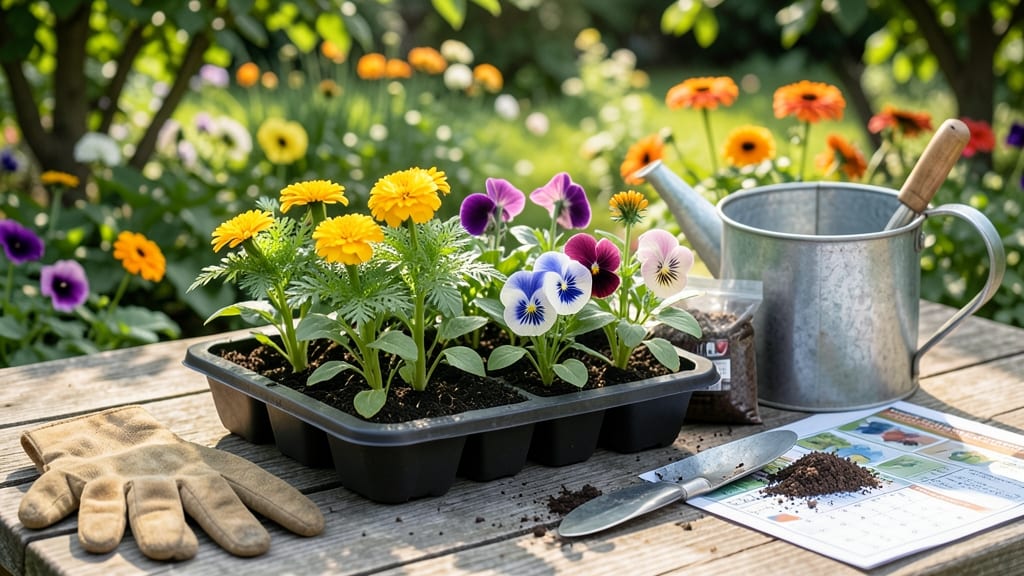
Timing your planting wrong can turn your dream garden into a season of wilting disappointment—but here’s the secret: the best time to start planting flowers depends on more than just the calendar.
Whether you’re in USDA Zone 6a or another climate, some blooms like 🌸 pansies thrive when planted in early spring, while others—like sun-loving zinnias—need the warmth of late summer. Without the right timing, even the hardiest flowers can struggle to root or bloom.
This guide breaks down the exact windows for your zone, plus pro tips to adjust for your local microclimate.
You’ll learn how to sync planting with frost dates, soil temperatures, and even moon phases—no guesswork. I’ll also share the three most common mistakes that kill blooms before they begin, so you can avoid them. Ready to transform your garden from "meh" to "wow"? Let’s get started.
From seed-starting indoors to direct sowing outdoors, we’ll cover everything—so you can enjoy vibrant flowers all season long. No more wasted effort, just peak blooms every time.


Best flower planting times by USDA climate Zones: a month-by-month breakdown
Getting the timing right for flower planting can transform your garden from a patchy mess to a showstopping display of color. But with USDA climate zones ranging from freezing Zone 3 to balmy Zone 10, there’s no one-size-fits-all answer.
For example, pansies thrive in early spring in Zone 5, while zinnias need to wait until late May—planting them wrong means wasted seeds and disappointed dreams. This breakdown gives you month-by-month deadlines for your zone, plus how to adjust for your local microclimate.
The key to successful planting lies in understanding two critical factors: soil temperature and frost dates. Most flowers won’t germinate until soil reaches 55–75°F, while others (like calendulas) can handle cooler temps. Meanwhile, last frost dates determine when it’s safe to plant tender annuals.
Use these guidelines to align your planting with your zone’s unique conditions—whether you’re in the deep freeze of Minnesota or the eternal summer of Florida.
📌 Pro Tip: Bookmark your local USDA Plant Hardiness Zone Map and check your average first/last frost dates (find them via the [National Weather Service](https://www.weather.gov/) or [Almanac](https://www.almanac.com/)). These will be your planting compass.
In Zones 3–4, where winters are brutal, focus on cold-hardy annuals like pansies and snapdragons in early spring. These flowers can tolerate light frosts and even bloom in 30°F temperatures.
Meanwhile, heat-loving zinnias and marigolds should wait until after Memorial Day, when soil temperatures consistently stay above 60°F. For perennials like coneflowers or black-eyed Susans, plant in late spring to avoid winter kill.
If you’re in Zones 5–6, your window is wider: April–May is prime for cool-season flowers, while May–June is ideal for heat lovers. Petunias and geraniums thrive in these zones but must wait until all frost risk has passed.
Pro tip: Use row covers to extend your season by 2–3 weeks if an unexpected frost threatens. For fall planting, aim for September–October to give cool-season blooms time to establish before winter.
Gardeners in Zones 7–8 enjoy longer growing seasons, but timing still matters. Sweet peas and stocks can go in as early as March, while sunflowers and dahlias need to wait until April–May.
Fall planting is also a game-changer here: Chrysanthemums and snapdragons planted in October will reward you with winter color in many southern climates. Don’t forget to mulch heavily to protect roots from early freezes.
In Zones 9–10, the rules flip: Plant anytime except during extreme heat (above 95°F). Cool-season flowers like pansies and sweet peas thrive in fall and winter, while hibiscus and bougainvillea grow year-round.
For perennials, spring or fall planting works best—avoid summer to prevent transplant shock from heat stress. If you’re in a coastal Zone 10, like Southern California, you might even see four distinct bloom seasons!
One mistake I see often? Planting seeds directly outdoors too early—even if the air feels warm, cold soil can stall germination. Always check soil temperature with a thermometer (or press your hand into the ground: if it feels cool, it’s not ready).
For tender annuals, like begonias or impatiens, wait until nighttime temperatures stay above 55°F before transplanting. Patience pays off with stronger, healthier blooms.
For perennials, timing depends on whether they’re cold-hardy (e.g., **
How to adjust planting timing for your local microclimate (even if you’re not in a ‘typical’ Zone)
Your local microclimate can shift planting windows by weeks or even months compared to the standard USDA zone guidelines. For example, urban heat islands may need later spring planting, while coastal areas often start earlier due to milder winters.
Even high-altitude gardens like Denver follow a different schedule than their lower-elevation neighbors. The key is adjusting for soil temperature, local frost patterns, and unpredictable weather—not just the calendar.
I’ve planted flowers in Zone 6a urban gardens, mountain communities, and coastal climates, and I’ve learned that one-size-fits-all advice fails. Instead, use these three data-backed adjustments: soil thermometers, elevation-corrected frost dates, and the 7-day rule for extending seasons.
Let’s break down how to fine-tune your schedule for your specific conditions.
⚠️ Critical Adjustments for Non-Typical Zones
- Urban Heat Islands: Soil warms 2–4 weeks faster than rural areas—wait until 60°F+ before planting heat-sensitive flowers like petunias or geraniums.
- Coastal Gardens: Plant 4–6 weeks earlier than inland zones due to milder winters (e.g., Zone 7 coastal may match Zone 8 inland timing).
- High Altitude (e.g., Denver): Frost dates shift later—check elevation-adjusted maps (e.g., 5,000 ft = Zone 5, 7,000 ft = Zone 3).
Pro Tip: Use the 7-day rule—if your last frost is April 15, plant cold-hardy flowers 7 days before (April 8) to account for late frosts.
Start by testing your soil temperature with a $10 digital thermometer. Most flowers need 55–75°F to germinate—cold soil delays growth or causes rot. For example, marigolds won’t thrive below 60°F, while pansies tolerate 40°F. I test soil every morning for a week before planting to avoid surprises.
Next, adjust for moon phases. While not scientific, many gardeners swear by planting root crops (e.g., dahlias) during the waxing moon for faster establishment. Use a lunar calendar to sync planting with the moon’s gravity—just don’t rely on it alone.
Pair it with your soil temp and frost dates for the best results.
For unpredictable weather, use the 7-day rule: If your average last frost is May 1, plant 7 days before (April 24) to hedge against late frosts.
This works for both spring and fall planting. I’ve used this rule in Zone 6a to safely transplant coleus and begonias without frost damage.
Finally, container gardens and raised beds warm up faster than in-ground soil—plant 2–3 weeks earlier in these spots. For example, I planted calendulas in containers on April 1 in Zone 6a, while in-ground planting waited until April 15. The difference in bloom time was 3 weeks!