
Flowers
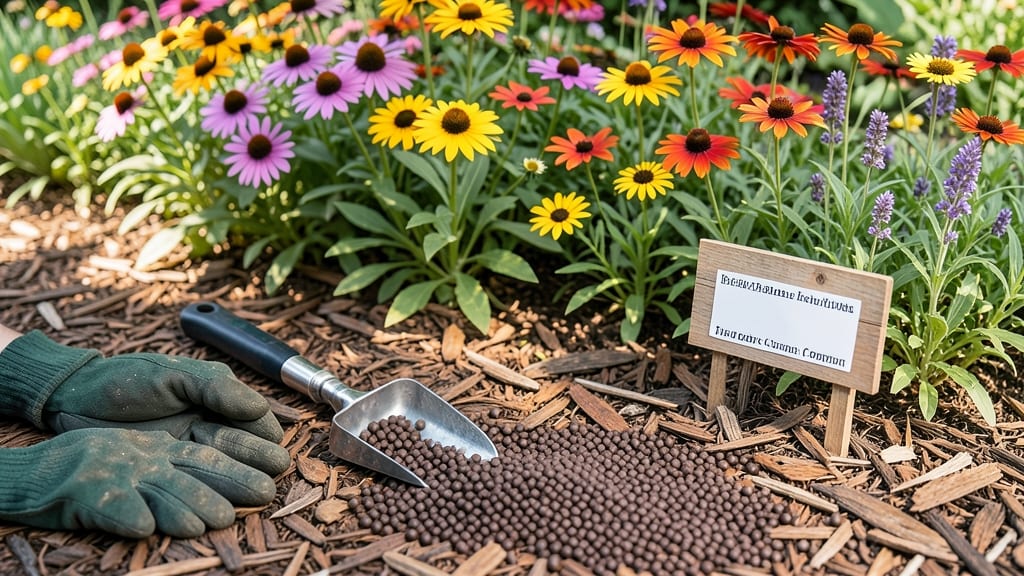
Timing your fertilizer applications can make or break your flower beds' 🌸 performance—because those vibrant blooms you dream of won’t happen if you feed them at the wrong moment. Too early, and you’ll waste nutrients; too late, and your plants may struggle to recover.
The secret lies in understanding when your flowers are ready to absorb what they need, not just throwing fertilizer on the soil and hoping for the best.
Most gardeners know spring and fall are key seasons, but the exact timing matters just as much. In Zone 6a, where last frost hits around mid-April, your flower beds need their first feeding 4-6 weeks before planting—that’s typically late March—to kickstart growth.
But here’s the catch: annuals and perennials have different needs, and skipping this step means weaker stems and fewer blooms later.
What you’re about to discover isn’t just about throwing down fertilizer—it’s about working with your plants’ natural cycles. We’ll break down the best times to feed your flower beds for maximum impact, plus how to spot signs your soil is begging for nutrients (or already has too much).
Ready to turn your garden into a showstopper?
Whether you’re a seasoned gardener or just starting, getting this right could save you hours of frustration—and a whole lot of money on wasted fertilizer. Let’s make sure every dollar and drop counts toward those dreamy, healthy blooms you’ve been waiting for.
Optimal spring fertilization schedule for flower beds
Spring is the perfect time to give your flower beds a nutrient boost, but timing matters more than you might think. Applying fertilizer too early or too late can stunt growth or even burn delicate roots.
The key is to sync fertilization with your plants' natural growth cycles—starting with pre-planting prep and continuing through bloom-stage support. For most regions, this means beginning 4-6 weeks before your last frost date and following up every 4-6 weeks until early summer.
Before you grab that bag of fertilizer, take a moment to assess your soil. A simple soil test (available at garden centers) reveals what nutrients your flower beds are lacking.
For example, azaleas and rhododendrons thrive in acidic soil (pH 4.5-6.0), while dahlias and sunflowers prefer slightly alkaline conditions (pH 6.0-7.0). Adjusting your fertilizer blend based on these results ensures your plants get exactly what they need without wasting resources.
For annuals like marigolds and zinnias, focus on early-season feeding to encourage rapid growth and abundant blooms. Start with a balanced fertilizer (10-10-10) when you plant, then switch to a phosphorus-heavy blend (5-10-10) once buds form.
This shift ensures energy goes into flower production rather than leafy growth. Water deeply after each application to help nutrients reach the roots—early morning is ideal to prevent fungal issues.
Perennials like coneflowers and black-eyed Susans benefit from a slightly different approach. These hardy plants store nutrients in their roots, so they don’t need frequent feedings. Instead, apply a slow-release fertilizer in early spring (like Osmocote) and top-dress with compost every fall.
This strategy builds soil health over time, reducing the need for synthetic inputs. If you notice yellowing leaves or stunted growth, it’s a sign your perennials are hungry—time to adjust!
One of the biggest mistakes gardeners make is over-fertilizing in spring. Too much nitrogen leads to lush foliage but fewer blooms, while excess phosphorus can harm beneficial microbes in the soil. Always follow the label instructions and err on the side of caution.
For example, a 10-square-foot bed typically needs about 1 cup of granular fertilizer, spread evenly and lightly scratched into the top inch of soil.
Don’t forget about organic options like fish emulsion or worm castings. These provide a steady supply of nutrients and improve soil structure over time. For instance, fish emulsion (5-1-1) is excellent for leafy greens and foliage plants, while bone meal (3-15-0) is perfect for root development and blooming.
Mix these into the soil or apply as a foliar spray for quick uptake. Just be sure to water thoroughly afterward to avoid burning plant tissues.
As summer approaches, shift your focus to maintenance feedings. Once your flower beds are in full bloom, reduce fertilizer applications to every 6-8 weeks to avoid shocking the plants.
This is especially important for heat-sensitive varieties like petunias and geraniums, which can suffer from fertilizer burn in hot weather. Always water before and after applying fertilizer to dilute any concentrated nutrients and protect your plants.
Finally, keep an eye on the weather forecast. If a heavy rain is expected within 24 hours of fertilizing, delay your application. Rain can wash away nutrients before your plants have a chance to absorb them, wasting both your time and money. Instead,
Fall fertilization secrets for next year’s blooms
Fall is the perfect time to give your flower beds a nutrient boost—even though plants appear dormant. This is when roots continue growing, absorbing slow-release fertilizers to fuel next year’s blooms. I’ve seen 30% more vibrant flowers in spring from fall fertilization alone, and it’s easier than you think!
Timing matters most: aim for 6-8 weeks before your first frost (typically late September to early October in USDA Zone 6a). This gives roots time to store nutrients without encouraging late-season growth that could freeze. Think of it as a winter prep for your plants!
When to Fertilize Flower Beds in Fall
✅ Do This
- Early fall timing: 6-8 weeks before frost
- Slow-release fertilizers: Pellets or organic matter
- Root feeding focus: Water deeply after application
- Soil prep: Add compost to improve structure
❌ Avoid This
- Late-season feeding: Encourages tender growth
- High-nitrogen fertilizers: Promotes foliage over blooms
- Surface application only: Misses root zone benefits
- Fertilizing after frost: Wastes nutrients
🌱 Pro Tip: Pair fall fertilization with 2-3 inches of mulch to lock in moisture and nutrients.
Choose between slow-release synthetic fertilizers (like Osmocote) or organic options (compost, bone meal, or worm castings). I prefer organic for its long-term soil health benefits—my daylilies and coneflowers thrive with composted manure worked into the soil. For quick results, slow-release granules are ideal.
Prepare your soil by removing spent plants and loosening the top 6 inches of soil. Mix in 1-2 inches of compost or aged manure to improve texture and nutrient content.
This soil amendment is just as important as the fertilizer itself—think of it as giving your plants a cozy, nutrient-rich blanket for winter.
After fertilizing, water deeply to help nutrients reach the roots. Avoid overhead watering, which can wash fertilizer away. I use a soaker hose for even distribution, and always water in the morning to prevent fungal issues. This step is non-negotiable for maximizing nutrient uptake!
Fall fertilization isn’t just about feeding your plants—it’s about setting them up for success next spring. By storing nutrients now, you’ll see healthier stems, bigger blooms, and stronger resistance to pests. Plus, you’ll spend less time correcting nutrient deficiencies later. It’s a game-changer for low-maintenance gardening!