
Flowers
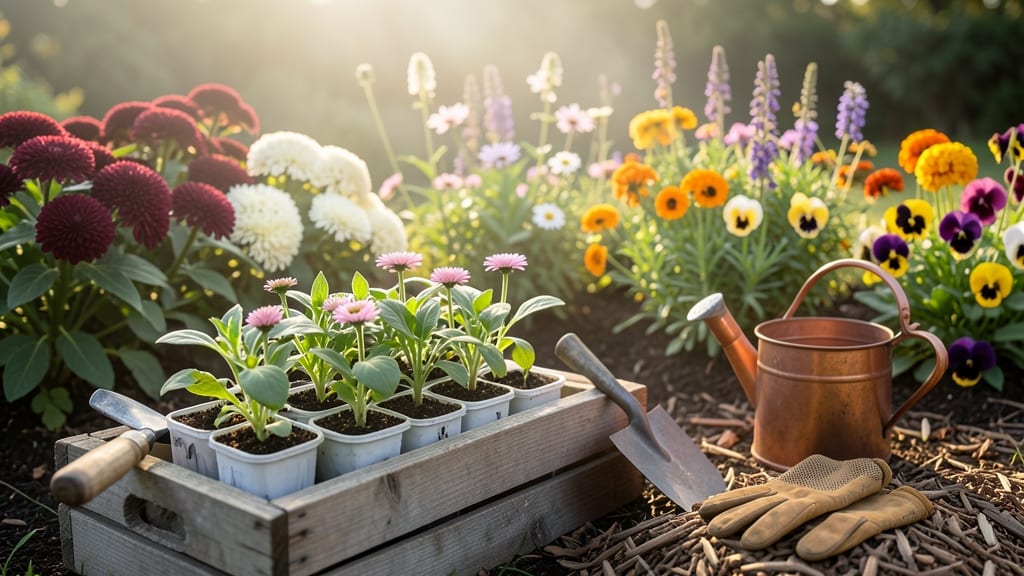
Timing your Fall Flowers 🌼 planting in Georgia can mean the difference between a showstopping garden and a sad, frost-nipped disappointment. The key isn't just when you plant—it's understanding how Georgia's 7b-8b climate creates a narrow but golden window for vibrant blooms from September through December.
Most gardeners assume "fall planting" means dumping seeds in the ground whenever it cools down—but that's a recipe for disappointment. In reality, you've got just 6-8 weeks before the first frost (usually mid-November) to get your flowers established.
Plant too early, and you'll waste precious growth time; too late, and your blooms won't have time to root before winter sets in.
I've learned the hard way that Georgia's regional differences matter too—North Georgia's cooler microclimates need flowers in the ground by early September, while South Georgia gardeners can stretch planting until late October.
The secret? Knowing your last frost date and choosing the right varieties (like cold-hardy mums or salvias) that thrive in our 210-240 frost-free days.
What if I told you there's a simple frost-date cheat sheet that takes all the guesswork out? That's exactly what we'll cover—plus the exact soil prep, spacing tricks, and post-planting care that'll give you blooms that last until Christmas.
Let's get your Georgia garden ready for fall color that steals the show.
Georgia’s fall planting timeline by frost zone (with exact dates)
Georgia’s fall planting window is one of the most rewarding for gardeners—longer growing seasons in the south and cooler temps in the north create perfect conditions for mums, pansies, and asters.
But timing is everything: plant too early, and frost zaps your blooms; too late, and growth stalls before winter. Here’s how to nail it down to the week in Georgia’s 7 frost zones (5A through 8B).
First, know your average first frost dates. In Zone 5A (northwest Georgia), expect frost by mid-November, while Zone 8B (southwest Georgia) often holds off until late December. These dates dictate when to plant cool-season annuals and hardy perennials for maximum impact.
For annuals like pansies and snapdragons, aim to transplant 6-8 weeks before frost. In Zone 6A, that’s early September; in Zone 7B, you’ve got until mid-October.
Perennials like Russian sage and salvia can handle cooler temps, so you can push those dates back 2-3 weeks for stronger root establishment.
Microclimates throw a wrench into these timelines. A sheltered garden near a brick wall or south-facing slope might delay frost by 10-14 days. Conversely, low-lying areas or open fields can bring frost 2 weeks early. Always scout your yard in late September for signs of early cold snaps.
Here’s your zone-by-zone cheat sheet for planting fall flowers, including exact transplant dates and ideal varieties for each region:
Pro tip: Soil temperature matters just as much as air temperature. Use a soil thermometer—ideal temps for fall planting are 60–70°F. If your soil is still above 75°F in late August, wait 2–3 weeks to avoid stressing transplants.
For perennials like Russian sage or coneflowers, divide and transplant in early fall (September in cooler zones, October in warmer ones). This gives roots time to knit before winter dormancy. Water deeply after transplanting and mulch with 2–3 inches of shredded bark to insulate roots.
Don’t forget second plantings! In Zones 7B–8B, you can stagger plantings of pansies and snapdragons every 2–3 weeks from September through October for continuous blooms until frost. Just monitor weather forecasts—if a hard freeze is predicted, cover tender blooms with frost cloth.
Adjust for container gardening too. Potted plants dry out faster and
Top 10 fall flowers that thrive in Georgia (and when to start seeds vs. buy transplants)
Georgia's fall-blooming flowers need precise timing to avoid frost damage while maximizing growth. The key is knowing whether to start seeds indoors or buy transplants—each method has a different deadline.
For example, snapdragons and sweet alyssum can handle Georgia's 7b-8b climate if planted early enough, but mums and asters need to be in the ground by late September to establish roots before frost.
I've found that seed-starting indoors gives you more variety but requires earlier deadlines (like 8-10 weeks before last frost), while transplants are foolproof for busy gardeners. The difference? Seeds need consistent warmth (70-75°F) to germinate, while transplants are already hardened off and ready to handle Georgia's cool nights (50-60°F).
Let's break down the best options for your fall garden.
| Flower | Seed Start Indoors | Transplant Purchase | Soil Prep Tip |
|---|---|---|---|
| Sweet Alyssum | July 15-Aug 1 | Aug 15-Sep 15 | Add compost for quick root growth |
| Snapdragons | July 1-Aug 15 | Aug 1-Sep 10 | Loosen soil to prevent root rot |
| Chrysanthemums (Mums) | Not recommended | Sep 1-Oct 15 | Use slow-release fertilizer at planting |
| Salvia | Feb-Mar (perennial) | Aug 15-Sep 30 | Plant in well-draining soil |
| Pansies | June 15-July 15 | Aug 1-Sep 20 | Mulch to retain moisture |
| Asters | Not recommended | Sep 1-Oct 1 | Test soil pH (6.0-7.0) |
For seed-starting success, use sterilized seed trays and maintain 70-75°F soil temps. Transplants, on the other hand, should be hardened off for 7-10 days before planting. I always water deeply after transplanting to reduce shock—this is especially critical in Georgia's dry autumns.
A 1-inch layer of mulch helps retain moisture and protect roots from temperature swings.
Don't overlook soil preparation—Georgia's clay-heavy soils need compost or peat moss to improve drainage. I mix in aged compost and a balanced fertilizer (10-10-10) at planting time. For container gardening, use a lightweight potting mix with perlite to prevent compaction.
The goal is to give your fall flowers a strong start before Georgia's mid-November frost arrives.
Pro tip: Stagger your plantings by 2-3 weeks to extend your fall bloom season. For example, plant snapdragons in early August and pansies in mid-September.
This ensures continuous color until December. Just remember—late October plantings are risky in North Georgia but work fine in South Georgia's warmer microclimates.
With the right timing and soil prep, your Georgia garden can burst with fall color from September through December. The key is acting early but planting just before peak heat—this gives your flowers time to establish before the cool autumn nights set in. Happy planting! 🌼