
Flowers
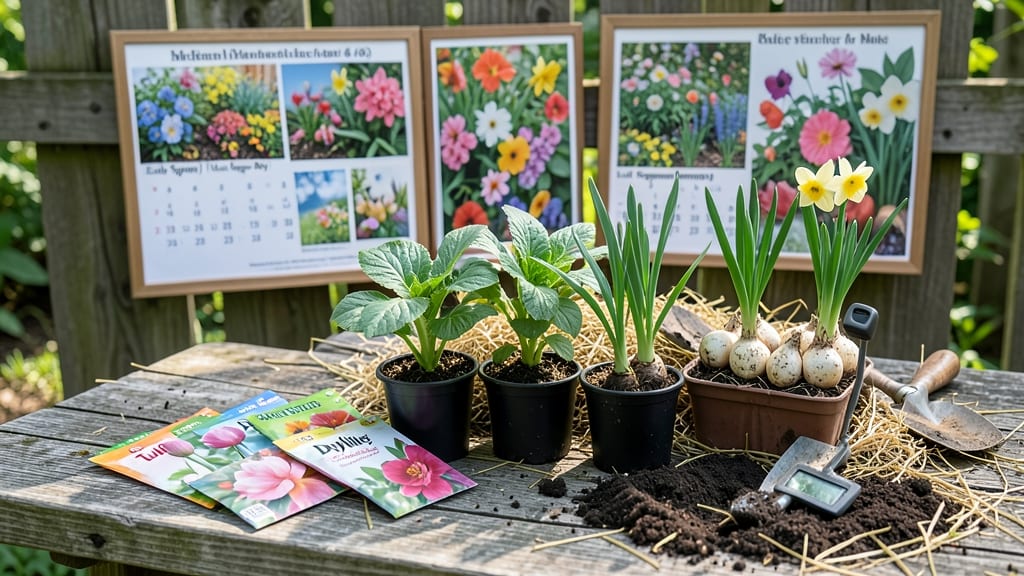
Planting flowers in Michigan isn’t just about timing—it’s about beating the unpredictable spring frost that can turn your garden dreams into a sad, icy memory.
Whether you’re dreaming of vibrant cosmos or hardy coneflowers, getting those seeds in the ground at the right moment makes all the difference between a burst of color and a season of disappointment.
Most Michigan gardeners know the general rule: wait until after the last frost, usually around mid-April. But here’s the catch—your microclimate (that shady corner or sunny patch) can shift those dates by weeks.
I’ll show you how to read your yard’s hidden clues to plant with confidence, even when the forecast calls for snow one day and sunshine the next.
From fast-blooming annuals that pop in just 60 days to perennials that reward patience with years of blooms, we’ll cover exactly what to plant when. Whether you’re in Zone 5b or 6b, these tricks will help you stretch your growing season and enjoy flowers from spring through fall.
Ready to turn your Michigan garden into a nonstop show? Let’s dive into the secrets of planting flowers so they thrive—no matter what Mother Nature throws your way.
Michigan flower planting calendar by hardiness zones (4-6) and last frost dates
Michigan spans USDA hardiness zones 4-6, meaning your last frost date can vary from early April in southern Michigan to late May in the Upper Peninsula. These differences dramatically impact flower planting windows—get it wrong, and you’ll miss peak bloom season entirely.
For zone 4 (northern Michigan), wait until May 15-20 for most annuals, while zone 6 (southern Michigan) gardeners can plant as early as April 15. Perennials and bulbs have different rules—some thrive when planted in fall (September-October), while others need spring soil warmth.
Here’s how to align your planting with Michigan’s microclimates and frost-free windows, including adjustments for northern vs. southern regions to maximize your garden’s potential.
| Zone & Region | Last Frost Date | Annuals (Outdoor) | Perennials | Bulbs (Fall) | Fall Planting (Sept) |
|---|---|---|---|---|---|
| Zone 4 (UP, Northern MI) | May 15-20 | Wait until May 25 (after soil warms to 60°F) | Spring: April 20-May 10 Fall: Sept 15-Oct 10 |
Sept 15-Oct 15 (tulips, daffodils) | Aug 15-Sept 15 (pansies, snapdragons) |
| Zone 5 (Central MI) | April 20-May 5 | May 10-15 (hardy varieties like marigolds earlier) | Spring: April 1-May 15 Fall: Sept 1-Sept 30 |
Sept 1-Oct 10 (hyacinths, crocuses) | Aug 1-Sept 10 (calendula, sweet alyssum) |
| Zone 6 (Southern MI) | April 1-15 | April 20-May 5 (pansies, violas earlier) | Spring: March 20-April 30 Fall: Sept 15-Oct 1 |
Sept 15-Oct 5 (alliums, daffodils) | July 15-Aug 15 (cosmos, zinnias) |
| 🌱 PRO TIP: Use row covers to push annual planting 2 weeks earlier in zones 4-5. | |||||
For annual flowers, timing is critical—plant cosmos or zinnias too early in zone 4, and frost will kill them. But in zone 6, you can start pansies or snapdragons as early as March 15 under row covers for early spring color.
Perennials like coneflowers or black-eyed Susans are more forgiving—they establish roots in spring or fall. In northern Michigan (zone 4), fall planting gives roots time to anchor before winter, while southern Michigan (zone 6) gardeners can plant perennials as early as March.
Bulbs like tulips and daffodils need 6-8 weeks of chilling, so plant them in fall (September-October). In zone 4, aim for September 15 to avoid winter heaving, while zone 6 allows planting until October 10.
Don’t overlook fall planting for cool-season annuals like pansies or sweet alyssum. In zone 6, you can sow these as early as July 15 for September-October blooms, while zone 4 gardeners should wait until August 15.
Use local frost maps (like the Midwestern Regional Climate Center) to fine-tune your schedule. A 30-day average can shift your planting window by 1-2 weeks—critical for 90-day bloomers like sunflowers or dahlias.
Protect delicate tropical annuals (e.g., petunias, geraniums) by waiting until after Memorial Day in zone 4 or Mother’s Day in zone 6. These plants won’t survive frost, so timing is everything for summer-long
Microclimate tricks to extend Michigan’s growing season for faster blooms
Michigan’s short growing season doesn’t have to limit your flower dreams. By creating microclimates—small areas with unique conditions—you can trick nature into giving you 2-4 extra weeks of warmth.
Whether it’s a sunny south-facing patch or a sheltered corner, these zones let you plant earlier, extend fall blooms, and protect delicate flowers from late frosts.
I’ve tested these strategies in my own garden, and they’ve helped my zinnias and cosmos bloom a full month earlier than neighbors who wait for the "perfect" date. The key is layering protection: windbreaks shield from chilly winds, raised beds warm the soil faster, and mulch insulates roots.
Let’s break down how to use these tools to your advantage.
- 1
- 2
- 3
- 4
Don’t overlook the power of black plastic mulch—it absorbs heat and can raise soil temps by 5-8°F. Lay it down in early spring under warm-season flowers like sunflowers to jumpstart growth. Just remember to remove it before planting to avoid overheating roots later in the season.
For late-season blooms, use row covers or cloches to protect flowers like asters and mums from early fall frosts. These lightweight covers let sunlight through while trapping warmth—extending your display into October. I’ve kept my chrysanthemums blooming until Thanksgiving using this trick!
Combine these methods for maximum impact. For example, plant cool-season flowers like pansies in a raised bed with black mulch and a windbreak. You’ll get vibrant blooms 3-4 weeks earlier than traditional planting times. The secret? Layering protection so your flowers stay one step ahead of Michigan’s mood swings.
Start small—try one microclimate hack this year, like adding mulch or a windbreak, and track the results. Before you know it, your garden will be the envy of the neighborhood, bursting with color when others are still waiting for spring to arrive. Happy planting! 🌸