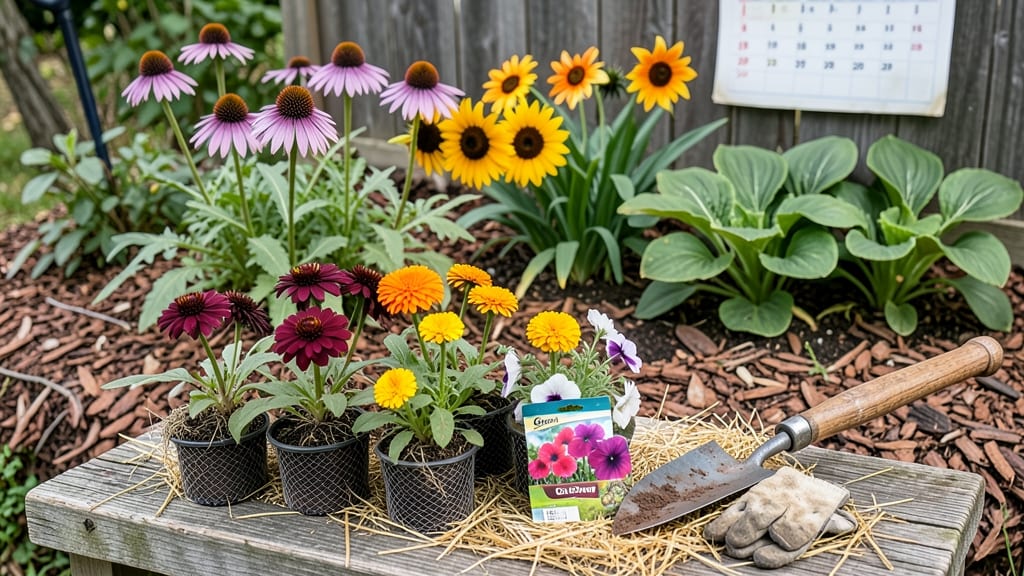
Timing your flower planting in Michigan can make the difference between a showstopping garden and a sad, wilted disappointment. The best time to plant flowers depends on your county’s frost dates, and getting it wrong risks losing your entire season before it even begins.
Most Michigan gardeners know spring is the prime window for annuals like petunias and marigolds, but did you know early fall planting (4-6 weeks before the first frost) gives perennials like coneflowers a head start?
With USDA Zones 5b-6b across the state, frost can strike as early as mid-October in northern counties—or linger until late May in southern areas.
I’ll break down the exact frost-date calculator you need to know for your county, plus pro tips for adjusting planting times based on your microclimate. Whether you’re battling urban heat islands or rural cold snaps, these strategies will help you maximize blooms from spring to fall.
Ready to transform your garden into a year-round paradise? Let’s dive into the perfect planting schedule for Michigan’s unpredictable—but beautiful—climate.
🌸When to Plant Flowers
Jan❄️
Feb❄️
Mar🌱
Apr🌱
May🌸
Jun☀️
Jul☀️
Aug🌱
Sep🌸
Oct🌸
Nov🌱
Dec❄️
Ideal Time
Also Good
Michigan flower planting calendar by county: frost dates and ideal months for annuals, perennials, and bulbs
Michigan’s diverse climate—spanning USDA Zones 4-6—means frost dates vary dramatically from the Upper Peninsula to southeastern counties like Monroe.
In Zone 4 (e.g., Marquette, Traverse City), the last frost often hits May 15–25, while Zone 6 areas (e.g., Detroit, Ann Arbor) can plant as early as April 15–May 1. These differences dictate whether your petunias or tulip bulbs thrive or wither.
For annual flowers like marigolds and zinnias, wait until two weeks after your county’s average last frost date. Perennials such as coneflowers and black-eyed Susans are more forgiving—plant them in early spring (April) or early fall (September) for root establishment before winter. Bulbs, including tulips and daffodils, should go into the ground in fall (October) for spring blooms.
Microclimates add another layer: Urban areas like Detroit or Grand Rapids often experience urban heat islands, allowing earlier planting by 1–2 weeks compared to rural zones. Conversely, northern counties (e.g., Chippewa, Schoolcraft) may face late frosts well into June, delaying tender annuals until Memorial Day.
County
Last Frost Date
First Frost Date
Best Time for Annuals
Best Time for Perennials
Best Time for Bulbs
Wayne (Detroit)
April 15–May 1
October 15–25
May 10–June 1
April 1–May 15 or Sept 1–15
October 1–15
Oakland (Pontiac)
April 20–May 5
October 10–20
May 15–June 10
April 15–May 30 or Sept 1–15
October 1–15
Kalamazoo
May 1–10
October 5–15
May 20–June 15
April 20–May 15 or Sept 1–15
September 20–October 10
Traverse City
May 10–20
September 25–October 10
June 1–15
May 1–15 or Sept 1–15
September 15–October 5
Marquette (UP)
May 25–June 5
September 15–25
June 15–July 1
May 15–June 1 or Sept 1–15
How to use Michigan’s frost dates to extend your flower season: cold-hardy vs. heat-loving varieties
Michigan’s frost dates are your secret weapon for a longer flower season. By strategically planting cold-hardy flowers early and heat-loving varieties later, you can enjoy blooms from spring through fall. The key? Understanding which flowers thrive in cool temperatures and which need warm soil to germinate.
For example, pansies and snapdragons can handle light frosts, while geraniums and zinnias will bolt or fail to sprout if planted too soon. I’ll show you how to align your planting schedule with Michigan’s last frost dates (typically mid-April to early May) to avoid costly mistakes.
Pro Tip: Use row covers or cold frames to extend the season for tender plants like petunias or marigolds if you’re eager to plant early. This gives you a 2-3 week head start without risking frost damage.
Early Planting (4-6 Weeks Before Last Frost)
Flowers
Pros
Cons
Pansies
Tolerates light frost (28°F)
May bolt in heat if planted too early in southern MI
Snapdragons
Cold-resistant; long bloom season
Slower growth in cool soil (<50°F)
Calendula
Edible; self-seeds easily
Needs well-draining soil to avoid rot
Late Planting (After Memorial Day)
Flowers
Pros
Cons
Zinnias
Heat-tolerant; attracts pollinators
Susceptible to powdery mildew in humid summers
Geraniums
Drought-resistant once established
Dies back in frost; not perennial in MI
Sunflowers
Fast-growing; great for cut flowers
Needs full sun (6+ hours)
If you’re in Northern Michigan (e.g., Traverse City or Marquette), wait until after Mother’s Day to plant heat-lovers like cosmos or portulaca. Southern counties (e.g., Detroit or Ann Arbor) can start 2 weeks earlier thanks to their urban heat islands.
For perennials like coneflowers or black-eyed Susans, plant in early fall (September-October) to give roots time to establish before winter. This doubles bloom time the following spring compared to spring planting.
Remember: Soil temperature matters more than air temperature. Use a soil thermometer to confirm it’s at least 50°F before planting heat-lovers. If it’s colder, wait—your seeds will rot in the ground.