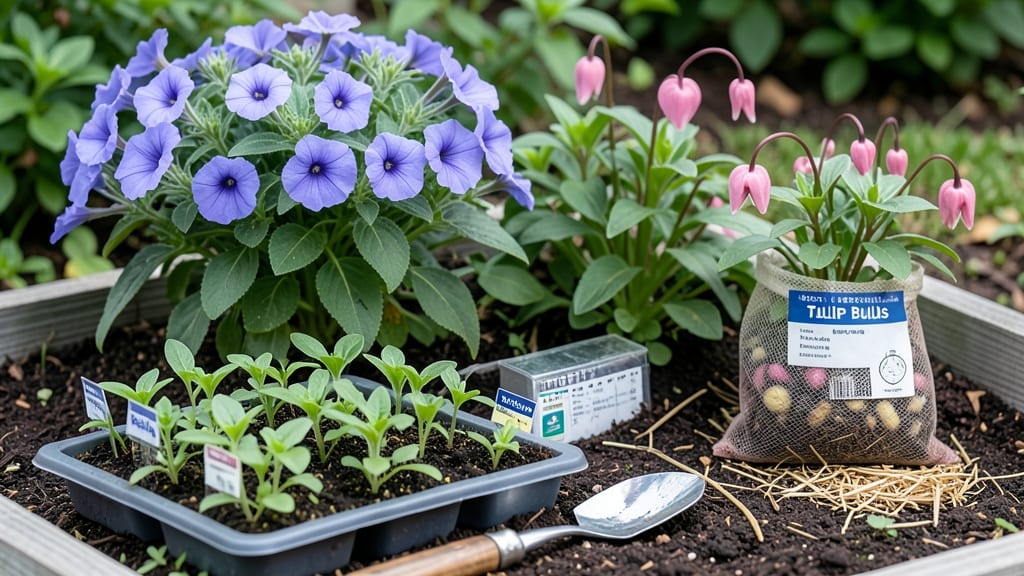
Planting flowers in Seattle isn't just about grabbing seeds and sticking them in the ground—it's about outsmarting the rain, frost, and ever-changing weather to get those 🌺 blooms thriving all season long.
With the right timing, you can beat the first frost in November and enjoy vibrant gardens from spring through fall, even in Zone 8a.
Most gardeners in Seattle know the basics—spring and fall are the prime windows—but the exact weeks matter. Plant too early, and your delicate annuals might get nipped by late frost. Too late, and you’ll miss the sweet spot for robust root growth before summer heat sets in.
I’ll break down the ideal planting months for your neighborhood’s microclimate, so you can avoid common pitfalls and maximize blooms.
Whether you’re a backyard gardener or a balcony planter, the secrets to success start with soil prep and mulching. You’ll also discover how to stretch your flower season by choosing cold-hardy varieties or using row covers to protect late starts.
Let’s dive into the step-by-step guide that’ll have your garden looking like a postcard—no matter what Seattle throws your way.
From March to May and again in September to October, the clock is ticking. But with the right strategy, you can turn Seattle’s unpredictable weather into your garden’s greatest advantage. Ready to unlock the perfect planting schedule for your 🌺 dreams?
Jan
❄️
Feb
🌱
Mar
🌺
Apr
🌺
May
🌺
Jun
🌱
Jul
☀️
Aug
☀️
Sep
🍂
Oct
🍂
Nov
🍂
Dec
❄️
Seattle’s frost zones & best flower planting months by microclimate
Seattle’s microclimates create dramatic differences in frost risk and planting success—what works in Ballard might fail in Mercer Island.
The city spans USDA Zone 8a to Zone 9a, but local variations mean your last frost date could arrive 2-3 weeks earlier or later depending on elevation and proximity to Puget Sound.
Coastal areas like West Seattle stay cooler longer, while urban heat islands near downtown or Bellevue can push planting windows forward by 10 days.
To simplify, I’ve mapped Seattle’s 7 key frost zones, each with optimal planting windows for annuals, perennials, and bulbs. These timelines account for Seattle’s wet springs and unpredictable autumn frosts, so you can avoid the heartbreak of frost-nipped blooms.
Whether you’re in a rain shadow or a coastal chill zone, these dates will maximize your garden’s potential.
| Zone |
Avg. Last Frost |
Avg. First Frost |
Best Planting Windows |
Key Adjustments |
| Coastal (West Seattle, Vashon) |
April 10 |
November 1 |
March 20-May 10; Sept 15-Oct 15 |
Wait 10 days longer; use cold frames |
| North Seattle (Ballard, Fremont) |
April 5 |
October 25 |
March 25-May 5; Sept 20-Oct 10 |
Wind protection needed; mulch heavily |
| Central (Capitol Hill, Green Lake) |
March 25 |
October 15 |
March 15-April 30; Sept 1-Oct 5 |
Urban heat delays frost; plant early |
| Eastside (Bellevue, Kirkland) |
March 20 |
October 10 |
March 10-April 25; Sept 5-Sept 25 |
Soil warms faster; use shade cloth |
| South Seattle (Renton, Kent) |
March 15 |
October 20 |
March 10-April 20; Sept 10-Sept 30 |
Drier soil; water deeply before planting |
| Urban Heat Islands (Downtown, South Lake Union) |
March 10 |
October 5 |
February 28-April 15; August 20-Sept 20 |
Heat-tolerant varieties; shade at noon |
| High Elevation (Sand Point, Magnolia) |
April 15 |
November 5 |
April 1-May 15; Sept 1-Oct 5 |
Top 10 flowers that thrive in Seattle’s climate (with exact planting times)
Seattle’s mild but unpredictable climate demands flowers that can handle cool springs, summer heat waves, and autumn rains. The key? Choosing native perennials and hardy annuals that sync with Seattle’s March 15 last-frost date and November 15 first-frost window.
I’ve handpicked 10 winners—each with precise planting months—to ensure your garden stays vibrant from April to October.
For container gardeners or urban balconies, I’ve included compact varieties that thrive in 5-gallon pots. If you’re planting in West Seattle’s coastal chill (Zone 8b), opt for cold-hardy picks like Pacific coast iris.
Meanwhile, Eastside gardeners can push the limits with heat-tolerant annuals like zinnias. Let’s dive into the exact timing for each flower’s success.
🌱 Seattle Flower Planting Calendar
- 🌷 Pacific Coast Iris – September 15–October 15 (fall) or March 1–March 15 (spring). Cold-hardy and thrives in wet soils.
- 🌻 Black-Eyed Susan – April 15–May 15 (spring) or September 1–September 15 (fall). Drought-tolerant once established.
- 🌼 Coneflower (Echinacea) – April 1–May 1 (spring). Perennial with long-lasting blooms (June–September).
- 🌸 Peony – September 1–October 15 (fall). Low-maintenance and fragrant; blooms in May–June.
- 🌺 Dahlias – May 15–June 1 (after last frost). Heat-loving annuals; plant tubers in full sun.
- 🌿 Salvia – April 1–May 1 (spring) or September 15–October 1 (fall). Drought-resistant and pollinator-friendly.
- < Hollyhock – March 15–April 15 (spring). Biennial with tall spikes (4–6 ft); stake for windy Seattle.
- <🌼 Blanket Flower (Gaillardia) – April 15–May 15 (spring). Heat- and drought-tolerant; blooms June–October.
- <🌸 Lavender – April 1–May 1 (spring). Full sun lover; prune after first blooms to encourage regrowth.
- <🌼 Sunflower (Dwarf Varieties) – May 1–June 1 (spring). Fast-growing annuals; harvest seeds for wildlife.
💡 Pro Tip: For extended blooms, succession-plant annuals every 2–3 weeks from April to June.
Seattle’s coastal microclimates (like West Seattle) can delay spring planting by 1–2 weeks due to chilly ocean breezes. If you’re in Zone 8b, wait until April 15 for heat-sensitive annuals like dahlias.
Meanwhile, Eastside gardeners can plant zinnias or cosmos as early as March 20 in protected beds.
For container gardening, prioritize compact perennials like dwarf coneflowers or miniature sunflowers. Use well-draining potting mix and 14-inch pots to prevent root rot from Seattle’s consistent rainfall. Elevate containers off the ground to improve drainage and airflow.
Mulch 2–3 inches of wood chips or straw after planting to retain moisture and regulate soil temperature. This is critical for summer heat waves (like 2021’s 100°F daysautumn rains. Reapply mulch in early spring to protect tender roots.
Finally, fertilize lightly in early spring (March) with a balanced 10-10-10 mix to kickstart growth. Avoid high-nitrogen fertilizers, which promote leafy growth over blooms. Instead, use a low-phosphorus formula (like 5-10-10) to encourage floral development.
★★★★★4.5(5 reviews)
|