
Flowers
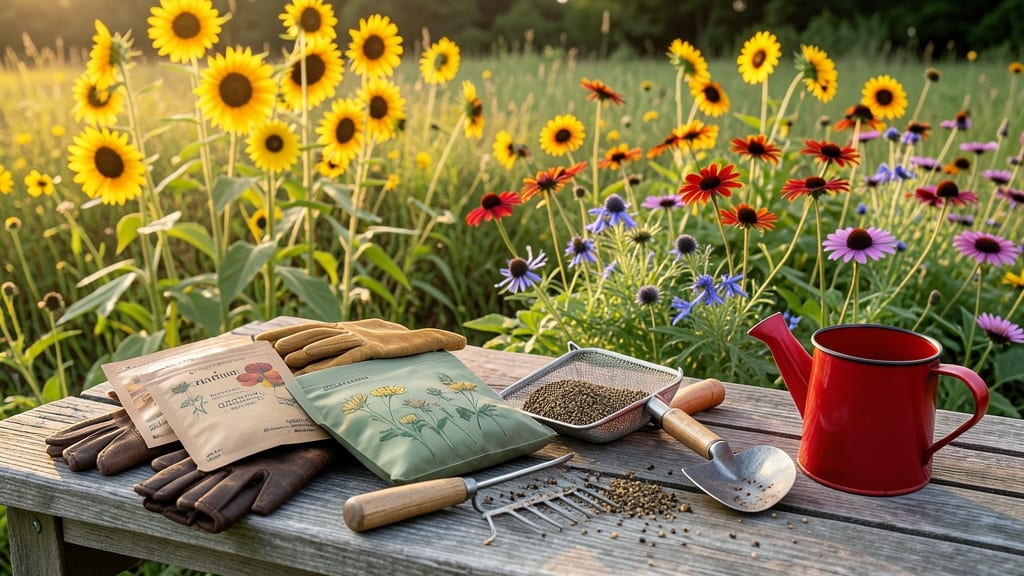
Planting wildflowers in Alabama isn't just about tossing seeds and hoping for the best—it's about timing them perfectly to outsmart the state's unpredictable climate.
Whether you're in the humid Coastal Plain or the cooler Appalachian Plateau, getting the months right means the difference between a vibrant meadow and a patch of brown dirt by summer.
Most gardeners in USDA zones 7a-8b know spring is ideal, but did you know fall planting often yields bigger blooms? The secret lies in Alabama's frost-free window—200-240 days of growing season—that lets you plant twice a year.
I'll show you exactly when to start seeds indoors or scatter them outside for maximum pollinator impact.
From Black-eyed Susans that love Alabama's heat to delicate Purple Coneflowers thriving in partial shade, each variety has its own sweet spot. We'll cover the best months for your region, soil prep tricks to avoid common mistakes, and how to extend your blooming season from March through October.
Ready to transform your yard into a buzzing wildflower haven? Let's dive into the science-backed schedule that'll have your garden teeming with bees, butterflies, and birds—without the guesswork.
Best planting months for Alabama native wildflowers by region and climate zone
Alabama’s 7 distinct ecoregions create wildly different planting windows for native wildflowers. From the humid Coastal Plain to the cooler Appalachian Plateau, timing your plantings to match local frost dates and rainfall patterns is key.
I’ve broken down the best months to plant by region, so you can give your wildflowers the perfect start—whether you’re sowing Black-eyed Susans in the Piedmont or Purple Coneflowers in the Ridge & Valley.
Most Alabama gardeners focus on spring planting (March-April), but fall (August-October) offers a second chance for many species. The trick? Adjusting for your USDA hardiness zone (7a-8b) and soil moisture.
For example, Coastal Plain areas (like Mobile) have longer frost-free seasons, while mountain regions (like Huntsville) need earlier starts to avoid late frosts. Let’s dive into the specifics for each region, starting with frost dates that shape your planting calendar.
Key frost dates by region:
- Coastal Plain (Zone 8a-8b): Last frost March 1-15, first frost November 20-30
- Piedmont (Zone 7b-8a): Last frost March 10-25, first frost November 5-20
- Ridge & Valley/Appalachian Plateau (Zone 7a-7b): Last frost March 20-April 5, first frost October 25-November 10
Soil prep matters just as much as timing. Alabama’s native wildflowers thrive in well-draining, slightly acidic soil (pH 6.0-7.0). Before planting, loosen the top 6 inches of soil and mix in compost or aged manure to improve fertility. In heavy clay soils (common in the Black Belt), amend with sand or pine bark fines to prevent compaction. For sandy soils (like those in the Coastal Plain), add organic matter to retain moisture.
Now, let’s compare the best wildflower varieties for each region in this planting timeline table, designed to help you choose species that thrive in your microclimate:
For Coastal Plain gardeners, prioritize drought-tolerant species like Coreopsis and Partridge Pea, which handle the region’s high humidity and summer rains. In contrast, Piedmont wildflowers like Black-eyed Susan and Purple Coneflower thrive with well-draining soil and benefit from a light spring feeding to encourage robust blooms.
Meanwhile, mountain regions should focus on early spring plantings to avoid late frosts, with varieties like Eastern Red Columbine adding early-season color.
One pro tip: If you’re planting in fall (August-October), choose varieties that establish roots before winter, like Partridge Pea or Blazing Star. These species handle Alabama’s mild winters better than tender annuals.
For spring plantings, start seeds indoors in February for a head start, especially in Zone 7a areas where frosts linger longer.
Don’t overlook seed stratification
Spring vs. fall planting: which strategy works best for Alabama’s wildflowers?
Alabama’s 200-240 frost-free days give gardeners two prime chances to plant wildflowers—spring and fall—but each season offers unique advantages. Spring planting is the classic choice, but fall often delivers healthier roots and earlier blooms.
The key is understanding how Alabama’s variable climate affects each strategy, from the Coastal Plain’s humidity to the Appalachian Plateau’s cooler nights.
Most gardeners default to spring planting because it aligns with our natural gardening rhythm, but fall planting—especially for native perennials like Blazing Star and Partridge Pea—lets seeds establish before winter’s mild chill.
These underrated varieties thrive when planted in September or October, avoiding the stress of summer heat while still benefiting from Alabama’s extended growing season.
Here’s the breakdown of pros and cons for each approach, tailored to Alabama’s conditions:
Spring Planting
Pros ✅
- Longer growing season: Seeds germinate as temps rise, giving plants 6+ months to establish.
- Easier soil prep: Dry winter soil is easier to till than heavy spring clay.
- Broader variety: Tender annuals like Mexican Sunflower thrive only in spring.
Cons ❌
- Competition risk: Weeds explode in spring; requires pre-emergent or mulch.
- Drought stress: Early summer heat can kill seedlings if rain fails.
- Slower establishment: Plants may not bloom until late summer.
Fall Planting
Pros ✅
- Cooler germination: Seeds sprout in 50-60°F soil, avoiding summer heat.
- Fewer weeds: Weed seeds dormant by late fall.
- Early blooms: Fall-planted perennials often flower 3-4 weeks earlier.
Cons ❌
- Timing critical: Plant 6-8 weeks before first frost (late Sept-Oct).
- Limited variety: Tender annuals won’t survive winter.
- Moisture needs: Fall rains can overwater seeds if not drained.
For Alabama’s mild winters, fall planting shines with perennials like Coreopsis and Eastern Red Columbine, which establish deep roots before dormancy. Spring wins for annuals like Black-eyed Susan, but both seasons work if you prep soil with compost and mulch to retain moisture.
My top tip? Test soil pH (aim for 6.0-7.0) before planting—Alabama’s clay soils often need gypsum or sulfur to adjust.
To extend blooms, I plant half my seeds in spring (March-April) and half in fall (September). For example, Blazing Star seeded in October blooms by May, while spring-planted Partridge Pea lights up July gardens.
The secret? Stratify seeds (mix with sand, refrigerate 4-6 weeks) to mimic winter conditions and break dormancy.
Here are 3 critical fall prep steps to maximize success:
- Test soil: Use a pH test kit ($10 at garden centers) and amend with lime (to raise pH) or sulfur (to lower it). Alabama’s acidic soils often need adjustment.
- Stratify seeds: Place seeds in a moist paper towel, seal in a bag, and refrigerate for 4-6 weeks before planting. This mimics winter’s cold snap.
- Control weeds: Apply corn gluten meal (natural pre-emergent) in early September to block weed seeds.
Whether you choose spring or fall, Alabama’s pollinators will thank you—just time it right! For a year-round display, combine both strategies and watch your meadow buzz with life from March through October.