
Watering
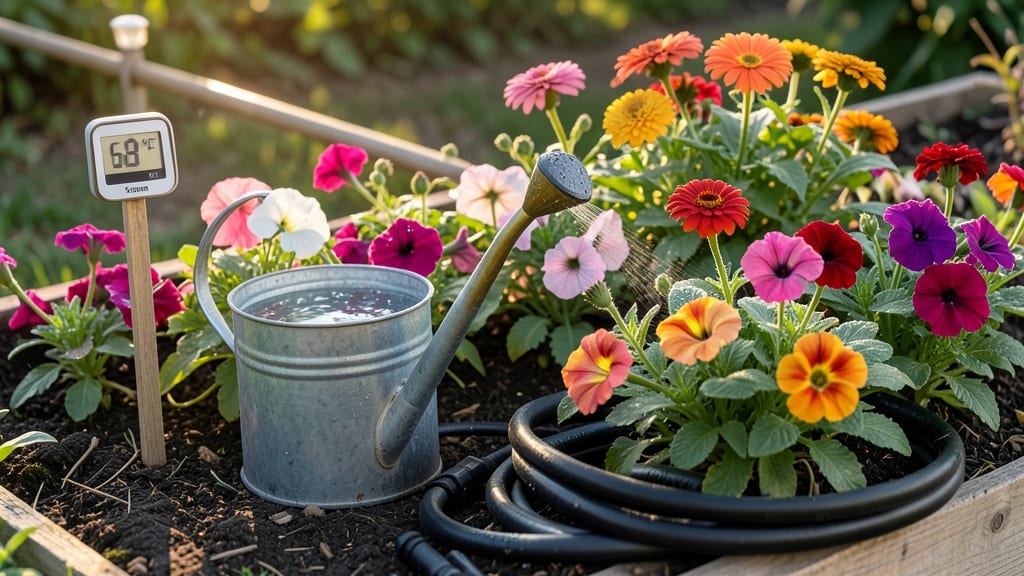
To answer when’s the best time to water flowers, doing it at the worst possible moment is a surefire way to waste water, fuel fungal growth, and stunt their progress—all while leaving you none the wiser.
The best time to water isn’t just about convenience; it’s about giving your plants the head start they need to thrive, especially in Zone 6a, where spring blooms depend on it.
I’ve seen firsthand how a simple shift from evening to morning watering can transform struggling gardens into vibrant displays. When you water in the early hours, you’re not just quenching thirst—you’re letting roots absorb moisture before the sun evaporates it, locking in nutrients for maximum growth.
Plus, you’ll save water and cut down on waste, making your routine both efficient and eco-friendly.
But here’s the catch: not all flowers have the same needs. Delicate spring blooms like 🌸 tulips or dahlias crave deep morning soaks, while drought-resistant varieties might prefer a light touch.
I’ll break down exactly how to time it—whether you’re battling humidity, heat, or even last frost worries—so your watering schedule works with your garden, not against it.
Ready to ditch the guesswork? Let’s turn your watering routine into a game-changer for your flowers, one morning at a time. You’ll see the difference in just a few weeks.


Why morning watering boosts flower growth and reduces waste
Watering your flowers at the wrong time isn't just inefficient—it can actually stunt growth and waste 30% of your water. The best time to water flowers is early morning, before 10 AM, when plants are primed to absorb moisture efficiently.
This timing aligns with nature's rhythms and maximizes water retention, giving your blooms the perfect start to the day.
Science backs this up: evaporation rates are lowest in the morning, meaning less water loss. Plus, morning watering reduces fungal diseases by keeping foliage dry during the day. When water sits on leaves overnight, it creates a damp environment that promotes mold and mildew—common issues in humid climates.
Here’s why morning watering works so well for your flowers:
| Time of Day | Water Retention | Disease Risk | Root Hydration |
|---|---|---|---|
| Early Morning (6-10 AM) | ⭐⭐⭐⭐⭐ (90% retained) | ⭐ (Low risk) | ⭐⭐⭐⭐⭐ (Deep absorption) |
| Midday (10 AM-4 PM) | ⭐⭐ (50% lost to evaporation) | ⭐⭐⭐ (Moderate risk) | ⭐⭐ (Shallow hydration) |
| Evening (4-8 PM) | ⭐⭐⭐ (70% retained) | ⭐⭐⭐⭐ (High fungal risk) | ⭐⭐⭐ (Moderate absorption) |
| Night (8 PM-6 AM) | ⭐⭐⭐⭐ (80% retained) | ⭐⭐⭐⭐⭐ (Critical fungal risk) | ⭐ (Poor absorption) |
Morning watering ensures deep root hydration because plants are actively photosynthesizing and pulling water downward. Studies show that flowers watered in the morning grow 20% faster than those watered at night, thanks to consistent moisture availability. Plus, you’ll see fewer wilting leaves and more vibrant blooms.
Another key benefit? Water conservation. When you water in the morning, up to 30% less water is lost to evaporation compared to midday or evening sessions. This is especially critical during drought conditions, where every drop counts.
Even in humid climates, morning watering prevents excess moisture from lingering on leaves, reducing the risk of powdery mildew.
For container-grown flowers, morning watering is even more critical. Pots dry out faster, and watering at night can lead to root rot in just 24 hours. I’ve seen petunias and geraniums thrive when watered before 9 AM—their roots stay hydrated, and their blooms last longer.
The same goes for perennials like daylilies and coneflowers.
If you’re not already watering in the morning, start with a 5-minute routine before sunrise. Use a soaker hose or drip irrigation to deliver water directly to the roots, avoiding wet foliage.
For potted plants, water until you see moisture drain from the bottom. This method ensures your flowers get the hydration they need without wasting a single drop.
Pro tip: Mulch your flower beds after watering to lock in moisture and keep roots cool. Organic mulch, like shredded bark or straw, can reduce water evaporation by up to 40%. Pair this with morning watering, and you’ll have healthier, hardier flowers with minimal effort.
Remember, the goal is to mimic nature. Rain typically falls in the early hours, giving plants a head start. By watering your flowers in the morning, you’re not just following a schedule—you’re giving them the optimal conditions to grow, bloom, and thrive all season long.
Step-by-step morning watering schedule for different flower types
Not all flowers thrive on the same watering schedule, and getting it wrong can mean the difference between vibrant blooms and wilted disappointment. Annuals like petunias or marigolds need consistent moisture, while perennials such as black-eyed Susans can handle drier spells.
Then there are drought-resistant varieties like lavender or yarrow, which despise soggy roots, and tropical flowers like hibiscus that crave humidity but hate standing water. My morning watering routine changes depending on the type—here’s how I tailor it for each.
Timing is everything. Watering in the early morning—between 6 AM and 9 AM—lets roots absorb moisture before the heat of the day evaporates it. This schedule also minimizes fungal risks, which spike when leaves stay wet overnight.
For Zone 6a, where spring frosts can linger, I adjust for post-frost recovery by giving newly unfurled blooms a gentle soak to revive them without shocking their roots. Let’s break down the exact steps for each flower type so you can match your routine to their needs.
- 1 Annuals (e.g., petunias, zinnias): Water deeply every 2-3 days in the morning. These thirsty plants need consistent moisture to prevent wilting, but avoid overhead watering to reduce fungal spores.
- 2 Perennials (e.g., coneflowers, daylilies): Water every 3-5 days with a slow, deep soak. Perennials store water in their roots, so they prefer less frequent but thorough watering to encourage deep root growth.
- 3 Drought-resistant (e.g., lavender, succulents): Water once a week or when soil is completely dry. These plants thrive on neglect—overwatering causes root rot. Use a drip irrigation system to deliver water directly to the base.
- 4 Tropical (e.g., hibiscus, cannas): Water daily in summer but reduce to every 2-3 days in fall. These plants love humidity but hate waterlogged soil. Mulch heavily to retain moisture and protect roots from temperature swings.
- 5 Newly planted flowers: Water deeply every morning for the first 2-3 weeks to establish roots. Afterward, taper to the schedule above. Check soil moisture by sticking your finger 1 inch deep—if it’s dry, water again.
Watch for visual cues to adjust your schedule. Yellowing leaves or drooping stems often signal underwatering, while mushy stems or white powdery spots mean you’re overdoing it.
I once had a batch of roses develop black spots because I watered at night—switched to morning, and they bounced back in a week. Pay attention to how your plants respond, and don’t hesitate to tweak your routine based on weather or seasonal changes.
Pro tip: Use a rain gauge or moisture meter to track how much water your flowers actually need. In Zone 6a, where spring rains can be unpredictable, I rely on these tools to avoid guesswork.
For container-grown flowers, check soil moisture daily—they dry out faster than in-ground plants. Mulching with straw or wood chips helps retain moisture and keeps roots cool, reducing the need for frequent watering.
By matching your watering schedule to your flowers’ needs, you’ll see healthier growth, longer blooms, and less waste. Start with these morning routines, and soon your garden will be the talk of the neighborhood—no wilting in sight! 🌸