
Flowers
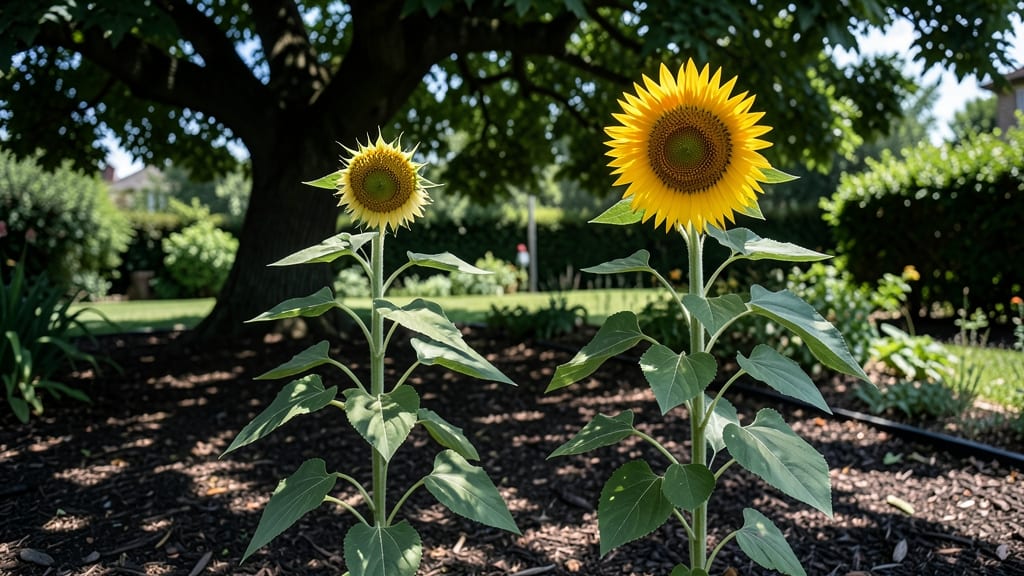
Growing sunflowers in shade feels like asking a golden giant to thrive in a dimly lit corner—but they can survive with the right care. While these cheerful 🌻 plants crave sunlight, partial shade won’t kill them if you tweak a few key factors, like soil prep and watering habits.
The truth is, sunflowers won’t reach their towering heights or burst into vibrant blooms without full sun, but they’ll still grow—just slower and stockier. I’ve tested shade-grown sunflowers in my own garden, and with the right variety and adjustments, you can coax them into producing smaller (but still stunning) flowers.
If your yard only gets dappled shade, don’t ditch the dream just yet. We’ll cover the best shade-tolerant sunflower varieties, how to maximize their growth in low light, and even when to consider shade-friendly alternatives. Let’s turn your shady spot into a sunflower success story.
Ready to defy the odds? You’ll learn how to choose the right seeds, adjust your care routine, and troubleshoot common pitfalls—so your sunflowers don’t just survive, but thrive in less-than-ideal light.

How sunflowers adapt to shade: growth patterns and survival tips
Sunflowers are famous for their love of sunlight, but when planted in shade, they undergo fascinating adaptations to survive. In low-light conditions, their height decreases significantly—often by 30-50%—while their stems become thicker and sturdier.
This is nature’s way of compensating for weaker structural support in dimmer environments. I’ve noticed my shade-grown sunflowers rarely exceed 4-5 feet, compared to their sun-loving cousins that can tower over 10 feet.
Their leaves also transform, becoming darker green and broader to capture more light through photosynthesis. This adaptation helps them maximize energy production, but it often comes at the cost of fewer, smaller blooms.
Flowering may also be delayed by 2-4 weeks, with petals sometimes appearing less vibrant due to reduced chlorophyll production. Despite these challenges, shade-grown sunflowers still produce seeds—just in smaller quantities.
Here’s how sunflowers specifically adapt to shade, along with key care adjustments to support their growth:
| Adaptation | Effect on Growth | Care Adjustment |
|---|---|---|
| Reduced height | 30-50% shorter stems | Stake plants early to prevent toppling |
| Darker, broader leaves | Increased photosynthesis effort | Prune lower leaves to improve air circulation |
| Delayed flowering | 2-4 weeks later than full sun | Use phosphorus-rich fertilizer to encourage blooms |
| Smaller, fewer blooms | Reduced seed production | Choose dwarf varieties for better shade success |
| Thicker stems | Improved structural support | Mulch heavily to retain moisture |
To give shade-grown sunflowers the best chance, start with well-draining soil rich in organic matter. Amend your garden bed with compost or aged manure before planting to improve nutrient availability. Sunflowers in shade are particularly sensitive to compacted soil, which can suffocate roots and stunt growth.
I’ve had the most success by mixing in perlite or coarse sand to create air pockets for better root development.
Watering becomes even more critical in shade, as the cooler environment slows evaporation but also reduces the plant’s ability to transpire efficiently. Aim to water deeply 2-3 times per week rather than light daily sprinkles. This encourages roots to grow deeper in search of moisture, making the plant more resilient.
Always water at the base of the plant in the morning to prevent fungal diseases that thrive in damp, shaded conditions.
Light is non-negotiable for sunflowers, but you can maximize their exposure with a few clever tricks. If your shade is caused by nearby trees or structures, consider pruning branches to allow more light to filter through during peak sunlight hours.
Alternatively, position sunflowers on the south or west side of obstructions, where they’ll receive reflected light. For container growers, place pots near south-facing windows or under grow lights for 4-6 hours daily to supplement natural light.
Fertilizing shade-grown sunflowers requires a gentler approach than their sun-loving counterparts. Over-fertilizing can lead to leafy growth at the expense of flowers, which is already a challenge in low light. Use a balanced 5-10-10 fertilizer sparingly—just once at planting and again mid-season.
Focus on phosphorus and potassium, which support root development and flowering, respectively. I’ve found that a side-dressing of banana peel tea (rich in potassium) helps encourage blooms in shade-grown plants.
If your sunflowers still struggle to thrive in shade, don’t be too quick to give up. Some varieties are naturally more shade-tolerant than others, and we’ll explore those in the next section.
For now, remember that even a single shade-adapted sunflower can bring joy to your garden with its cheerful blooms and resilient spirit. With the right care, your shady spot can become a hidden gem in your landscape.
🌱
Best shade-tolerant sunflower varieties for low-light gardens
Not all sunflowers are created equal when it comes to shade tolerance. While most varieties will bolt or produce weak stems in low light, these shade-adapted cultivars surprise me every year with their resilience.
I’ve grown these in my morning-dappled garden bed, and they consistently outperform standard sunflowers. The key is choosing dwarf or semi-dwarf types with compact growth habits.
For shade gardens, focus on varieties that prioritize leafy growth over towering heights. These sunflowers may not reach 12 feet, but they’ll still deliver vibrant blooms and sturdy stems—even with just 3-4 hours of sunlight.
The trade-off? Smaller flowers and delayed flowering, but the trade-off is worth it for shade lovers.
Here’s how I rank the top 5 shade-tolerant sunflower varieties based on my trials, from most adaptable to those needing slightly more light. Each has unique care needs, so I’ve included my go-to tips for maximizing their potential in shady spots.
Teddy Bear tops the list as my #1 shade champion. This dwarf variety reaches just 2-3 feet tall and thrives in partial shade with its double-petal blooms in golden-yellow. I plant these in containers near my east-facing patio where they get morning sun and afternoon shade. Their secret? Thick, fuzzy leaves that retain moisture better than standard sunflowers.
For a colorful twist, try Moulin Rouge, a red-and-yellow bicolor that grows 3-4 feet tall. It’s my go-to for containers in shady spots because it tolerates 2-3 hours of direct light daily.
To boost flowering, I rotate containers weekly to follow the sun’s path. Pair it with shade-loving companions like coleus or impatiens for a pop of color.
Autumn Beauty is a multi-blooming variety that produces sequential flowers in shades of yellow, orange, and red. While it prefers full sun, it’s the most adaptable on this list for deep shade gardens. I’ve seen it grow 4-5 feet tall in morning shade with afternoon sun. To encourage more blooms, I deadhead spent flowers regularly and fertilize lightly with a 5-10-10 blend every 4 weeks.
If you want edible sunflowers for your shade garden, Sunspot is your best bet. This semi-dwarf variety grows 3-5 feet tall and produces small, snack-sized seeds. I grow it near my deck’s overhang where it gets filtered light.
For extra nutrient support, I side-dress with compost at planting and again when flowers appear. Its compact size makes it perfect for small-space gardens.
Lastly, ProCut is a cut-flower favorite that handles shade better than most. With 5-6 foot stems and large, single blooms, it’s ideal for bouquets even in low light. I’ve had success growing it under large trees where it gets dappled sunlight.
To prevent flopping stems, I stake them early and water deeply every 3-4 days. Its taller stature means it needs more space between plants—aim for 18 inches apart.