
Planting
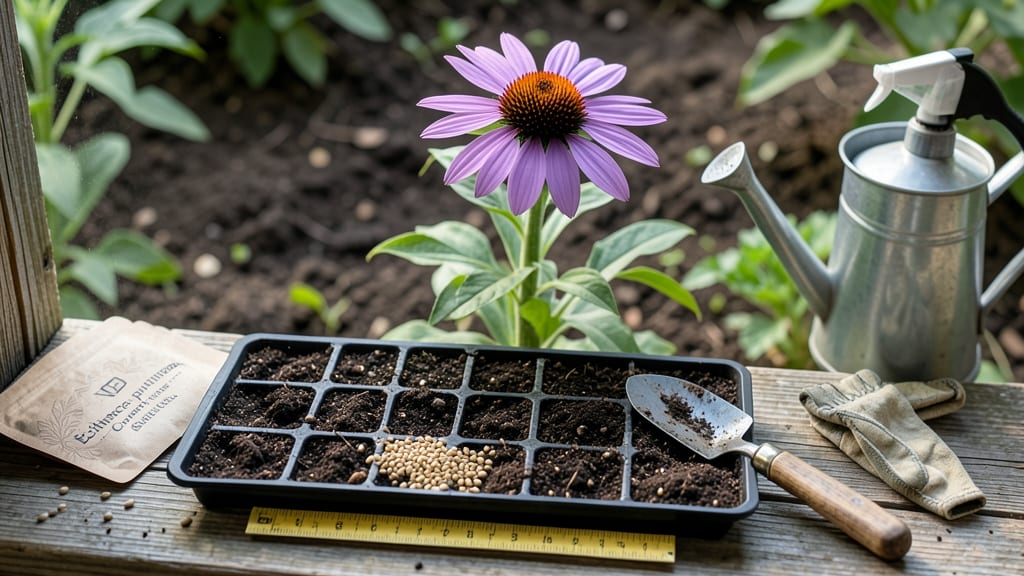
Optimal coneflower seed planting depth by seed type (direct vs transplant)
Getting coneflower seeds to sprout consistently starts with the right planting depth. Too shallow, and they dry out; too deep, and they suffocate. For Echinacea purpurea and other varieties, the ideal depth depends on whether you're direct sowing or transplanting young seedlings.
Even small variations—like 1/8 inch too deep—can cut germination rates by half.
Most coneflower seeds are tiny, so precise placement matters. The standard rule is 1/4 inch deep for direct sowing, but adjust slightly for heavy clay soils (go slightly shallower) or sandy loam (go marginally deeper). Transplants, however, need a gentler touch—just 1/8 inch deep—since their roots are already established.
| Seed Type | Planting Method | Ideal Depth | Soil Adjustments | Germination Time |
|---|---|---|---|---|
| Echinacea purpurea | Direct Sow | 1/4 inch (0.6 cm) | Clay: 1/8 inch; Sand: 3/16 inch | 14-21 days |
| Echinacea pallida | Direct Sow | 1/4 inch (0.6 cm) | Clay: 1/8 inch; Loam: 1/4 inch | 10-14 days |
| All varieties | Transplant | 1/8 inch (0.3 cm) | None; Gently press soil | 7-10 days |
| Large seeds | Direct Sow | 3/16 inch (0.5 cm) | Heavy soil: 1/4 inch | 12-18 days |
For direct-sown seeds, use a fine-mesh rake to create a smooth, even surface before pressing seeds into the soil. This prevents uneven depths that can lead to patchy germination. If your soil is compacted or heavy, loosen the top 2 inches first—this improves both drainage and root penetration.
Transplants require extra care because their delicate roots are already stressed. After removing seedlings from their nursery pots, gently tease apart the root ball to encourage outward growth. Plant them at the same depth they were in their container, then water lightly to settle the soil without displacing them.
Another key factor is seed size. Standard coneflower seeds are tiny, but some varieties (like Echinacea paradoxa) produce slightly larger seeds. For these, you can plant 3/16 inch deep—just enough to cover them without burying.
Always check the seed packet for specifics, as some hybrid varieties may have different needs.
Moisture control is just as critical as depth. After planting, keep the soil consistently moist (not soggy) until germination. Use a lightweight mulch, like straw, to retain humidity and prevent crusting. Avoid overhead watering, which can wash seeds deeper than intended or dislodge them entirely.
If you're planting in containers, use a well-draining mix with perlite or vermiculite to prevent waterlogging. The depth rules stay the same, but containers dry out faster, so monitor moisture closely. A clear plastic dome or humidity tray can speed up germination by maintaining a mini greenhouse effect.
Finally, timing matters. Plant coneflower seeds 4-6 weeks before your last frost date for direct sowing, or start transplants indoors 8-10 weeks early in cooler climates. Seeds sown too early in cold soil may rot, while those planted too late risk stunted growth before winter.
Pro tip: Mark your planting rows with toothpicks or labels to avoid disturbing the soil later. Coneflowers are slow to establish, so patience is key—don’t rush to thin seedlings until they’re 2-3 inches tall with their first true leaves.
With the right depth and care, your coneflower seeds will germinate reliably, giving you vibrant blooms from midsummer through fall. Happy planting! 🌼🌱
5 Proven germination tricks to improve coneflower seed success
Getting your coneflower seeds to sprout reliably can feel like a guessing game, but I’ve found that a few simple germination tricks make all the difference. Beyond just planting depth, these techniques—like pre-soaking and cold stratification—help break down tough seed coats and mimic natural conditions.
Let’s dive into the proven methods that’ll give your Echinacea purpurea seedlings the best possible start.
One of the biggest challenges with coneflower seeds is their hard outer shell, which can delay or even prevent germination. That’s why I always recommend starting with a 24-hour soak in room-temperature water before planting.
This softens the seed coat just enough to let moisture penetrate, speeding up the sprouting process. For even better results, try a warm soak—just place the seeds in a bowl of water and let it sit near a sunny window for a few hours.
🌱 Numbered Highlights: Germination Tricks for Coneflower Seeds
- 1/4-inch depth is ideal for most coneflower seeds, but adjust to 1/8-inch in heavy clay soil to prevent rot.
- Use cold stratification (4-6 weeks in fridge) to mimic winter conditions and break seed dormancy.
- Keep soil consistently moist but never soggy—use a spray bottle to avoid disturbing seeds.
- Plant near companion plants like bee balm or black-eyed Susans to attract pollinators early.
- Cover seeds with a lightweight mesh to protect from birds and pests while allowing sunlight.
Cold stratification is another game-changer for coneflower seeds, especially if you’re planting in early spring. Simply place your soaked seeds in a sealed bag with a damp paper towel, then refrigerate for 4-6 weeks. This mimics the natural winter chill period that many wildflower seeds need to germinate. Once stratified, plant them outdoors as soon as the soil is workable—usually 2-3 weeks before your last frost date.
Moisture management is where many gardeners trip up. Coneflower seeds need consistent moisture to germinate, but they’ll rot if the soil stays too wet. I use a spray bottle to keep the soil damp without disturbing the seeds, and I always plant in well-draining soil.
A mix of 50% garden soil and 50% compost works wonders for me, giving young roots the nutrients they need without suffocating them.
Don’t overlook the power of companion planting to boost your coneflower’s success. Planting near bee-friendly flowers like bee balm or black-eyed Susans creates a mini ecosystem that attracts pollinators early in the season.
These pollinators not only help your coneflowers thrive but also deter pests that might target young seedlings. Plus, the shared root zone helps maintain even soil moisture levels.
Finally, give your newly planted seeds a protective cover until they sprout. A lightweight mesh or row cover keeps birds and pests away while still allowing sunlight and water to reach the soil.
Once you see those first tiny green shoots, you can remove the cover and watch your coneflowers grow into those stunning purple blooms you love. With these tricks, you’ll see faster, stronger germination and healthier plants all season long. 🌼