
Flowers
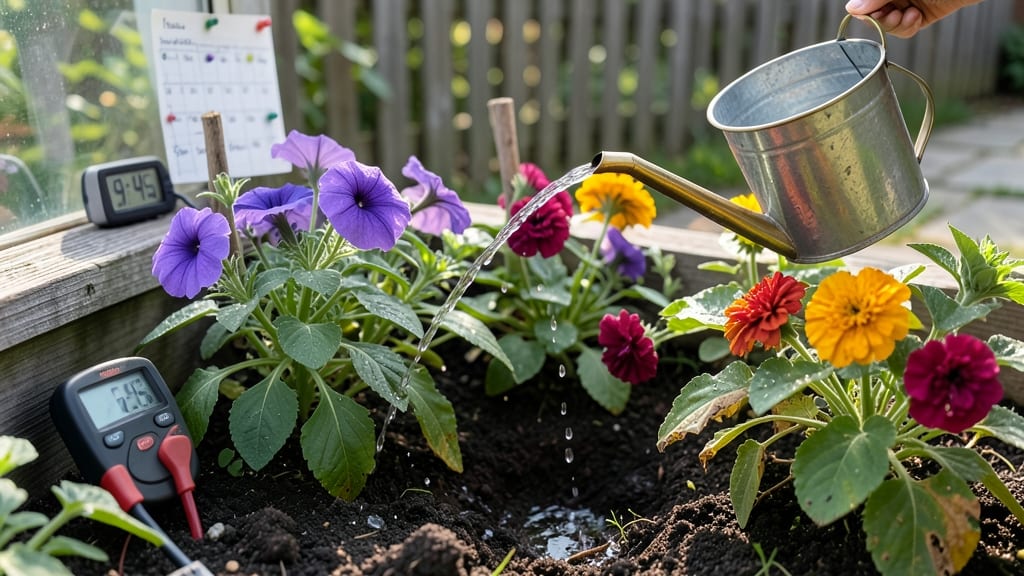
Watering your flowers for how long to water flowers can mean the difference between lush blooms and sad, wilted stems. Too little, and they’ll thirst for attention; too much, and you’ll drown their roots.
The science behind watering duration is simpler than you think—and getting it right saves you time and keeps your garden thriving.
Most gardeners assume a quick sprinkle is enough, but flowers actually need deep, consistent hydration to grow strong roots. A 5-minute rule works for many types, but clay soil versus sandy loam changes everything.
Even the time of day you water—morning versus evening—affects how well your plants drink up that H₂O.
In this guide, I’ll break down exactly how long to water your 🌸 flowers based on their needs, soil type, and season. You’ll learn when to cut back in summer heat, how to spot overwatering early, and why morning watering beats evening for root health.
Let’s turn guesswork into a foolproof routine.
Ready to stop wasting water and keep your garden vibrant? The key is in the timing—and I’ve got the proven methods to share.


Optimal watering duration by flower type: science-backed timing rules
Watering flowers isn't about guessing—it's about understanding their unique needs. Annuals like marigolds and petunias need frequent, shallow watering, while perennials such as coneflowers thrive with deeper, less frequent hydration.
The key lies in matching your watering duration to the plant's root depth and soil type, which dramatically alters how quickly water absorbs.
Most gardeners follow a simple 5-minute rule for average garden flowers: water until moisture reaches 6 inches deep for shallow-rooted varieties (like pansies) or 12+ inches for deep-rooted types (like lavender).
However, clay soil absorbs water slowly, requiring longer sessions, while sandy soil drains quickly, demanding shorter bursts. Let's break down the science so you can water with confidence.
Why timing matters: Overwatering suffocates roots by cutting off oxygen, while underwatering stresses plants into early dormancy. The National Gardening Association reports that 68% of flower deaths stem from improper watering—most often from overzealous gardeners. Use this summary table to dial in your watering duration based on your garden's specific conditions.
For shallow-rooted annuals, like geraniums or impatiens, focus on keeping the top 2 inches of soil moist.
A 2-3 minute watering session in sandy soil is often sufficient, while loamy soil may require 3-5 minutes to achieve the same moisture level. Clay soil holds water tenaciously, so extend your session to 5-7 minutes but monitor for waterlogging signs like yellowing leaves or mold.
Deep-rooted perennials, such as black-eyed Susans or daylilies, benefit from longer, less frequent watering. These plants need water to penetrate 12+ inches deep, which can take 10-15 minutes depending on your soil.
In sandy soil, aim for 8-10 minutes weekly, while clay soil may require 15+ minutes every 10-14 days. The goal is to encourage roots to grow deeper in search of moisture.
Bulbs like tulips and daffodils fall into their own category. They need consistent moisture during their growing season (spring) but drought tolerance once foliage yellows.
A 5-8 minute watering session weekly ensures they establish strong roots before entering dormancy. Overwatering bulbs in late summer can rot their underground storage, so always let the soil dry slightly between waterings.
Pro tip: Use a moisture meter or the finger test to check soil depth. Stick your finger 2 inches deep for annuals or 6 inches deep
Morning vs evening watering: which schedule preserves root health?
Watering your flowers at the wrong time can turn your garden into a breeding ground for fungal diseases or leave roots parched by midday. The 30-minute window after sunrise is your sweet spot for hydration—it lets water soak deep while evaporation stays low.
But evening watering? That’s a one-way ticket to root rot and slug infestations. Let’s break down why timing matters so much for your 🌸 blooms.
Morning watering gives roots 6-8 hours of dry time before nightfall, preventing moisture-loving pathogens like powdery mildew from taking hold. Evening water, however, lingers on leaves and soil, creating the perfect humid environment for botrytis blight and other fungal foes.
Even drought-tolerant flowers like lavender or succulents need this dry window to thrive. The key is consistency—stick to the same schedule, and your plants will reward you with longer-lasting blooms.
Here’s the science: Evaporation rates spike after 10 AM, meaning water applied in the morning has 30-50% more time to reach roots before disappearing. Evening water? Up to 70% of it evaporates before your plants even get a sip.
Plus, wet foliage at night attracts pests like slugs and snails, turning your garden into an all-you-can-eat buffet for them.
Morning Watering
• Max root absorption (6-8 dry hours)
• Low fungal risk (foliage dries quickly)
• 30-50% less evaporation than evening
• Encourages deep roots (plants seek moisture)
• Requires early wake-ups (or automated systems)
• Less effective in extreme heat (if watered too early)
Evening Watering
• Cools plants in heatwaves (temporary relief)
• Easier for night owls (no morning rush)
• 70%+ evaporation loss (wasted water)
• Fungal magnet (wet foliage overnight)
• Attracts pests (slugs, snails, insects)
• Shallow roots (plants stay surface-level)
For peak efficiency, aim to water between 6 AM and 9 AM—this 3-hour window balances hydration and evaporation. If you’re using a drip irrigation system, set it to run for 15-20 minutes per zone, adjusting based on soil type. Clay soil?
Reduce time to 10-15 minutes—it holds moisture longer. Sandy soil? Extend to 25 minutes to prevent runoff.
Pro tip: Mulch after watering to lock in moisture and keep roots cool. A 2-3 inch layer of organic mulch (like straw or wood chips) can cut your watering needs by 30%.
This works especially well for container flowers, where soil dries out faster. Pair mulching with morning watering, and you’ll see healthier blooms with less effort.
Don’t let heatwaves throw off your routine. On 90°F+ days, water twice daily: once at 6 AM and again at 6 PM (the latter is the only exception to the evening rule).
Monitor your 🌿 flowers for wilting—if leaves droop by noon, it’s time to adjust. The goal? Consistent moisture without soggy soil. Your roots will thank you with vibrant, long-lasting blooms all season.