
Flowers
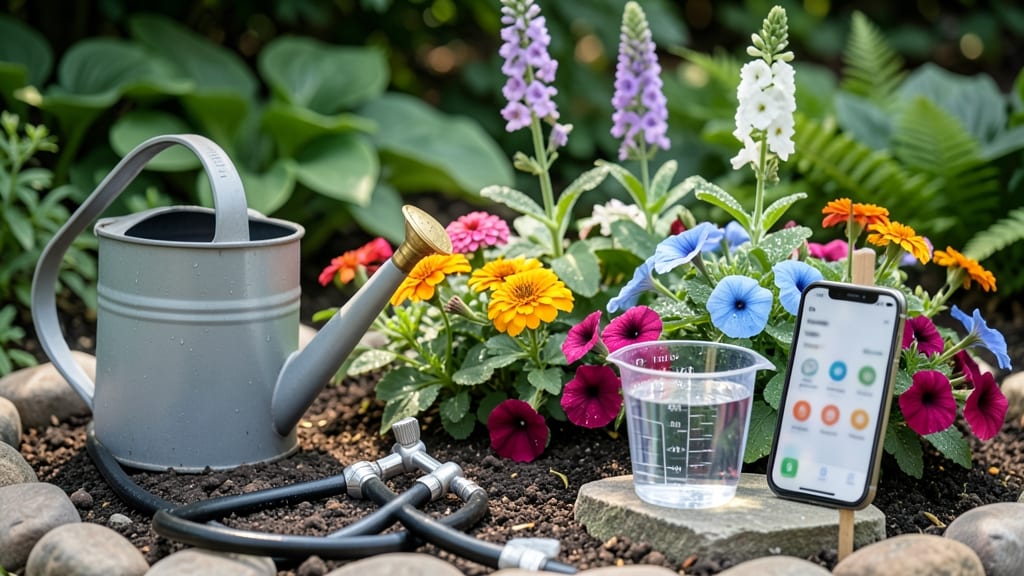
If you’ve ever watched your 🌸 flowers wilt within days—only to wonder how much water they need—you’re not alone. The truth is, most gardeners guess how much water their blooms need, but science shows that overwatering actually kills more flowers than dehydration.
The key isn’t just how often you water, but how deeply, when, and based on the type of flower you’re growing.
Think about it: a delicate rose in your Zone 6a garden has completely different needs than a drought-resistant lavender. Even within the same species, soil type, climate, and season play huge roles.
For example, spring-planted annuals might need daily watering in July, while perennials can thrive on weekly deep soaks once established. The right approach saves time, money, and heartache—because nobody wants to mourn a garden full of brown petals.
In this guide, I’ll break down the exact watering rules for different flower types, from thirsty hydrangeas to water-wise succulents.
You’ll learn how to read your soil, spot the 5 signs your flowers are drowning (or thirsty), and adjust your watering schedule based on your local climate—whether you’re in a dry desert or a humid rainforest. No more guesswork, just science-backed tips to keep your blooms happy and healthy.
Ready to transform your watering routine? Let’s dive into the simple rules that’ll have your flowers thriving all season long—without the trial and error.


Science-backed watering rules for different flower types
Not all flowers thirst the same way—some demand daily hydration while others rot from kindness. The key lies in their root depth and natural habitat. Tropical orchids, for example, thrive in humid, moist air, while desert cacti store water in their thick stems.
Understanding these differences prevents root rot or wilting before blooms even appear.
Watering isn’t just about how much—it’s about when and how deeply. Shallow watering encourages surface roots, making plants vulnerable to drought. Instead, aim for deep, infrequent watering to build resilient root systems.
This science-backed approach works for annuals, perennials, and even bulbs, but each type has unique needs.
Annuals like petunias and zinnias need frequent watering because their roots are shallow and they grow quickly. Aim for 1–1.5 inches of water per week, splitting it into morning sessions to reduce evaporation. Overwatering here leads to powdery mildew, while underwatering causes buds to drop before opening.
Perennials, such as daylilies and black-eyed Susans, develop deeper root systems over time, so they tolerate drought better once established. Water deeply every 5–7 days during dry spells, but reduce frequency in rainy seasons. Mulching with wood chips locks in moisture and mimics their natural forest floor habitat.
Bulbs like tulips and daffodils are drought-tolerant once blooming, but their root systems are delicate during early growth. Water lightly but consistently in spring until foliage yellows—this signals they’re storing energy for next year. Overwatering bulbs causes rot or weak stems that flop under rain or wind.
Tropical flowers like orchids and hibiscus crave high humidity and consistent moisture. Unlike desert plants, they can’t store water, so their leaves wrinkle when thirsty. Use a pebble tray or humidifier to maintain 60%+ humidity, and water when the top inch of soil feels dry.
Avoid letting them sit in standing water, which causes root rot.
Succulents and cacti are the opposite of tropicals—they store water in their leaves and thrive on neglect. Water only when soil is bone-dry, typically every 3–4 weeks. Overwatering here is the #1 killer, turning crispy leaves into mushy,
Climate-specific watering schedules: desert vs. rainforest flowers
Your 🌸 roses might need daily watering in Zone 8 Florida, but the same plant in Zone 9 Arizona could wilt from overwatering. Climate dictates everything—from how often you water to how deeply.
Humid rainforest-like conditions in the Pacific Northwest mean flowers lose moisture slower, while desert heat evaporates water 3x faster. The key? Adjusting your schedule based on USDA hardiness zones, humidity levels, and seasonal shifts.
Let’s compare three climates: Arizona’s desert (low humidity, extreme heat), Florida’s rainforest-like (high humidity, frequent rain), and the Pacific Northwest’s temperate (moderate humidity, cooler summers). Even the same flower—like petunias or lavender—will have wildly different watering needs.
Below, I’ll show you exactly how to adapt your routine for each region.
Take lavender, for example. In Arizona, it thrives with deep, infrequent watering—once every 3-4 days in summer. But in Florida, the same plant might rot if watered that often.
Instead, Florida gardeners should water once a week or when the top 2 inches of soil feel dry. The Pacific Northwest’s cooler climate means lavender can go 10-14 days between waterings in summer, with even longer gaps in fall.
Seasonal shifts matter too. In Zone 9 Arizona, summer watering might mean daily soaks for sun-loving flowers like geraniums, while winter watering drops to once every 2 weeks. Meanwhile, in Zone 8 Florida, summer storms reduce your watering needs—just check soil moisture before adding more.
The Pacific Northwest’s cooler summers mean flowers like hydrangeas need less frequent watering than in desert climates.
Pro tip: Use a soil moisture meter to avoid guesswork. Stick it 2 inches deep—if it reads dry, water deeply. If it’s moist, wait. This works across all climates but is critical in humid regions where overwatering is a silent killer.
Your 🌸 flowers will thank you with longer blooms and fewer wilted petals.
Remember, climate isn’t the only factor. Soil type and mulch also play huge roles. Sandy desert soil drains fast, while clay-heavy rainforest soil holds moisture longer. Adjust your schedule based on what’s naturally happening in your garden, not just the zone map. Happy watering!