
Watering
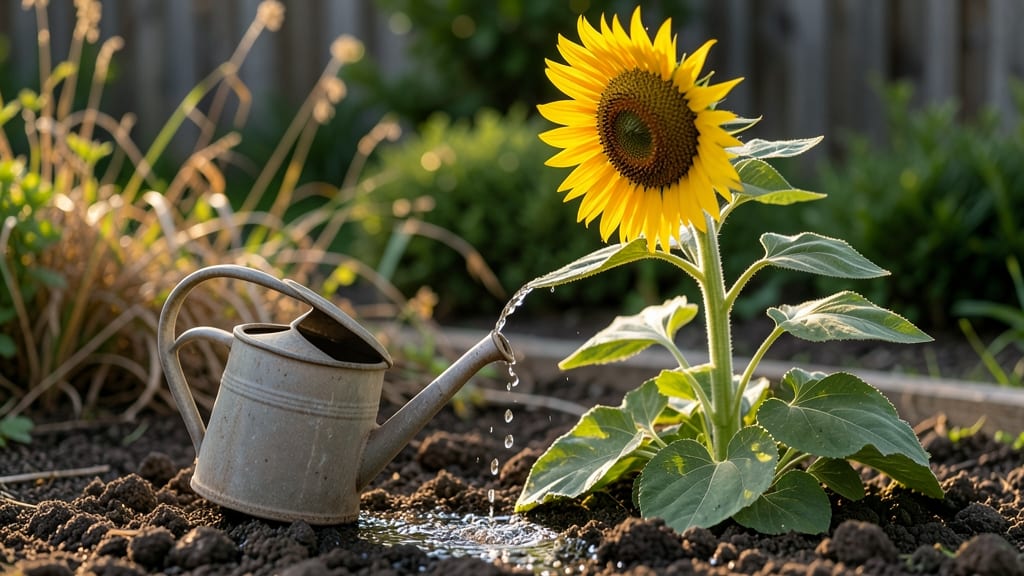
Mastering the sunflower water needs is your secret weapon for growing those 6-foot-tall giants that turn heads in every garden. Too much water, and you’ll drown the roots; too little, and your 🌻 will wilt before it even blooms.
The key isn’t just how often you water—it’s when, how deeply, and how your local climate plays into the equation.
If you’ve ever watched a sunflower droop midday or seen its leaves turn yellow, you know watering isn’t a one-size-fits-all task.
I’ve grown sunflowers in Zone 6a for years, and the difference between a thriving stalk and a sad sapling comes down to a few critical adjustments—like watering deeply in the morning instead of splashing at dusk or cutting back once the plant hits maturity.
Here’s what you need to know: sunflowers crave consistency, but they’re tougher than they look. Seedlings need frequent sips, while mature plants can handle longer dry spells—if you’ve got the right soil and mulch.
I’ll break down the exact schedule, from April planting to September harvest, so you never guess again whether your sunflower is thirsty or just taking a nap.
Ready to grow sunflowers that reach for the sky without flopping over? Let’s dive into the watering routine that’ll keep your 🌻 standing tall, proud, and ready to bloom.


How much water do sunflowers need by growth stage?
Sunflowers are thirsty giants—literally! Their water needs shift dramatically from delicate seedlings to towering mature plants. Understanding these stages ensures your sunflowers grow straight and strong instead of leggy or wilted. Let’s break down the precise watering schedule for each phase, so you never guess again.
At the seedling stage, sunflowers need consistent moisture to establish roots, but overwatering here can drown tender sprouts. Think of it like a damp sponge: keep the soil evenly moist but never soggy. This is the most critical phase for setting the foundation for future growth.
| Growth Stage | Water Frequency | Soil Moisture Goal | Amount per Session | Climate Adjustments |
|---|---|---|---|---|
| Seedling (0-2 weeks) | Daily (light misting) | Evenly moist | ¼ inch (6mm) per day | More in heat/wind |
| Vegetative (2-6 weeks) | Every 2-3 days | 1-2 inches deep | ½ inch (12mm) per session | Less in humidity |
| Budding (6-8 weeks) | Every 3-4 days | 2-3 inches deep | 1 inch (25mm) per session | Increase in drought |
| Flowering (8-12 weeks) | Every 5-7 days | 3-4 inches deep | 1.5 inches (38mm) | Reduce in rain |
| Maturity (12+ weeks) | Every 10-14 days | Dry topsoil | Deep soak (2 inches) | Minimal in winter |
The vegetative stage (2-6 weeks) is when sunflowers shoot up like jack-in-the-boxes. Here, they need deep watering every 2-3 days to encourage strong root development. Aim for 1-2 inches of soil moisture—stick your finger in: if the top inch feels dry, it’s time to water.
During the budding phase (6-8 weeks), sunflowers demand more water to support those heavy blooms. This is where deep soaks every 3-4 days prevent wilting. Look for yellowing leaves or drooping buds—these are red flags for thirst. Mulching with straw helps retain moisture.
Once in full bloom (8-12 weeks), sunflowers need 1.5 inches of water every 5-7 days. This stage is crucial for seed development. Skimping here leads to small, underdeveloped seeds, while overwatering can cause root rot. Always water at the base of the plant, not the leaves.
By maturity (12+ weeks), sunflowers become drought-tolerant. Reduce watering to every 10-14 days unless your region is experiencing extreme heat. Let the top 3-4 inches of soil dry out between waterings. This helps prepare them for seed harvest.
Climate plays a huge role: in hot, dry areas, increase frequency by 20-30%, while in humid regions, reduce by 10-15% to avoid fungal diseases. Always adjust based on your soil type—sandy soil drains faster than clay, so water more often.
Pro tip: Use a moisture meter or the finger test to check soil moisture. If the soil feels like a wrung-out sponge, it’s time to hydrate. Consistency is key—sunflowers hate boom-and-bust watering, which causes uneven growth.
Watch for wilting leaves or yellowing at the base—these signal underwatering. On the flip side, mushy stems or moldy soil mean you’re overdoing it. Balance is everything with these sun-loving giants.
With this stage-by-stage approach, your sunflowers will reward you with bold blooms and sturdy stalks—ready to brighten your garden from seedling to sunset. Happy growing! 🌻
Sunflower watering schedule: daily vs. deep watering methods
When it comes to sunflower watering, most gardeners make one of two mistakes: either they give their plants a quick daily splash that barely reaches the roots, or they drown them with excessive surface watering.
Both approaches lead to the same problem—sunflowers that struggle to stand tall. The secret lies in a balanced approach that combines deep hydration with strategic timing.
Sunflowers have deep taproots that can extend up to 6 feet into the soil. This means they need water to penetrate deeply, not just soak the top inch. Daily light watering might keep the leaves perky for a day, but it won’t support the plant’s long-term growth.
Instead, aim for deep watering sessions that encourage roots to grow deeper and stronger.
Here’s the golden rule: water your sunflowers deeply 2-3 times per week during their active growing season (spring and summer). For seedlings, you’ll need to water more frequently—every 2-3 days—to keep the soil consistently moist.
Once they reach mature height, you can stretch the interval to every 7-10 days, depending on your climate.
⚠️ Warning: Overwatering vs. Underwatering
Overwatering signs: Yellowing leaves, mold at the soil line, and a soggy, foul-smelling base. This often happens when you water at night or too frequently.
Underwatering signs: Wilting leaves that don’t recover after watering, dry soil 2+ inches deep, and stunted growth. This is common with shallow or infrequent watering.
Pro Tip: Stick your finger 2 inches into the soil. If it’s dry, it’s time to water. If it’s damp, wait another day.
To achieve deep watering efficiently, use tools like a soaker hose or drip irrigation system. These deliver water slowly and directly to the root zone, reducing waste and ensuring hydration reaches where it’s needed most.
Avoid overhead sprinklers, which can lead to fungal diseases like powdery mildew by keeping foliage wet for extended periods.
Timing is just as critical as depth. Always water in the early morning (between 6-9 AM) to allow excess moisture to evaporate during the day. Watering at night or late afternoon increases the risk of fungal infections and attracts pests like slugs.
I’ve seen firsthand how sunflowers watered in the morning stand proud and disease-free compared to those watered in the evening.
For container-grown sunflowers, the rules change slightly. Smaller pots dry out faster, so you’ll need to water every 5-7 days instead of every 10. Use a well-draining potting mix and a pot with drainage holes to prevent root rot.
Grouping containers together also helps create a microclimate that retains moisture longer.
Remember, sunflowers are resilient, but they won’t tolerate neglect. By mastering the deep watering technique and paying attention to soil moisture and leaf health, you’ll grow sunflowers that reach for the sky—tall, strong, and full of sunshine. 🌻