
Light Requirements
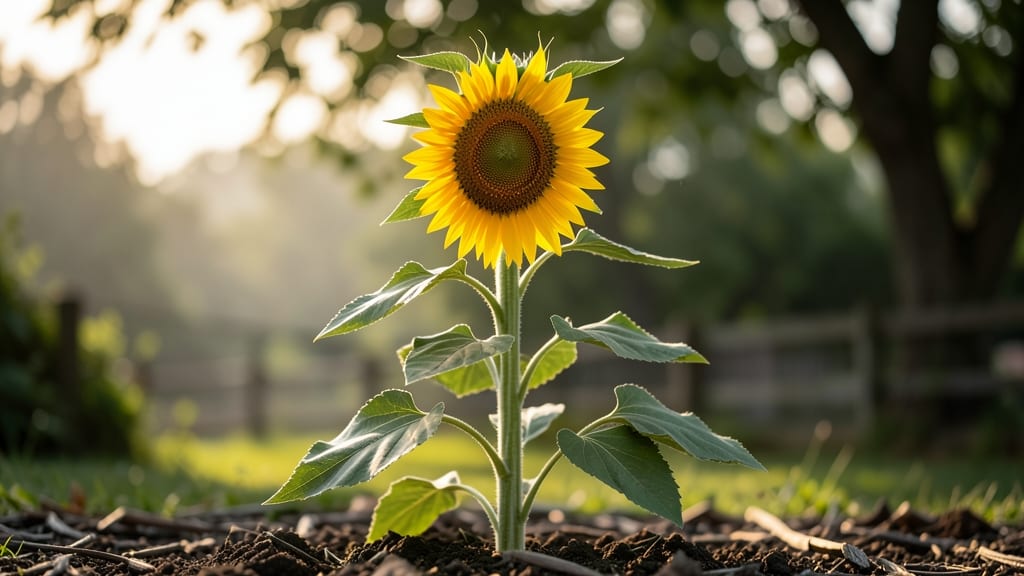
If your sunflowers need the right sun requirements to bloom, you might be missing their most critical need: the right amount of sunlight.
These cheerful giants aren’t just sun-lovers—they’re sun-obsessed, and getting their light requirements wrong can leave you with weak stems and disappointing blooms instead of the towering beauty you planted for.
Most gardeners assume "full sun" means "as much as possible," but sunflowers actually thrive with 6 to 8 hours of direct sunlight daily—and in hotter climates like USDA Zone 6a, they can handle even more.
The key isn’t just duration, though; it’s consistency. Too little light, and your plants will grow leggy and floppy, while too much shade can stunt their growth entirely.
Here’s the good news: with the right placement and a few simple adjustments, you can give your sunflowers exactly what they need to reach their full potential.
I’ll break down the ideal sunlight exposure, how to spot when your plants aren’t getting enough, and even which varieties tolerate less light if your garden space is limited.
Whether you’re a first-time gardener or a seasoned grower, mastering these sunflower sun requirements will transform your garden from a patch of sad stalks to a field of golden giants. Let’s get your 🌻 plants soaking up the sun the right way.

How many hours of sunlight do sunflowers need daily?
Sunflowers are sun-worshippers—they thrive under bright, direct light, but their needs change as they grow. While mature sunflowers crave full sun exposure, young seedlings have different requirements. Understanding these stages is key to growing strong, healthy plants that reach their full 6-16-foot potential.
Let’s break down exactly how much sunlight sunflowers need at each phase of their life cycle.
For seedlings, 4-6 hours of sunlight daily is ideal during their early weeks. This prevents them from becoming leggy or weak while they establish roots. Once seedlings are 4-6 inches tall, you can gradually increase their sun exposure to prepare them for maturity.
Skipping this step often leads to stunted growth or poor flowering later on.
Mature sunflowers need 8-12 hours of direct sunlight daily to produce their signature large, vibrant blooms. This is their peak flowering phase, where they convert sunlight into energy for seed development. In regions with long summer days (like the Midwest or Southwest), they’ll naturally get enough light.
However, in northern climates or during shorter days, you may need to supplement with grow lights or choose early-maturing varieties.
While sunflowers technically tolerate partial shade, growth suffers dramatically. Plants in less than 6 hours of sun will produce smaller, weaker stems and fewer seeds. Their leaves may also turn pale yellow, a classic sign of light deprivation.
If you’re growing sunflowers in a shady garden, opt for dwarf varieties like 'Teddy Bear' or 'Moulin Rouge,' which handle 4-6 hours of light better than giants.
Measuring sunlight accurately is easier than you think. Use a sunlight tracker app or place a white piece of paper in your garden for a day—mark the shadow cast by a stick every hour.
If shadows are longer than the stick itself for more than 2 hours, you’re likely in partial shade. For full sun, shadows should be shorter than the object casting them for most of the day.
In hot climates, afternoon shade (between 2 PM and 5 PM) can prevent heat stress while still providing enough light. Use lightweight shade cloth (30-50%) during peak heat, then remove it as temperatures drop.
This mimics their natural wild habitat, where they grow in open fields but benefit from some afternoon relief.
One common mistake is assuming morning sun alone is enough. While morning light is valuable, afternoon sun is critical for photosynthesis. Sunflowers need intense light during their growth peak (late morning to early afternoon).
If your garden only gets morning sun, consider using reflective surfaces like white walls or mulch to bounce extra light onto your plants.
For container growers, place pots in the sunniest spot available, even if it’s just a south-facing balcony. Sunflowers in containers dry out faster, so ensure they get maximum light exposure to compensate.
Rotate containers every few days to prevent leaning toward the sun, which weakens stems and reduces bloom quality.
Remember: sunflowers are heliotropic, meaning they follow the sun’s movement. Young plants will bend toward light sources, which is normal—but if they’re growing too lopsided, they’re not getting enough light. In these cases, supplement with grow lights (12-16 hours daily) or transplant to a sunnier location immediately.
Signs your sunflowers aren’t getting enough sunlight (and how to fix it)
Your sunflowers might be silently screaming for more light, even if they look healthy at first glance. Leggy stems and pale yellow leaves are classic red flags that your plants aren’t getting their required 6-8 hours of sunlight daily.
These signs often appear when sunflowers stretch desperately toward any available light source, creating weak, spindly growth that can’t support their own weight.
Another telltale symptom is delayed or stunted blooming. When sunflowers don’t receive enough sunlight, they’ll produce smaller flower heads—or none at all—because their energy goes into reaching for light instead of developing buds.
Even if you see green buds forming, they may never fully open if the light conditions remain inadequate.
🌱
⚠️ Sunflower Sunlight Emergency!
Sunflowers need 6-8+ hours of direct sunlight daily—any less and you’ll see these warning signs:
- Leggy stems stretching toward light
- Pale yellow leaves instead of deep green
- Small or no blooms despite mature height
- Flopping over from weak stem structure
Fix it now: Move plants to sunnier spots immediately or use reflective surfaces (like white walls or mirrors) to bounce extra light onto them.
If your sunflowers are in northern climates, seasonal light changes can trick you into thinking they’re getting enough sun when they’re not. During shorter summer days, you may need to rotate plants every few days to ensure all sides receive equal sunlight exposure.
In southern climates, the intense midday sun can actually scorch young seedlings, so providing morning sun with afternoon shade during their first few weeks can prevent damage while they establish roots.
For quick fixes, try companion planting with taller, sun-loving plants like corn or tall grasses on the north side of your sunflowers. These act as natural windbreaks while reflecting extra light downward.
Alternatively, place a white reflective board (like a piece of plywood or a mirror) behind your sunflowers to bounce additional sunlight onto their leaves.
💡
Don’t overlook the soil and water connection—sunflowers deprived of sunlight often show similar symptoms to those suffering from overwatering or poor drainage. Always check the soil moisture by sticking your finger 1-2 inches deep; it should feel dry before watering again.
If you’ve ruled out water issues and still see yellowing leaves or weak growth, sunlight deficiency is likely the culprit.
For a diagnostic checklist, simply observe your plants for 3-5 days: Are the leaves facing east in the morning and west in the afternoon? Are the stems bending toward any nearby light source?
If you answered yes to either, your sunflowers are begging for more sunlight. The good news? With these adjustments, you’ll see stronger stems and vibrant blooms within just a few weeks.